During the isostatic pressing of materials with constant shear stress, such as aluminum, pressure distributes uniformly in all directions. Because the material maintains a constant shear stress, the radial pressure effectively equalizes with the axial pressure. This creates a state where the compacted material experiences consistent force from every angle, resulting in a truly isostatic pressure distribution.
The specific flow properties of materials like aluminum allow radial and axial pressures to reach equilibrium. This ensures the internal pressure distribution is uniform throughout the compacted part, eliminating the directional pressure gradients found in other material types.
The Mechanics of Pressure Equalization
The Role of Constant Shear Stress
In the context of isostatic pressing, the material's behavior under load is the deciding factor for pressure distribution.
Materials like aluminum exhibit a property known as constant shear stress. This internal characteristic dictates how the material yields and flows when force is applied.
Balancing Directional Forces
Typically, in compaction processes, there is a difference between the force applied vertically (axial) and the force transferred horizontally (radial).
However, for materials with constant shear stress, this disparity is negated. The physical properties of the material cause the radial pressure to become approximately equal to the axial pressure.
Implications for the Final Part
Achieving True Isostatic Conditions
The term "isostatic" implies equal pressure from every side.
Because the radial and axial pressures balance out, the material achieves a state of hydrostatic stress. This means the pressure distribution within the material is not biased toward the direction of the applied force.
Uniform Density and Structure
This equalization is critical for the quality of the final component.
When pressure is uniform, the material compacts evenly. This results in a homogeneous internal structure, free from the density variations that often occur when radial pressure is significantly lower than axial pressure.
Understanding the Limitations
Material Specificity
It is vital to recognize that this uniform distribution is not universal to all isostatic pressing scenarios.
This phenomenon is specifically dependent on the material having constant shear stress. Materials that do not exhibit this property may not achieve the same equilibrium between radial and axial pressures.
The "Approximate" Reality
While the theoretical distribution is uniform, the primary reference notes that radial pressure becomes approximately equal to axial pressure.
In practical applications, minor factors such as friction or complex geometries may still introduce slight variations, even in ideal materials like aluminum.
Optimizing Your Compaction Strategy
If you are selecting materials or designing a process relying on isostatic principles, consider the following:
- If your primary focus is part homogeneity: Prioritize materials like aluminum that exhibit constant shear stress to ensure internal density is consistent.
- If your primary focus is process simulation: Model your pressure distribution effectively by assuming radial and axial pressures will equilibrate for this class of materials.
Understanding the link between shear stress and pressure equalization allows you to predict and control the structural integrity of your compacted parts.
Summary Table:
| Feature | Isostatic Pressing of Aluminum | Other Compaction Methods |
|---|---|---|
| Pressure Distribution | Uniform (Radial ≈ Axial) | Directional (Radial < Axial) |
| Shear Stress | Constant | Variable/Non-constant |
| Part Homogeneity | High Internal Consistency | Potential Density Gradients |
| Structural Stress | Hydrostatic State | Non-uniform Stress State |
Maximize Your Material Homogeneity with KINTEK
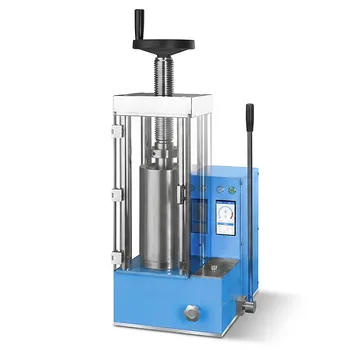
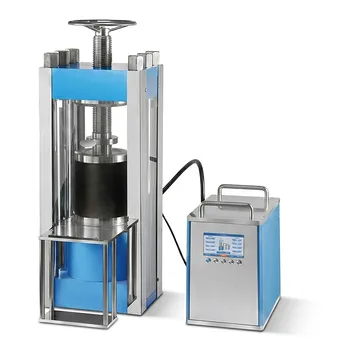
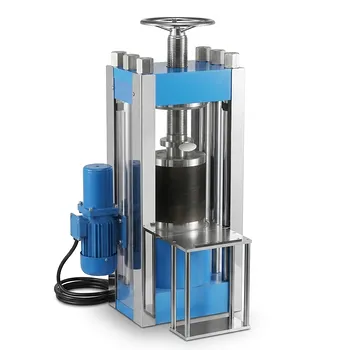
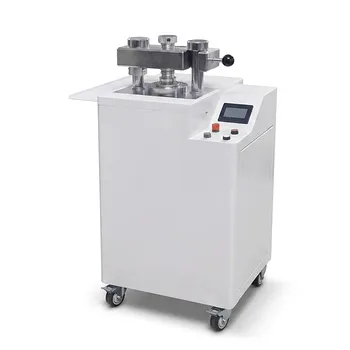
Unlock the full potential of your material research with KINTEK’s precision isostatic pressing solutions. Whether you are working with aluminum alloys or advanced battery materials, our comprehensive range of manual, automatic, heated, and glovebox-compatible models, as well as cold and warm isostatic presses, ensures the uniform pressure distribution required for superior structural integrity.
Don't let density variations compromise your results. Partner with KINTEK to find the ideal pressing system tailored to your lab's specific needs. Contact us today to optimize your laboratory pressing process!
Related Products
- Electric Isostatic Pressing Machine 40 Tons Automatic Laboratory Powder Compacting Press
- Warm Isostatic Press for Solid State Battery Research Warm Isostatic Press
- Automatic Lab Cold Isostatic Pressing CIP Machine
- Lab Isostatic Pressing Molds for Isostatic Molding
- Split Hot Isostatic Pressing Machine 150 Ton Laboratory Heated Isostatic Press
People Also Ask
- What are the key characteristics of the isostatic pressing process? Unlock Uniform Density and Complex Geometries
- Why is vacuum-sealed packaging necessary before isostatic pressing of CuPc thin films? Protect Integrity & Uniformity
- How is pressure applied to the material during isostatic pressing? Master Uniform Density and Complex Geometries
- What are the applications of isostatic pressing in the automotive industry? Precision Manufacturing for High-Performance Parts
- How is isostatic pressing utilized in the aerospace industry? Engineering High-Performance Aviation Components