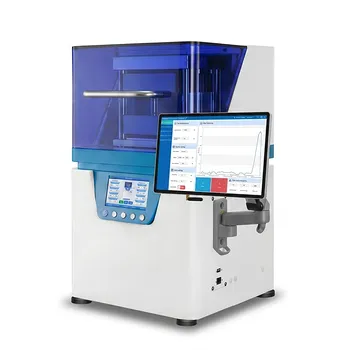
Isostatic pressing is a powder consolidation process characterized by the application of equal pressure from all directions to reduce material porosity. By encapsulating a powder mixture within a flexible membrane or hermetic container, the system utilizes a pressurizing medium—such as a liquid or gas—to compact the material uniformly. This confinement ensures the medium does not escape or contaminate the powder while achieving a consistent density throughout the component.
The defining characteristic of isostatic pressing is the elimination of density gradients through the use of uniform, all-directional pressure. Unlike unidirectional methods, this approach allows for the creation of complex shapes with consistent internal structure and superior material integrity.
The Mechanics of Uniform Compaction
Encapsulation and Confinement
The core of the process involves sealing the powder mixture inside a specific barrier. As noted in the primary documentation, this is typically a flexible membrane or a hermetic container.
This container serves a critical dual purpose: it acts as a mold to define the shape and as a barrier to prevent the pressurizing medium from penetrating the powder.
Omnidirectional Pressure Transfer
Once sealed, the container is submerged in a pressure vessel filled with a medium, such as water, oil, or argon gas.
Because fluids and gases transmit pressure equally in all directions, the force is applied to the mold's exterior surface uniformly. This causes the powder to compact inward from every angle simultaneously, rather than being pressed from just the top or bottom.
Achieving Material Integrity
Systematic Porosity Reduction
The primary physical change driven by this process is the reduction of porosity. As the pressure increases, the void spaces between powder particles are collapsed.
This results in a solid component where the powder molecules are effectively bonded together. This is essential for applications requiring high structural integrity.
Consistent Density Distribution
A distinct advantage of isostatic pressing over other methods is the uniformity of the resulting density.
Because the pressure is not directional, the material does not suffer from friction-induced density gradients. This ensures that the physical properties of the part remain consistent throughout, regardless of its size or geometric complexity.
Understanding the Trade-offs
Requirement for Post-Processing
While isostatic pressing excels at creating internal uniformity, it is rarely a "net-shape" process for precision surfaces.
The flexible nature of the molds means the final dimensions can vary slightly. Consequently, components often require subsequent finishing or machining to achieve final tolerances.
Processing Complexity
The process involves distinct methodologies based on temperature, which adds variables to the operation.
Operators must manage specific parameters such as working temperature, ambient temperature, and static pressure to ensure success. This ranges from Cold Isostatic Pressing (CIP) at room temperature to Hot Isostatic Pressing (HIP) which can reach up to 2200°C.
Making the Right Choice for Your Goal
To determine if isostatic pressing is the correct manufacturing solution for your specific needs, consider the following parameters:
- If your primary focus is complex geometries: This process is ideal because the omnidirectional pressure allows for the uniform compaction of intricate shapes that would crack or distort under uniaxial pressure.
- If your primary focus is material density: Use this method to eliminate internal voids and porosity, ensuring the highest possible structural integrity for the part.
- If your primary focus is temperature control: Select the specific variation (CIP, WIP, or HIP) that aligns with your material's sintering or bonding requirements.
Isostatic pressing remains the definitive choice when internal structural uniformity and density are more critical than raw production speed.
Summary Table:
| Characteristic | Description | Benefit |
|---|---|---|
| Pressure Direction | Omnidirectional (All directions) | Eliminates density gradients & friction |
| Medium | Liquid (CIP) or Gas (HIP) | Uniform force transmission |
| Encapsulation | Flexible membrane or hermetic container | Prevents contamination; defines shape |
| Porosity | Systematic reduction of voids | High structural integrity & density |
| Shape Capability | Support for complex, intricate geometries | Reduces risk of cracking/distortion |
Elevate Your Material Research with KINTEK Pressing Solutions
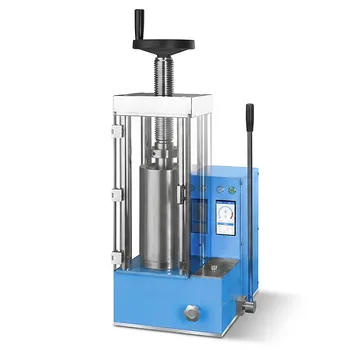
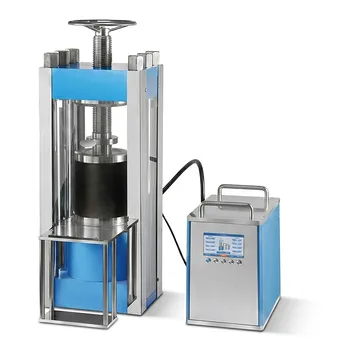
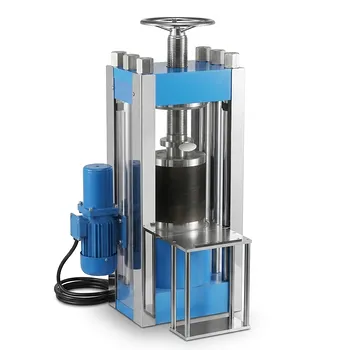
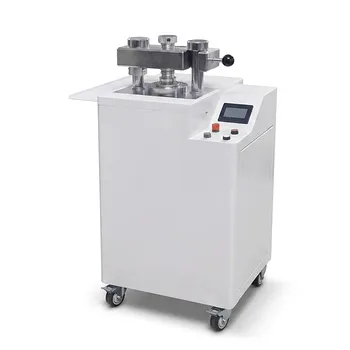
Precision starts with the right equipment. KINTEK specializes in comprehensive laboratory pressing solutions designed for the most demanding research environments. Whether you are advancing battery research or developing high-performance ceramics, our range of manual, automatic, heated, and glovebox-compatible models, alongside our advanced Cold (CIP) and Warm (WIP) Isostatic Presses, provides the uniform compaction your materials require.
Why choose KINTEK?
- Unmatched Uniformity: Achieve consistent density across complex shapes.
- Versatile Configurations: Solutions tailored for every lab footprint and temperature requirement.
- Expert Support: Our team helps you select the ideal press to eliminate porosity and maximize material integrity.
Ready to transform your powder consolidation process? Contact KINTEK today to find your perfect pressing solution!
Related Products
- Electric Isostatic Pressing Machine 40 Tons Automatic Laboratory Powder Compacting Press
- Warm Isostatic Press for Solid State Battery Research Warm Isostatic Press
- Automatic Lab Cold Isostatic Pressing CIP Machine
- Lab Isostatic Pressing Molds for Isostatic Molding
- Split Hot Isostatic Pressing Machine 150 Ton Laboratory Heated Isostatic Press
People Also Ask
- Why is vacuum-sealed packaging necessary before isostatic pressing of CuPc thin films? Protect Integrity & Uniformity
- How is pressure applied to the material during isostatic pressing? Master Uniform Density and Complex Geometries
- How does pressure distribute during isostatic pressing of aluminum? Achieve Uniform Density for Your Lab Materials
- What are the applications of isostatic pressing in the automotive industry? Precision Manufacturing for High-Performance Parts
- How is isostatic pressing utilized in the aerospace industry? Engineering High-Performance Aviation Components