The decisive processing advantage of using LPSCl sulfide solid electrolytes lies in their solid physical state. Unlike liquid electrolytes, which act as solvents that can dissolve transition metals, the solid structure of LPSCl creates a mechanically stable interface during assembly that physically inhibits the dissolution of manganese (Mn) from lithium-rich cathodes.
The substitution of liquid solvents with a solid LPSCl framework eliminates the primary medium for cathode degradation. This physical stability ensures that the electrochemical interface remains intact during assembly, directly enabling higher initial Coulombic efficiency and mitigating voltage decay.
The Structural Impact on Assembly Integrity
Inhibiting Manganese Dissolution
In traditional battery assembly, liquid electrolytes (such as 1 M LiPF6 mixtures) penetrate the porous structure of the cathode.
This interaction unfortunately facilitates the dissolution of manganese elements from the cathode material into the electrolyte.
By utilizing LPSCl, you introduce a solid-state barrier. This prevents the chemical leaching of manganese, preserving the structural integrity of the cathode material from the moment of assembly.
Establishing a Stable Solid-Solid Interface
Liquid electrolytes rely on "wetting" the electrode surfaces, which can lead to unstable interfaces prone to side reactions.
LPSCl electrolytes form a distinct solid-solid interface.
This stability is critical for mitigating voltage decay, a common issue in high-energy lithium-rich systems.
Enabling Electrochemical Activation
The robust interface formed during the processing of LPSCl allows for clear electrochemical activation.
This is particularly beneficial for lithium-rich cathodes.
Because the interface is stable, the cell can undergo reversible capacity growth during initial cycles, a feat often hampered by the instability of liquid electrolytes.
Mechanical Densification as a Processing Lever
Creating a Uniform Ion Path
While liquids naturally fill voids, solid electrolytes require specific mechanical processing to achieve conductivity.
Pre-pressing the LPSCl powder at a precise pressure of 125 MPa is essential.
This processing step eliminates voids between particles, ensuring a continuous and uniform path for ion conduction.
Forming a Low-Resistance Foundation
This densification process creates a mechanically stable separator layer.
This layer serves as a solid foundation for the subsequent coating of the anode layer.
The result is a low-resistance solid-solid interface that supports high-performance operation, provided the pressure is applied correctly.
Understanding the Processing Trade-offs
The Necessity of Precision Pressure
The advantage of stability comes at the cost of processing complexity.
Liquids are forgiving because they naturally wet surfaces; LPSCl requires mechanical force to function.
If the 125 MPa pressure is not applied uniformly, voids will remain, leading to high impedance and poor cell performance.
Interface Contact Challenges
A solid electrolyte cannot flow into electrode pores like a liquid.
This means the "point-to-point" contact between the solid electrolyte and the active material is more difficult to maintain than the "wetted" contact of a liquid.
Therefore, the assembly process relies heavily on mechanical densification to approximate the contact area that liquids achieve naturally.
Making the Right Choice for Your Goal
To maximize the benefits of LPSCl in your assembly process, tailor your approach based on your specific performance targets:
- If your primary focus is Cycle Life Stability: Prioritize the use of LPSCl with manganese-rich cathodes to leverage the material's ability to inhibit metal dissolution and prevent voltage decay.
- If your primary focus is Minimizing Resistance: Ensure your assembly protocol strictly adheres to the 125 MPa pre-pressing standard to eliminate voids and guarantee a dense, conductive separator layer.
Success in ASSB assembly requires shifting your focus from managing chemical volatility to mastering mechanical precision.
Summary Table:
| Feature | LPSCl Sulfide Solid Electrolyte | Traditional Liquid Electrolyte |
|---|---|---|
| Physical State | Solid-state framework | Liquid solvent |
| Cathode Interaction | Inhibits Mn dissolution | Facilitates metal leaching |
| Interface Type | Stable solid-solid interface | Volatile "wetted" interface |
| Assembly Focus | Mechanical densification (125 MPa) | Chemical wetting/saturation |
| Voltage Stability | High (mitigates voltage decay) | Lower (prone to side reactions) |
Elevate Your Battery Research with KINTEK
Transitioning to all-solid-state technology requires more than just materials—it demands mechanical precision. KINTEK specializes in comprehensive laboratory pressing solutions designed to meet the rigorous demands of sulfide electrolyte assembly.
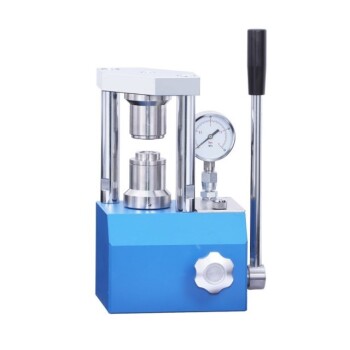
Whether you need to achieve the critical 125 MPa densification for LPSCl or require specialized environments for battery fabrication, our range of manual, automatic, heated, and glovebox-compatible models, alongside advanced cold and warm isostatic presses, ensures your research achieves maximum ionic conductivity and interface stability.
Ready to optimize your ASSB assembly process? Contact KINTEK today to find the perfect press for your laboratory.
References
- Donggu Im, Miyoung Kim. Elucidating the Electrochemical Activation Mechanism of a Li-Rich Layered Oxide Cathode for All-Solid-State Battery using 4D-STEM. DOI: 10.14293/apmc13-2025-0283
This article is also based on technical information from Kintek Solution Knowledge Base .
Related Products
- Warm Isostatic Press for Solid State Battery Research Warm Isostatic Press
- Lab Cylindrical Press Mold for Laboratory Use
- Laboratory Hydraulic Split Electric Lab Pellet Press
- Lab Button Battery Disassembly and Sealing Mold
- Lab Round Bidirectional Press Mold
People Also Ask
- Why must composite cathodes be sealed in vacuum lamination bags for WIP? Ensure Battery Stability and Density
- How do sacrificial volume materials (SVM) maintain microchannels in isostatic pressing? Ensure Structural Integrity
- What is the function of elastic molds in warm isostatic pressing? Achieve Uniform Density in Composite Particles
- What is the process involved in warm isostatic pressing? Mastering Uniform Density with WIP Technology
- How does Warm Isostatic Pressing differ from traditional pressing methods? Unlock Uniform Density for Complex Parts