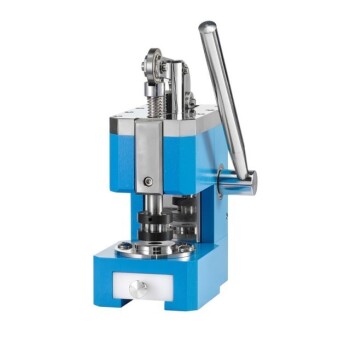
The primary purpose of a customized single-sided exposure specimen fixture is to mechanically isolate a specific area of the titanium foil coating for electrochemical testing. By physically sealing the back and sides of the sample, the fixture forces the current to pass exclusively through the intended front surface. This precise isolation eliminates external variables that often distort experimental data.
By defining the contact area and preventing edge effects, this fixture ensures that the resulting data reflects the intrinsic electrochemical activity of the coating rather than artifacts of the sample's geometry.
Achieving Precision in Measurement
Defining the Effective Contact Area
In electrochemical experiments, the accuracy of your data is directly tied to knowing exactly how much surface area is reacting.
A customized fixture precisely limits the effective contact area between the electrolyte and the titanium foil.
This ensures that the current density calculations—which rely on area— remain consistent and accurate across different trials.
Eliminating Edge Effects
When testing conductive foils, electrical current naturally tends to concentrate at the sharp edges of the sample.
This phenomenon, known as edge effects, creates localized areas of high activity that do not represent the coating's general performance.
By masking the edges, the fixture removes these deviations, ensuring the measurement reflects the uniform surface behavior.
Preventing Backside Interference
Titanium foil coatings often exhibit uneven growth on the back or unpolished sides of the sample.
If the electrolyte contacts the back of the foil, this uneven material will participate in the reaction and skew the results.
The fixture creates a physical barrier, sealing the back to ensure current flows only through the high-quality coating on the front.
Critical Considerations for Accuracy
The Necessity of a Perfect Seal
The reliability of this method hinges entirely on the integrity of the physical seal.
If the fixture does not seal perfectly against the foil, electrolyte will leak to the back or sides, immediately reintroducing the errors you are trying to avoid.
Sample Flatness Requirements
Because the fixture relies on physical sealing, the titanium foil must be sufficiently flat.
Wrinkles or deformations in the foil can prevent the fixture from defining the specific range of contact, leading to inconsistent exposure areas.
Making the Right Choice for Your Goal
To determine if this fixture is necessary for your specific application, consider your data requirements:
- If your primary focus is Fundamental Material Science: Use this fixture to capture the intrinsic activity of the coating without geometric interference.
- If your primary focus is Comparative Analysis: Use this fixture to ensure that measurement deviations are eliminated, allowing for a true apples-to-apples comparison between different coating batches.
By controlling the geometry of the test, you transform your results from a rough estimation of the sample into a precise characterization of the material.
Summary Table:
| Feature | Function in Electrochemical Testing | Benefit to Data Quality |
|---|---|---|
| Area Isolation | Defines precise contact area with electrolyte | Accurate current density calculations |
| Edge Masking | Prevents current concentration at sample borders | Eliminates localized activity artifacts |
| Physical Barrier | Seals the back and sides of titanium foil | Prevents interference from uneven backside growth |
| Mechanical Seal | Ensures no electrolyte leakage | Guaranteed experimental repeatability |
Optimize Your Electrochemical Research with KINTEK
Precise material characterization starts with the right equipment. KINTEK specializes in comprehensive laboratory pressing and testing solutions—ranging from manual and automatic presses to specialized fixtures for battery research.
Whether you are conducting fundamental material science or comparative coating analysis, our laboratory solutions ensure your results are free from geometric artifacts. Contact us today to discover how our high-precision tools and isostatic presses can enhance your lab's efficiency and data accuracy.
References
- S. Kim, Young‐Il Kim. Growth of Oxide and Nitride Layers on Titanium Foil and Their Electrochemical Properties. DOI: 10.3390/ma18020380
This article is also based on technical information from Kintek Solution Knowledge Base .
Related Products
- Lab Cylindrical Press Mold for Laboratory Use
- Lab Double Plate Heating Mold for Laboratory Use
- Lab XRF Boric Acid Powder Pellet Pressing Mold for Laboratory Use
- XRF KBR Plastic Ring Lab Powder Pellet Pressing Mold for FTIR
- Automatic Laboratory Hydraulic Press for XRF and KBR Pellet Pressing
People Also Ask
- What is the purpose of incorporating cartridge heaters into a lab press mold for MLCC block compression? Optimize Results
- Why is precise cooling management of the lab press mold necessary? Protect Core Integrity in Thermoforming
- What is the function of a pressing tool in thermoplastic panels? Master Precision Shaping & Fusion Bonding
- Why is a high-performance laboratory molding press critical for in-situ electrolyte formation? Unlock Battery Success
- How does the geometry of laboratory molds influence mycelium-based composites? Optimize Density and Strength