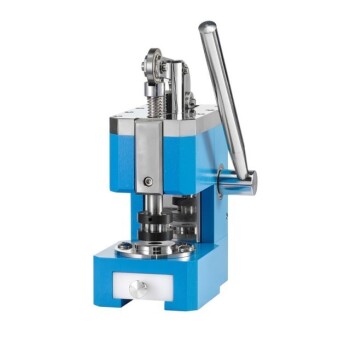
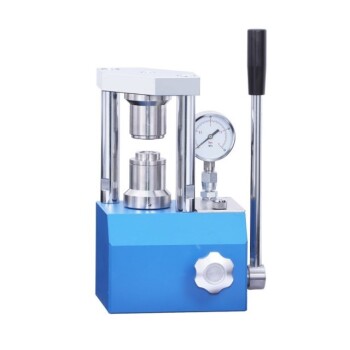
Laboratory manual compaction equipment serves as a critical baseline tool for defining the physical properties of phosphate composite brick mixtures. Its specific function is to apply a standardized amount of compaction energy—based on the Proctor test principle—to mixtures contained within steel cylindrical molds. This process allows researchers to rigorously evaluate how different mixture variations respond to pressure before committing to larger, pilot-scale production runs.
The core value of this equipment lies in its ability to isolate variables. By applying consistent energy to reach specific geometric ratios, it enables the precise identification of the optimum moisture content and maximum dry density for any given formula.
The Mechanics of Standardization
Applying the Proctor Principle
The equipment operates on the Proctor test principle, which is the industry standard for determining soil compaction properties.
By delivering a fixed amount of energy to the mixture, researchers can simulate the densification process in a controlled environment. This ensures that any changes in the brick's performance are due to formula adjustments, not inconsistent pressure.
Controlling Sample Geometry
A primary function of the equipment is to produce test specimens with precise dimensions.
The system is designed to achieve specific height-to-diameter ratios, such as 2:1. Creating samples with these exact proportions is essential for subsequent mechanical testing, ensuring that structural integrity data is valid and comparable.
Optimizing Formula Parameters
Determining Maximum Dry Density
The ultimate goal of using this equipment is to discover the highest density a mixture can achieve under standard pressure.
By compacting various iterations of the formula, you can pinpoint exactly which mixture yields the maximum dry density. High density is typically correlated with better strength and durability in the final composite brick.
Identifying Optimum Moisture Content
Water content is a critical variable in brick formulation; too little results in crumbling, while too much compromises strength.
This equipment allows you to plot density against moisture levels. Through this testing, you locate the optimum moisture content—the specific water ratio that allows the particles to slide into their densest possible configuration.
Understanding the Constraints
Manual Operation Variables
While effective for establishing baselines, manual equipment introduces a human element to the testing process.
Operators must be highly consistent in how they apply energy to ensure repeatability. Slight variations in manual technique can result in data spread that implies formula differences where none exist.
Scaling to Production
The data derived from laboratory manual compaction is a prediction, not a guarantee, of pilot-scale performance.
While it accurately identifies the potential of a formula, the forces applied by industrial hydraulic presses may differ from laboratory compaction energy. Therefore, these results should be treated as a gateway requirement for moving to pilot production, rather than final production specifications.
Making the Right Choice for Your Goal
To maximize the utility of laboratory manual compaction equipment in your optimization process:
- If your primary focus is formulation research: Ensure you strictly maintain the 2:1 height-to-diameter ratio to keep mechanical testing data comparable across all samples.
- If your primary focus is production scaling: Use the maximum dry density and optimum moisture content values found here as the initial target settings for your pilot-scale machinery.
Success in formula optimization begins with the precise, controlled definition of your material's density potential.
Summary Table:
| Key Optimization Parameter | Function in Formula Research | Impact on Final Brick Quality |
|---|---|---|
| Optimum Moisture Content | Identifies the exact water ratio for particle lubrication. | Prevents crumbling and ensures structural integrity. |
| Maximum Dry Density | Defines the highest density achievable under fixed pressure. | Directly correlates to mechanical strength and durability. |
| Proctor Principle | Standardizes compaction energy applied to the mixture. | Eliminates pressure variables for pure formula testing. |
| Sample Geometry (2:1) | Produces specimens with precise height-to-diameter ratios. | Ensures valid, comparable data for mechanical testing. |
Elevate Your Material Research with KINTEK
Precision in the lab is the foundation of excellence in production. At KINTEK, we specialize in comprehensive laboratory pressing solutions designed to streamline your formula optimization. Whether you are conducting foundational research on phosphate composite bricks or scaling up battery research, our range of manual, automatic, heated, and multifunctional models—including specialized cold and warm isostatic presses—ensures you achieve consistent, repeatable results.
Ready to optimize your compaction process? Contact our laboratory specialists today to find the perfect press for your research goals and experience the KINTEK advantage in precision engineering.
References
- Omar Inabi, Yassine Taha. Investigation of the Innovative Combined Reuse of Phosphate Mine Waste Rock and Phosphate Washing Sludge to Produce Eco-Friendly Bricks. DOI: 10.3390/buildings14092600
This article is also based on technical information from Kintek Solution Knowledge Base .
Related Products
- Lab Round Bidirectional Press Mold
- Manual Laboratory Hydraulic Press Lab Pellet Press
- Lab Polygon Press Mold
- Manual Laboratory Hydraulic Pellet Press Lab Hydraulic Press
- Laboratory Manual Heated Hydraulic Press Machine with Hot Plates
People Also Ask
- What is the purpose of incorporating cartridge heaters into a lab press mold for MLCC block compression? Optimize Results
- Why is precise cooling management of the lab press mold necessary? Protect Core Integrity in Thermoforming
- What is the function of a pressing tool in thermoplastic panels? Master Precision Shaping & Fusion Bonding
- Why is a high-performance laboratory molding press critical for in-situ electrolyte formation? Unlock Battery Success
- How do the design and geometric precision of pressing molds and mandrels affect the quality of PTFE composite samples?