
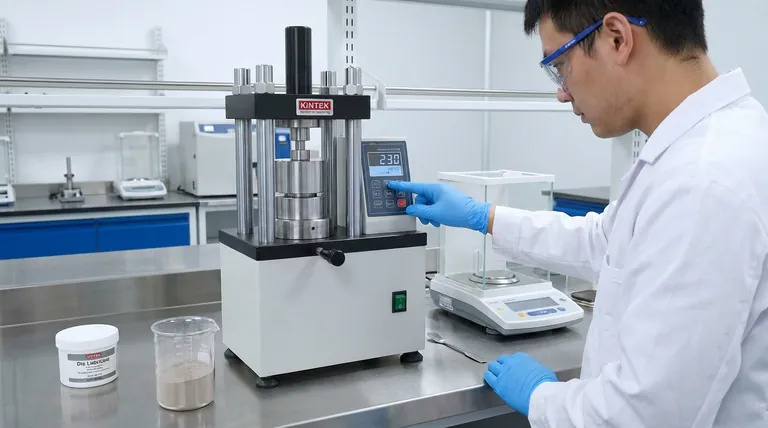
Protection against physical hazards and equipment failure is the foundation of safe pellet pressing. You must immediately prioritize standard Personal Protective Equipment (PPE), specifically gloves and safety glasses, to shield against particulate exposure and mechanical risks. Furthermore, strict adherence to the manufacturer’s operational instructions is the only way to ensure the machine operates within safe limits.
Safety in pellet pressing extends beyond personal gear; it requires maintaining the structural integrity of your high-pressure tools. While PPE protects the operator, proper lubrication and material selection protect the die from catastrophic failure, ensuring both safety and pellet quality.
Personal Protection Protocols
Essential Protective Gear
When handling powdered samples, the risk of inhalation or eye contact with fine particulates is significant. Always wear safety glasses to protect your eyes from debris or powder.
Simultaneously, use appropriate gloves to prevent skin contact with potentially hazardous sample materials. This creates a necessary barrier between the operator and the chemical or physical irritants in the powder.
Operational Compliance
Every pellet press has specific limits and operating procedures designed by the engineer. You must follow the manufacturer’s instructions without deviation.
Ignoring these guidelines not only compromises the quality of your pellets but introduces significant safety risks. Proper operation ensures the equipment performs optimally and safely.
Equipment Integrity as a Safety Factor
Mitigating Die Wear
The condition of the metal die is a critical safety consideration. Material wear in the die can compromise its structural integrity under pressure.
Excessive wear not only reduces the life of the die but also degrades the quality of the resulting pellet. A worn die is more likely to fail, potentially causing hazards during the pressing process.
Material Selection and Lubrication
To prevent dangerous wear, utilize hardened steel dies. These are significantly more resistant to the abrasive nature of powdered samples than standard materials.
Additionally, you must apply proper lubrication to the die assembly. Lubrication reduces friction during pressing, which preserves the die's surface and reduces the mechanical stress on the system.
Routine Inspection
Safety relies on proactive maintenance rather than reactive repairs. Conduct regular inspections of the pellet press and die assembly.
This allows you to identify wear issues early before they become critical failures. addressing these issues immediately maintains the safety profile of the entire operation.
Understanding the Trade-offs
Maintenance Time vs. Operational Uptime
Implementing a rigorous inspection and lubrication schedule requires time and discipline. It may seemingly slow down the immediate workflow compared to running samples continuously.
However, neglecting these steps to save time increases the risk of catastrophic die failure. The trade-off for speed is often damaged equipment and compromised safety.
Cost of Quality Materials
Using hardened steel dies represents a higher initial investment than softer alternatives.
While the upfront cost is higher, the resistance to wear ensures a longer service life and safer operation. Cheaper materials may suffice for short-term use but pose greater risks and replacement costs over time.
Ensuring Long-Term Safety and Quality
To maintain a safe laboratory environment while producing high-quality pellets, align your procedures with your specific operational goals.
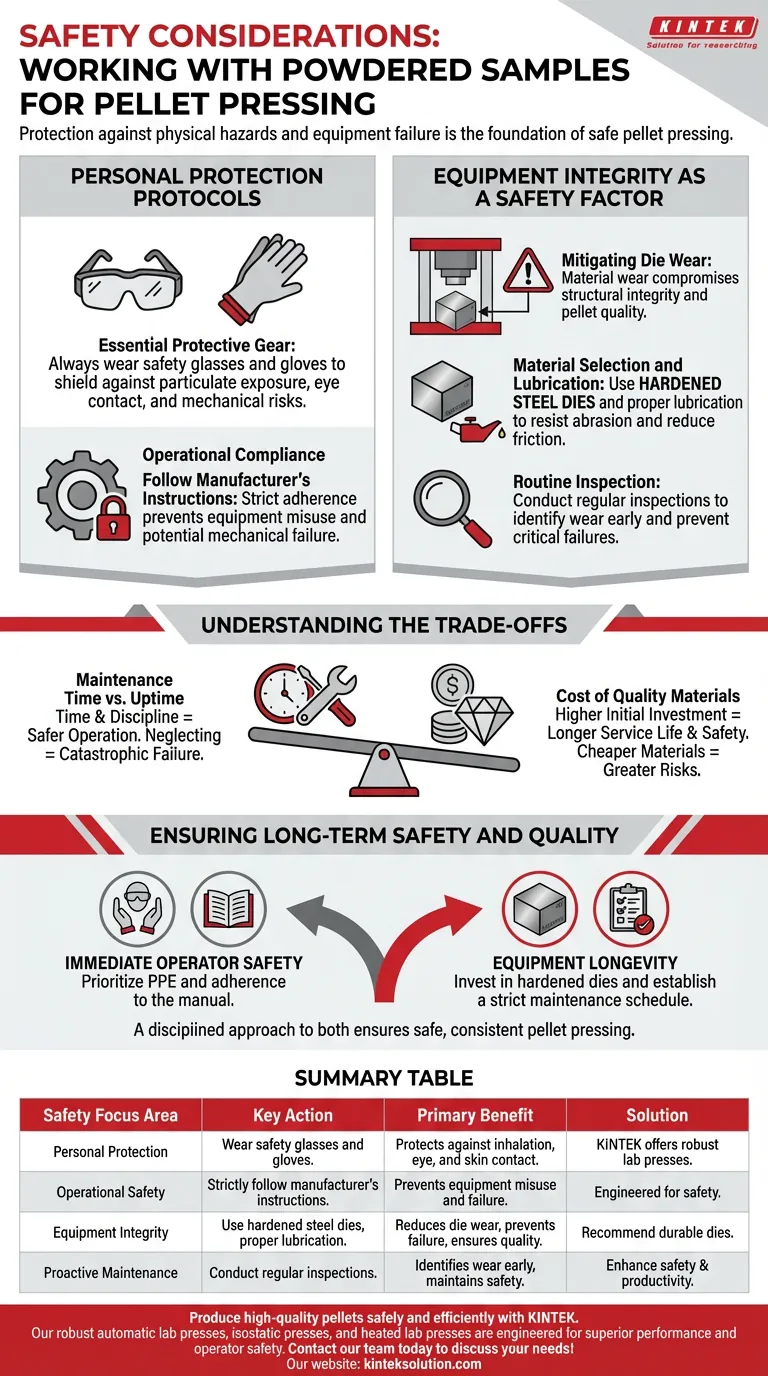
- If your primary focus is immediate operator safety: Prioritize wearing safety glasses and gloves, and strictly adhere to the manufacturer's operational manual.
- If your primary focus is equipment longevity: Invest in hardened steel dies and establish a strict schedule for lubrication and wear inspection.
A disciplined approach to both personal protection and equipment maintenance is the only way to ensure safe, consistent pellet pressing.
Summary Table:
| Safety Focus Area | Key Action | Primary Benefit |
|---|---|---|
| Personal Protection | Wear safety glasses and gloves. | Protects against inhalation, eye, and skin contact with hazardous powders. |
| Operational Safety | Strictly follow manufacturer's instructions. | Prevents equipment misuse and potential mechanical failure. |
| Equipment Integrity | Use hardened steel dies and apply proper lubrication. | Reduces die wear, prevents catastrophic failure, and ensures pellet quality. |
| Proactive Maintenance | Conduct regular inspections of the press and die. | Identifies wear issues early, maintaining long-term safety and performance. |
Produce high-quality pellets safely and efficiently with KINTEK.
Our robust automatic lab presses, isostatic presses, and heated lab presses are engineered for superior performance and built with operator safety as a core principle. We provide detailed operational guidelines and recommend durable, hardened steel dies to minimize wear and extend equipment life.
Let KINTEK's expertise enhance your laboratory's safety and productivity. Contact our team today to discuss your specific pellet pressing needs and find the perfect solution for your lab.
Visual Guide
Related Products
- Laboratory Hydraulic Split Electric Lab Pellet Press
- Laboratory Hydraulic Pellet Press for XRF KBR FTIR Lab Press
- Manual Laboratory Hydraulic Pellet Press Lab Hydraulic Press
- Automatic Laboratory Hydraulic Press Lab Pellet Press Machine
- Automatic Laboratory Hydraulic Press for XRF and KBR Pellet Pressing
People Also Ask
- What are the emerging trends in the design and materials of lab pellet presses? Modernize Your Lab Efficiency
- How do lab pellet presses support customization and flexibility? Optimize Your Sample Prep for Any Material
- What are common lab pellet press issues? Expert Troubleshooting Guide for Reliable Material Research
- What are the common operational types of lab pellet presses? Choosing the Right Manual, Automatic, or Hydraulic System
- Why use a laboratory pellet press for solid-state battery evaluation? Ensure Accuracy in Interface Stability Testing



















