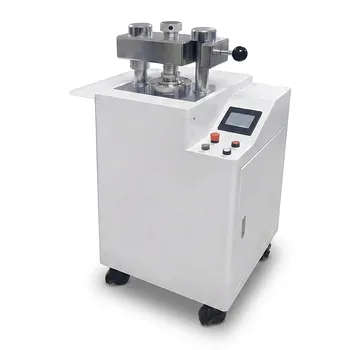
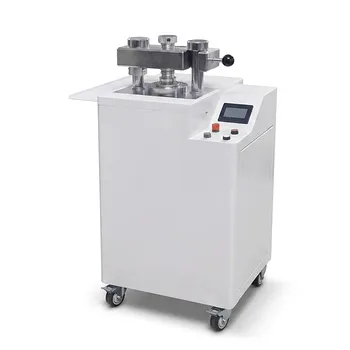
A ring XRF pellet die is specifically designed for situations where a sample must be pressed directly into a permanent metal supporting ring. This tooling is most critically used for X-ray fluorescence (XRF) spectrometers equipped with automated loading systems, where the mechanical stability of the sample is non-negotiable.
The ring die is the standard solution for high-throughput automation. It secures the sample within a rigid metal perimeter during compression, ensuring the resulting pellet is robust enough for robotic handling and suitable for long-term storage.
The Primary Use Case: Automation and Stability
Ensuring Mechanical Integrity
Automated spectrometers frequently use robotic arms or carousel mechanisms to load samples.
A standard pressed pellet is relatively fragile and prone to chipping or breaking during this mechanical handling.
The ring die addresses this by pressing the powder directly into a solid metal ring. This ring acts as a protective chassis, allowing the automation system to grip and move the sample without damaging the analyzed surface.
Adhering to Industry Dimensions
For these automated systems to function, the sample holder must meet precise physical specifications.
The ring die is engineered to hold these specific rings in place during the pressing process.
The most common standard for this application is a ring with a 51.5 mm outer diameter and a 35 mm inner diameter for the actual sample material.
Sample Archiving and Protection
Long-Term Storage
Beyond immediate analysis, ring dies are the preferred method when samples must be kept for future reference.
The metal ring protects the edges of the pellet, which are the most vulnerable points for degradation or crumbling.
This allows laboratories to re-analyze samples later without needing to re-mill and re-press the material.
Understanding the Trade-offs and Pitfalls
Material Contamination Risks
While the ring provides structural support, the material of the die itself is a critical variable.
If you are analyzing for elements like Iron (Fe), you should avoid standard stainless steel dies.
In these cases, Tungsten Carbide die pellets are the necessary alternative to prevent the die from contaminating the sample surface with iron during the high-pressure pressing process.
Binding Limitations
The metal ring provides external support, but it does not solve internal cohesion issues.
If a sample does not bind well on its own, it may still crumble inside the ring.
For these materials, a wax binder (powder or tablet) must be added during the milling stage. It is vital to use the minimum amount of binder necessary to maintain sample integrity without diluting the analytical signal.
Making the Right Choice for Your Goal
To select the correct die configuration, assess your laboratory's specific workflow requirements:
- If your primary focus is automated analysis: Use a ring die (51.5 mm OD) to ensure your samples can withstand the physical stress of robotic loading systems.
- If your primary focus is trace element accuracy: Verify your die material compatibility; choose Tungsten Carbide over stainless steel if analyzing for iron to avoid contamination.
- If your primary focus is difficult-to-press samples: Do not rely on the ring alone; incorporate a wax binder during milling to ensure the pellet remains cohesive within the ring.
The ring die is not just a pressing tool; it is a structural integration step that bridges sample preparation with high-volume spectrometer automation.
Summary Table:
| Feature | Ring XRF Pellet Die Specification/Requirement |
|---|---|
| Primary Application | Automated XRF loading systems and robotic handling |
| Standard Dimensions | 51.5 mm Outer Diameter / 35 mm Inner Diameter |
| Key Benefit | Enhanced mechanical stability and edge protection |
| Storage Suitability | Excellent for long-term archiving and re-analysis |
| Die Material Choice | Tungsten Carbide (to avoid Fe contamination) or Stainless Steel |
| Binding Support | Compatible with wax binders for low-cohesion powders |
Maximize Your Lab’s Throughput with KINTEK
Ensure your samples withstand the rigors of automation with KINTEK’s specialized pressing solutions. As experts in laboratory equipment, KINTEK offers a comprehensive range of manual, automatic, and multifunctional presses designed for precision and durability. Whether you are conducting battery research or high-volume industrial analysis, our cold and warm isostatic presses and high-quality XRF dies provide the mechanical integrity your workflow demands.
Ready to upgrade your sample preparation? Contact KINTEK today to find the perfect glovebox-compatible or automated pressing system for your laboratory.
Related Products
- XRF KBR Steel Ring Lab Powder Pellet Pressing Mold for FTIR
- XRF KBR Plastic Ring Lab Powder Pellet Pressing Mold for FTIR
- Lab XRF Boric Acid Powder Pellet Pressing Mold for Laboratory Use
- Lab Ring Press Mold for Sample Preparation
- Automatic Fluorescence Sample Preparation Press 40 Ton Lab Pellet Press for XRF Analysis
People Also Ask
- What considerations are important regarding the die size of an XRF pellet press? Optimize for Your XRF Spectrometer and Sample
- Why are pellets used in XRF analysis, and what is their limitation? Boost Accuracy and Speed in Your Lab
- What is the general process for preparing a sample pellet for XRF? Master Consistency for Accurate Analysis
- What are the differences between manual and automatic XRF pellet presses? Choose the Right Press for Your Lab's Needs
- What are the different types of XRF pellet preparation methods available? Manual, Hydraulic, and Automated Presses Explained