Isostatic pressing is a pivotal manufacturing process in the automotive industry, specifically utilized to produce high-performance engine parts and critical safety components. This technique is the standard for manufacturing pistons, cylinder heads, brake pads, and clutch plates where structural integrity and precision are non-negotiable.
Core Takeaway Isostatic pressing creates parts with superior uniformity and density by applying equal pressure from all directions. This makes it the ideal choice for automotive components that must endure extreme mechanical stress and require exacting precision, such as engine internals and friction materials.
High-Performance Engine Applications
The primary application of isostatic pressing in automotive manufacturing is the creation of drivetrain components that must survive harsh operating environments.
Pistons and Cylinder Heads
The internal combustion engine subjects components to intense heat and repetitive mechanical stress. Isostatic pressing is used to manufacture pistons and cylinder heads because it ensures high strength and durability. By eliminating internal voids and inconsistencies, the process prevents fatigue failure in these critical engine parts.
Critical Safety and Precision Components
Beyond raw strength, the automotive industry relies on isostatic pressing for components that demand high dimensional accuracy and consistency.
Brake Pads and Clutch Plates
Brake pads and clutch plates rely on friction to function, meaning their material composition must be uniform throughout. The industry employs isostatic pressing to create these parts because it delivers high precision and accuracy. This ensures that safety systems perform reliably and that power transmission components engage smoothly without premature wear.
How the Process Ensures Quality
To understand why this method is chosen over others, one must look at the mechanics described in the supplementary references.
Uniform Pressure Application
Unlike traditional pressing, which compresses material from one direction, isostatic pressing applies pressure equally from all directions. Metal powder is confined within a flexible membrane or hermetic container, and a liquid or gas medium is used to exert this omnidirectional force.
Elimination of Shear Stresses
Because the pressure is isotropic (uniform in all directions), the material creates a consistent structure. This method effectively eliminates the non-physical shear stresses often associated with uniaxial (single-direction) loading. The result is a component with uniform density and identical material properties throughout the entire part.
Understanding the Trade-offs
While isostatic pressing offers superior material properties, it involves distinct operational considerations compared to standard manufacturing.
Complexity vs. Material Integrity
Standard uniaxial pressing is often simpler but can result in uneven density gradients within a part. Isostatic pressing requires more complex setups, involving pressurizing mediums (gas or liquid) and flexible containers. The trade-off is accepting a more involved process to achieve a "self-sealing" effect and uniform load distribution that simpler methods cannot replicate.
Material Versatility
The process is highly versatile, capable of handling various materials. While metal powders are common for engines, Warm Isostatic Presses (WIPs) can process plastics and laminated products. However, selecting the correct pressurizing medium and temperature range is critical for the specific material type being formed.
Making the Right Choice for Your Goal
When evaluating isostatic pressing for automotive manufacturing, align the process with your specific engineering requirements.
- If your primary focus is Durability: Utilize this process for engine components like pistons to ensure they withstand high combustion pressures without failure.
- If your primary focus is Precision: Choose this method for friction components like brake pads to guarantee consistent performance and safety.
Isostatic pressing transforms raw powder into high-integrity automotive components by ensuring that strength and density are uniform in every dimension.
Summary Table:
| Application Category | Specific Automotive Components | Key Manufacturing Benefit |
|---|---|---|
| High-Performance Engine | Pistons, Cylinder Heads | Eliminates voids, prevents fatigue failure under high heat |
| Safety & Friction | Brake Pads, Clutch Plates | Uniform material density for consistent friction performance |
| Drivetrain | Gear components, Transmission parts | Superior structural integrity and dimensional accuracy |
| Material Processing | Metal powders, laminated plastics | Uniformity via omnidirectional (isotropic) pressure |
Elevate Your Manufacturing Precision with KINTEK
Are you looking to enhance the structural integrity and performance of your automotive or laboratory components? KINTEK specializes in comprehensive laboratory pressing solutions tailored to your specific engineering needs. From Cold (CIP) and Warm Isostatic Presses (WIP) to manual, automatic, and heated models, our equipment is widely trusted in battery research and advanced materials manufacturing.
Why choose KINTEK?
- Uniform Density: Achieve superior material properties with isotropic pressure application.
- Versatile Solutions: Explore our range of multifunctional and glovebox-compatible presses.
- Expert Support: We help you select the ideal pressurizing medium and temperature range for your goals.
Ready to transform your production quality? Contact KINTEK today for a consultation and let us help you achieve uniform strength in every dimension.
Related Products
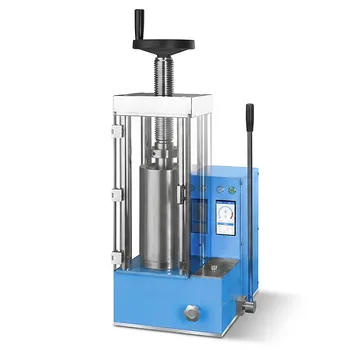
- Electric Isostatic Pressing Machine 40 Tons Automatic Laboratory Powder Compacting Press
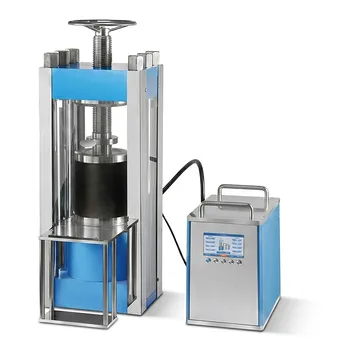
- Warm Isostatic Press for Solid State Battery Research Warm Isostatic Press
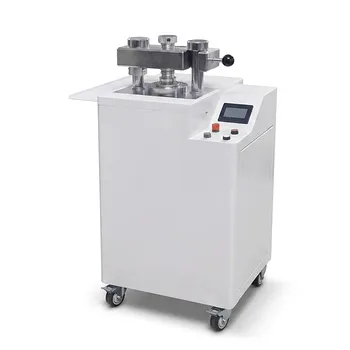
- Split Warm Isostatic Lab Press 200 Ton Powder Compaction Chamber for Battery Research and Material Science
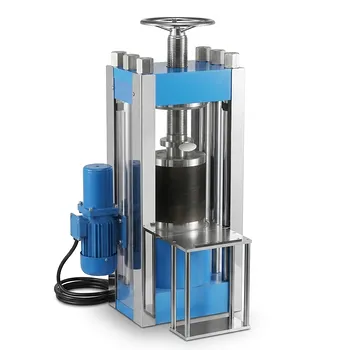
- Electric Lab Cold Isostatic Press CIP Machine
- Split Hot Isostatic Pressing Machine 150 Ton Laboratory Heated Isostatic Press
People Also Ask
- What are the key characteristics of the isostatic pressing process? Unlock Uniform Density and Complex Geometries
- Why is vacuum-sealed packaging necessary before isostatic pressing of CuPc thin films? Protect Integrity & Uniformity
- How is pressure applied to the material during isostatic pressing? Master Uniform Density and Complex Geometries
- How does pressure distribute during isostatic pressing of aluminum? Achieve Uniform Density for Your Lab Materials
- How is isostatic pressing utilized in the aerospace industry? Engineering High-Performance Aviation Components