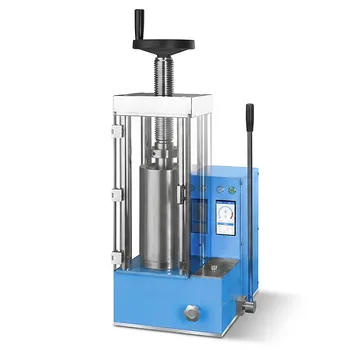
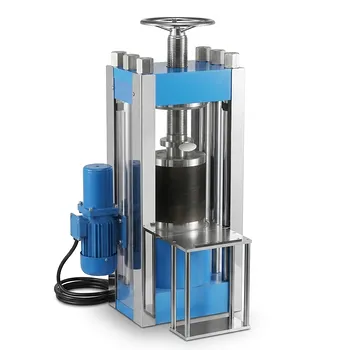
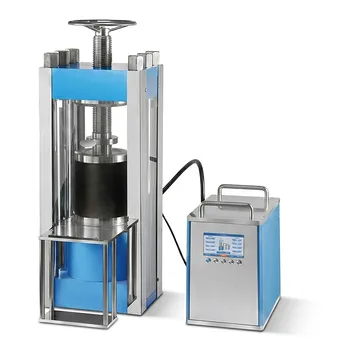
The primary benefits of the Cold Isostatic Pressing (CIP) process stem from its ability to apply uniform pressure from all directions, resulting in superior material properties and design flexibility. This method excels at producing parts with predictable shrinkage, high structural integrity, and complex geometries that would be difficult or expensive to achieve with standard machining.
The Core Value of CIP Cold Isostatic Pressing transforms powder manufacturing by decoupling part complexity from production cost. It ensures uniform density throughout the material, allowing for the creation of intricate, near-net shapes that require minimal post-processing while maintaining exceptional dimensional accuracy.
Achieving Material Uniformity and Quality
The most distinct technical advantage of CIP is the elimination of internal stress gradients commonly found in uniaxial pressing.
Predictable Shrinkage and Density
Because pressure is applied isostatically (equally from all sides), the powder compacts with high uniformity. This leads to consistent and predictable shrinkage during the subsequent sintering phase. Manufacturers can rely on high dimensional accuracy, reducing the variability often seen in other compaction methods.
Superior Internal Integrity
The CIP process significantly reduces the risk of common defects such as air entrapment and voids. By subjecting the material to uniform hydraulic pressure, the process minimizes distortion and ensures a homogenous internal structure. This results in improved material quality, providing a solid foundation for parts requiring high reliability.
Unlocking Design Freedom
CIP allows engineers to produce geometries that are often limited by the constraints of rigid die pressing.
Complex and Near-Net Shapes
The process is capable of forming large, complex, and "near-net" shapes in a single step. This capability reduces the reliance on extensive machining to achieve the final form. By molding parts closer to their final dimensions, manufacturers save significantly on raw material waste and labor costs.
High Aspect Ratio Capabilities
CIP is particularly effective for producing parts with long, slender profiles. It can successfully manufacture components with aspect ratios greater than 2:1 while maintaining uniform density along the entire length. This is a critical advantage for producing tubes, rods, or other elongated structural components.
Optimizing Process Economics
Beyond the physical properties of the part, CIP offers specific operational advantages that streamline the manufacturing workflow.
High Green Strength
The process imparts sufficient strength to the unsintered ("green") part to allow for safe handling. This "green strength" is vital for moving parts between processing stages without breakage. It lowers production fallout rates and facilitates necessary in-process handling before the final sintering step.
Cost and Time Efficiency
By reducing the need for post-treatment machining, CIP cuts down on total cycle times. The ability to process large batches or complex shapes without expensive, complex rigid tooling further improves cost efficiency. Additionally, the process minimizes material loss, as there is no melting or chemical reaction involved during compaction.
Understanding the Trade-offs
While CIP offers exceptional density control, it is essential to recognize its processing context to ensure it fits your production model.
The "Green" State Limitation
It is important to remember that CIP creates a green body, typically achieving 60% to 80% of theoretical density. The part is not fully dense immediately after pressing; it requires a subsequent sintering process to achieve final hardness and strength. Therefore, CIP is rarely a standalone solution but rather a critical preparatory step in a larger powder metallurgy workflow.
Making the Right Choice for Your Goal
To maximize the value of Cold Isostatic Pressing, align the process benefits with your specific manufacturing targets.
- If your primary focus is Dimensional Precision: Leverage the uniform density of CIP to ensure predictable shrinkage and tight tolerances during sintering.
- If your primary focus is Cost Reduction: Utilize CIP’s near-net shape capability to drastically reduce raw material waste and expensive machining time.
- If your primary focus is Part Geometry: Use CIP to manufacture long, slender parts (high aspect ratios) that would suffer from density gradients if produced via uniaxial pressing.
By balancing the need for complex geometry with the requirement for uniform internal structure, CIP provides a robust solution for high-performance component manufacturing.
Summary Table:
| Benefit | Technical Advantage | Impact on Manufacturing |
|---|---|---|
| Material Uniformity | Equal pressure from all sides | Consistent shrinkage and high dimensional accuracy |
| Design Flexibility | Isostatic hydraulic pressure | Creation of complex near-net shapes and high aspect ratios |
| Structural Integrity | Eliminates stress gradients | Reduced voids, air entrapment, and internal defects |
| Process Efficiency | High green strength | Easier handling and significant reduction in machining costs |
| Cost Savings | Minimal material waste | Lower raw material consumption and shorter cycle times |
Elevate Your Material Research with KINTEK Solutions
Unlock the full potential of your powder manufacturing with KINTEK’s precision Cold Isostatic Pressing (CIP) technology. Whether you are developing next-generation battery components or high-performance ceramics, our equipment ensures the uniform density and structural integrity your research demands.
Why choose KINTEK?
- Comprehensive Laboratory Solutions: From manual and automatic to heated and glovebox-compatible models.
- Advanced Isostatic Pressing: Specialized cold and warm isostatic presses designed for superior material performance.
- Expert Support: Specialized guidance to help you choose the right pressing solution for your specific application.
Ready to transform your production workflow? Contact us today to discover how KINTEK’s laboratory pressing solutions can enhance your efficiency and innovation.
Related Products
- Electric Lab Cold Isostatic Press CIP Machine
- Electric Split Lab Cold Isostatic Pressing CIP Machine
- Automatic Lab Cold Isostatic Pressing CIP Machine
- Manual Cold Isostatic Pressing CIP Machine Pellet Press
- Electric Isostatic Pressing Machine 40 Tons Automatic Laboratory Powder Compacting Press
People Also Ask
- What role do electric lab cold isostatic presses play in industrial contexts? Bridge R&D and Manufacturing with Precision
- What are the applications of electric lab cold isostatic presses in research settings? Advance Material R&D with High-Pressure CIPs
- How does electrical Cold Isostatic Pressing (CIP) contribute to cost savings? Unlock Efficiency and Reduce Expenses
- What are some research applications of electric lab CIPs? Unlock Uniform Powder Densification for Advanced Materials
- What are the characteristics of standard off-the-shelf electric lab CIP solutions? Achieve Immediate, Cost-Effective Processing