The necessity of high-performance sealing gaskets in Lithium-Sulfur (Li-S) battery testing stems from the aggressive nature of the cell chemistry and the critical need for environmental isolation. Unlike standard batteries, Li-S units utilize volatile solvents like DME and DOL that can degrade inferior seals, leading to leaks and safety hazards. Furthermore, these gaskets are essential for protecting the highly reactive lithium metal anode from atmospheric moisture and oxygen, ensuring the validity of your electrochemical data.
High-performance gaskets are not merely accessories; they are fundamental to Li-S battery reliability. They function as the primary defense against solvent evaporation and atmospheric contamination, compensating for mechanical imperfections to preserve the integrity of your experimental results.
Chemical Resistance and Solvent Containment
Handling Aggressive Solvents
Lithium-Sulfur electrolytes frequently rely on ether-based solvents such as Dimethoxyethane (DME) and Dioxolane (DOL).
These solvents are highly volatile and chemically aggressive. Standard rubber seals often swell or degrade when exposed to them, causing seal failure and electrolyte leakage.
Preventing Electrolyte Evaporation
High-performance gaskets, such as those made from fluoroelastomers, provide the chemical resistance necessary to contain these volatile liquids.
By preventing internal electrolyte evaporation, the gasket maintains the precise chemical concentration required for the reaction. This ensures that test data remains consistent over long-term cycling.
Protecting Sensitive Cell Chemistry
Shielding the Lithium Anode
The anode in a Li-S battery is typically composed of metallic lithium, which is extremely sensitive to moisture and oxygen.
Even trace amounts of atmospheric exposure can cause the lithium to corrode or react violently. A high-performance gasket acts as a robust barrier to prevent this degradation.
Creating an Airtight Barrier
To generate reliable data, the internal environment of the cell must be completely isolated from the external lab atmosphere.
The gasket forms an airtight seal that locks out contaminants. This isolation is the only way to ensure that observed performance changes are due to the battery chemistry, not external interference.
Mechanical Stability Under Pressure
Compensating for Microscopic Deformations
Battery test cells are mechanically fastened, often under significant high pressure.
The rigid components of the cell may have microscopic deformations or surface irregularities. Without a compliant gasket, these imperfections would create pathways for leaks.
Ensuring a Continuous Seal
High-performance gaskets deform elastically to fill these microscopic gaps.
This ability to "flow" into imperfections ensures a hermetic seal is maintained even when the cell hardware is subjected to the mechanical stress of fastening.
Understanding the Risks of Inferior Sealing
The Danger of "Phantom" Failure
Using low-quality gaskets can introduce variables that mimic battery failure.
If electrolyte evaporates or moisture enters, the cell performance will drop, leading you to incorrectly believe the battery chemistry is at fault. This wastes valuable research time troubleshooting the wrong problem.
Laboratory Safety Hazards
Beyond data integrity, the containment of DME and DOL is a safety imperative.
These solvents are flammable and toxic. A compromised seal releases hazardous vapors into the laboratory environment, posing a direct risk to personnel.
Ensuring Data Integrity in Your Experiments
Selecting the correct sealing material is as critical as selecting the active materials for your electrodes.
- If your primary focus is long-term reliability: Prioritize fluoroelastomer gaskets to prevent solvent evaporation, ensuring your electrolyte volume remains constant over weeks of testing.
- If your primary focus is anode protection: Ensure the gasket specifications guarantee an airtight seal to completely rule out moisture-induced corrosion of the lithium metal.
Your choice of gasket defines the boundary between a controlled experiment and a compromised test.
Summary Table:
| Feature | Importance in Li-S Battery Testing | Benefit of High-Performance Gaskets |
|---|---|---|
| Chemical Resistance | DME/DOL solvents are highly aggressive and volatile | Prevents seal swelling, degradation, and electrolyte leakage |
| Atmospheric Shielding | Lithium anodes react violently with O2 and moisture | Provides a hermetic barrier to maintain internal chemical purity |
| Mechanical Compliance | Hardware surfaces often have microscopic irregularities | Elastically deforms to fill gaps, ensuring a continuous airtight seal |
| Data Integrity | External contaminants can mimic battery failure | Eliminates "phantom failures" and ensures results reflect actual chemistry |
| Lab Safety | Electrolyte solvents are flammable and toxic | Prevents the release of hazardous vapors into the workspace |
Maximize Your Battery Research Precision with KINTEK
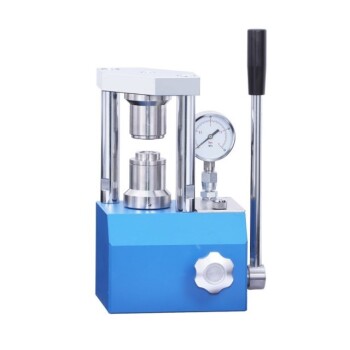
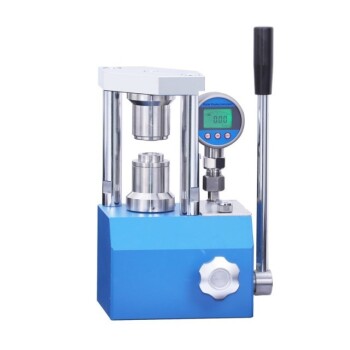
Don't let inferior seals compromise your data or laboratory safety. KINTEK specializes in comprehensive laboratory pressing solutions, offering manual, automatic, heated, multifunctional, and glovebox-compatible models, as well as cold and warm isostatic presses widely applied in battery research.
Whether you are testing next-generation Li-S cells or developing high-capacity electrodes, our equipment ensures the mechanical stability and environmental isolation your research demands.
Ready to elevate your lab's performance? Contact us today to find the perfect solution for your battery research needs!
References
- Fritz Wortelkamp, Ingo Krossing. Electrolyte‐Dependent Electrode Potentials in Lithium–Sulfur Batteries. DOI: 10.1002/celc.202500109
This article is also based on technical information from Kintek Solution Knowledge Base .
Related Products
- Lab Button Battery Tablet Press Sealing Mold
- Button Battery Sealing Press Machine for Lab
- Lab Button Battery Disassembly and Sealing Mold
- Manual Button Battery Sealing Machine for Battery Sealing
- Button Battery Sealing Machine for Button Batteries
People Also Ask
- How does a sealed battery mold facilitate the assembly and testing of asymmetric supercapacitors using VO2?
- Why use standardized CR2032 components & high-precision presses? Ensure reliability in lithium metal battery research.
- Why is a laboratory battery sealing press essential for desolvation energy testing? Ensure Reliable Kinetic Data
- What is the function of specialized battery molds and sealing consumables? Optimize Your In-situ XRD Testing Today
- What role does a laboratory sealing press play in thermal analysis of solid dispersion films? Ensure Data Integrity