The process of making a Potassium Bromide (KBr) pellet generally involves mixing a finely ground sample with KBr powder at a specific ratio and compressing it into a solid, transparent disc. Specifically, you must mix the sample (typically 1–2% by weight) with the KBr, load the mixture into a die set, and use a hydraulic press to apply high pressure until the powder fuses into a pellet suitable for analysis.
The secret to a high-quality pellet lies not just in the pressing, but in minimizing moisture and ensuring the correct sample-to-KBr ratio to prevent optical scattering.
Critical Preparation Steps
Managing Moisture
Moisture is the enemy of a clear KBr pellet. Before beginning, heat the anvils and the die set body to ensure they are completely dry.
Material Equilibrium
Ensure your KBr powder is kept dry and is at the same temperature as the die set and anvils. Temperature discrepancies can cause condensation, leading to cloudy, wet pellets that yield poor spectral data.
Mixing and Loading
Establishing the Ratio
Mix your sample with the KBr powder at a ratio of 1% to 2% sample by weight. This low concentration is vital for ensuring the pellet is transparent to infrared light.
Grinding Strategy
Thoroughly grind the sample material into a fine powder before mixing it with the KBr. Once combined, mix them to ensure homogeneity, but do not grind the KBr itself excessively, as this exposes crystal facets that attract atmospheric moisture.
Loading the Die
Place the mixture into the die assembly. It is critical to use as little powder as possible—just enough to create a thin, even coat on the anvil face.
The Pressing Procedure
Eliminating Air
If your equipment allows, apply a vacuum of several mm Hg to the die set before pressing. This degassing step removes trapped air and moisture, which are significant sources of spectral interference.
Applying Pressure
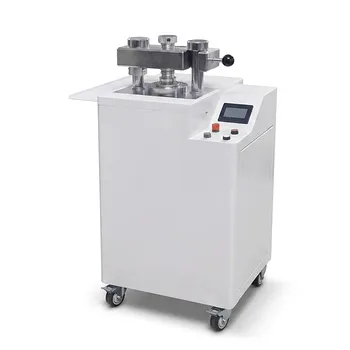
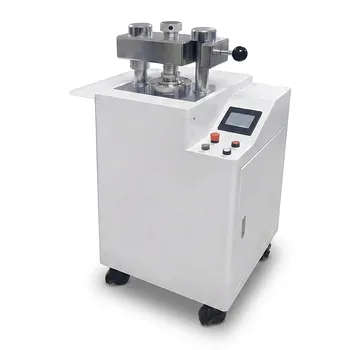
Place the die set in a hydraulic press. Apply a force of approximately 8 tons and maintain this pressure for several minutes.
Ejection
After the hold time, release the pressure and carefully eject the pellet from the die set. It should appear as a compact, dense, and transparent disc ready for the sample holder.
Understanding the Trade-offs
The Risk of Excess Powder
A common mistake is using too much KBr powder. This requires excessive force to compress; if that force is not met, the pellet may contain white spots or become wedged in the die, making extraction difficult.
Moisture Sensitivity
KBr is hygroscopic, meaning it naturally absorbs water from the air. If the preparation environment is not sufficiently dry, the pellet will absorb moisture, causing significant background noise in the 3300 cm⁻¹ region of the spectrum.
Pressure Balance
Pressure control is delicate. Excessive pressure can crack the pellet, rendering it useless. Conversely, insufficient pressure will result in an opaque pellet that scatters light, degrading the quality of your analysis.
Making the Right Choice for Your Goal
To ensure your KBr pellet yields actionable data, focus on these specific parameters:
- If your primary focus is Optical Clarity: Prioritize heating your die set and applying a vacuum before pressing to eliminate air and moisture pockets.
- If your primary focus is Spectral Accuracy: Strictly adhere to the 1-2% sample ratio and ensure the sample is ground finely to prevent light scattering.
By controlling moisture and resisting the urge to overfill the die, you ensure the resulting pellet provides a clean, reliable window into your material's chemical structure.
Summary Table:
| Step | Critical Action | Key Requirement |
|---|---|---|
| Preparation | Moisture Removal | Pre-heat die set and anvils to prevent condensation |
| Mixing | Sample-to-KBr Ratio | 1% to 2% sample by weight for optical transparency |
| Grinding | Particle Size | Fine grind sample before mixing; avoid over-grinding KBr |
| Degassing | Vacuum Application | Apply vacuum to remove trapped air and moisture |
| Pressing | Hydraulic Force | Apply ~8 tons of pressure for several minutes |
| Result | Pellet Quality | Clear, transparent disc without white spots or cracks |
Elevate Your FTIR Precision with KINTEK Pressing Solutions
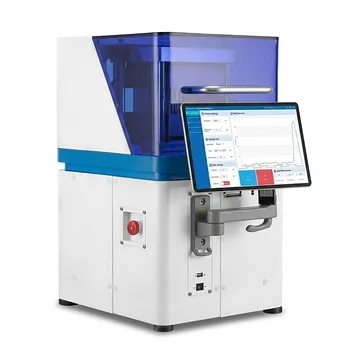
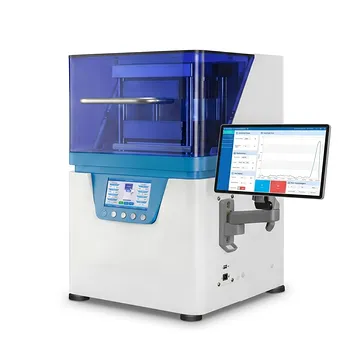
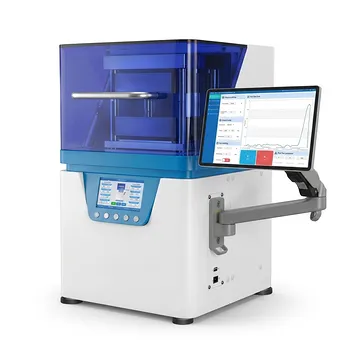
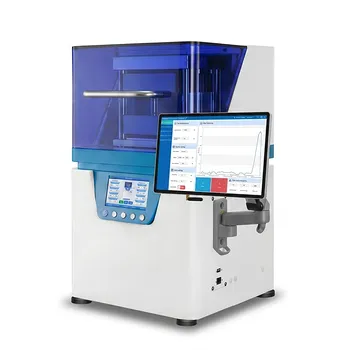
Don't let moisture or inconsistent pressure compromise your spectral data. KINTEK specializes in comprehensive laboratory pressing solutions designed to deliver the optical clarity your research demands. Whether you need manual precision or high-throughput efficiency, our range includes manual, automatic, heated, and glovebox-compatible models, as well as advanced cold and warm isostatic presses widely applied in battery research.
Ready to achieve flawless KBr pellets and reliable analysis? Contact KINTEK today to find the perfect press for your lab's needs.
Related Products
- Laboratory Hydraulic Press 2T Lab Pellet Press for KBR FTIR
- Laboratory Hydraulic Pellet Press for XRF KBR FTIR Lab Press
- Automatic Laboratory Hydraulic Press for XRF and KBR Pellet Pressing
- Manual Laboratory Hydraulic Pellet Press Lab Hydraulic Press
- Automatic Laboratory Hydraulic Press Lab Pellet Press Machine
People Also Ask
- What is the role of a laboratory pressure machine and KBr in FTIR? Master Sample Preparation for Flame Retardants
- What is the role of a laboratory hydraulic press in high-loading NCM811 cathode prep for solid-state batteries?
- What role does a laboratory hydraulic press play in reaction pellets? Optimizing Lunar Soil and Metal Fuel Density
- Why is a laboratory hydraulic press necessary for sample preparation? Precise Pelleting for Spiro Heterocyclic Analysis
- Why Use High-Tonnage Pressure Control for Li4Ti5O12 Electrode Disks? Optimize Your Battery Research