The primary purpose of doping layered transition metal oxide cathodes with magnesium (Mg) or titanium (Ti) is to significantly bolster structural stability. These elements act as stabilizers within the material's crystal lattice. By reinforcing the structure, they prevent the cathode from degrading during the physical stress of charging and discharging.
Layered cathode materials are prone to structural changes that reduce battery life. Doping with elements like Mg or Ti directly counters this by inhibiting harmful phase transitions, resulting in superior cycling stability and higher capacity retention over the long term.
The Mechanics of Stabilization
Inhibiting Phase Transitions
During the charge and discharge process, lithium ions move in and out of the cathode's layered structure. Without stabilization, this movement can cause the material's crystal structure to shift or collapse, a phenomenon known as a phase transition.
The introduction of Magnesium (Mg) or Titanium (Ti) inhibits these transitions. These dopants act as "pillars" or anchors within the lattice, holding the layers in place and preventing the structural reorganization that leads to battery failure.
Enhancing Cycling Stability
Because the internal structure is less likely to degrade, the battery can withstand many more charge/discharge cycles. The structural integrity provided by Mg or Ti ensures that the cathode does not crack or pulverize over time. This is critical for applications requiring high durability, such as electric vehicles.
Improving Capacity Retention
Structural degradation usually leads to a loss of active material, meaning the battery holds less charge as it ages. By stabilizing the structure, these dopants ensure that more of the cathode material remains active. Consequently, the battery retains a higher percentage of its original capacity even after extensive use.
Understanding the Trade-offs
Electrochemical Inactivity
While Mg and Ti are excellent for stability, they are generally electrochemically inactive in this context. This means they do not participate in the redox reactions that generate electricity.
Balancing Stability vs. Capacity
Replacing active transition metals (like Nickel or Cobalt) with inactive dopants (Mg or Ti) involves a delicate balance. While you gain structural life, adding too much dopant can theoretically reduce the total specific capacity of the material. The goal is to use the minimum amount necessary to achieve stability without significantly displacing the active elements that store energy.
Making the Right Choice for Your Goal
Doping is a tool for tuning the performance characteristics of a battery to meet specific needs.
- If your primary focus is Cycle Life: Prioritize Mg or Ti doping to inhibit phase transitions and prevent structural breakdown over thousands of cycles.
- If your primary focus is Capacity Retention: Use these dopants to ensure the battery maintains its range and performance consistency as it ages.
Ultimately, Mg and Ti doping transforms a fragile high-performance material into a robust, commercially viable component.
Summary Table:
| Feature | Impact of Mg/Ti Doping | Benefit to Battery |
|---|---|---|
| Structural Integrity | Acts as a lattice "pillar" | Prevents crystal structure collapse |
| Phase Transitions | Inhibits harmful shifts | Reduces degradation during charging |
| Cycle Life | Prevents cracking/pulverization | Increases longevity (e.g., for EVs) |
| Capacity Retention | Keeps more material active | Maintains range and power over time |
| Redox Activity | Electrochemically inactive | Requires balancing with active metals |
Elevate Your Battery Research with KINTEK Precision
Are you looking to optimize your cathode formulations for maximum durability? KINTEK specializes in comprehensive laboratory pressing solutions designed for advanced material science. Whether you are synthesizing doped transition metal oxides or preparing pellets for analysis, our range of manual, automatic, heated, and glovebox-compatible presses provides the precision you need.
From high-performance battery research to cold and warm isostatic presses, we empower scientists to achieve superior structural stability in their materials. Contact KINTEK today to find the perfect equipment for your lab and accelerate your path to more robust, long-lasting battery technology!
References
- Razu Shahazi, Md. Mahbub Alam. Recent advances in Sodium-ion battery research: Materials, performance, and commercialization prospects. DOI: 10.59400/mtr2951
This article is also based on technical information from Kintek Solution Knowledge Base .
Related Products
- Warm Isostatic Press for Solid State Battery Research Warm Isostatic Press
- Lab Cylindrical Press Mold for Laboratory Use
- Lab Round Bidirectional Press Mold
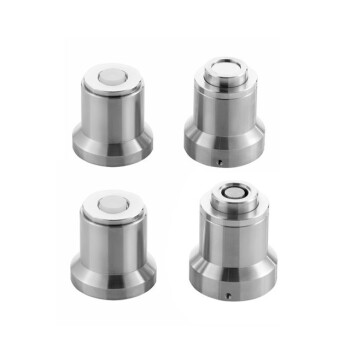
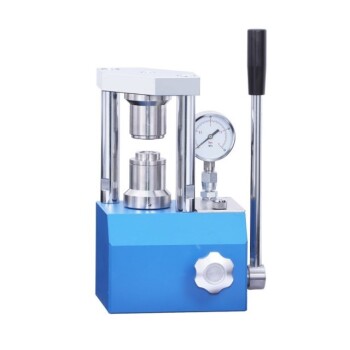
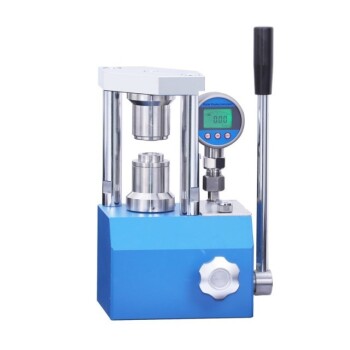
- Lab Button Battery Disassembly and Sealing Mold
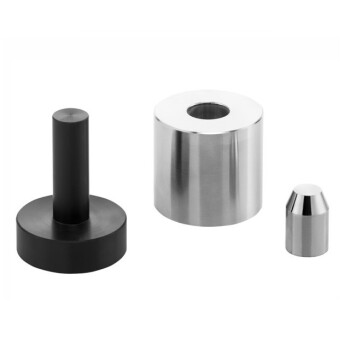
- Carbide Lab Press Mold for Laboratory Sample Preparation
People Also Ask
- Why must composite cathodes be sealed in vacuum lamination bags for WIP? Ensure Battery Stability and Density
- How do sacrificial volume materials (SVM) maintain microchannels in isostatic pressing? Ensure Structural Integrity
- What is the function of elastic molds in warm isostatic pressing? Achieve Uniform Density in Composite Particles
- What is the process involved in warm isostatic pressing? Mastering Uniform Density with WIP Technology
- What are the advantages of using a Warm Isostatic Press (WIP) for batteries? Achieve Superior Interface Contact