Potassium bromide (KBr) serves as the fundamental optical carrier matrix in solid-state infrared spectroscopy. Its primary function is to suspend the solid sample in a transparent medium, allowing infrared radiation to pass through the material without interference, absorption, or chemical alteration.
The Core Insight Solids are too dense and opaque to be analyzed directly by transmission IR spectroscopy. KBr solves this by acting as a "transparent solvent" in solid form—it becomes plastic under pressure to encase your sample in a clear, glass-like disk that renders the sample's molecular vibrations visible to the spectrometer.
The Functional Roles of KBr
The utility of KBr rests on three specific chemical and physical properties that ensure data integrity.
Optical Transparency
The most critical role of KBr is its lack of infrared absorption. Ideally, a background material must be invisible to the spectrometer.
KBr is transparent across a wide spectral range (typically 4000 to 400 cm⁻¹). This ensures that any peaks appearing in your final spectrum belong exclusively to your sample, not the carrier matrix.
Uniform Sample Dispersion
To obtain a clear signal, sample molecules must be spread thinly and evenly. KBr acts as a dispersion medium.
By mixing the sample with KBr powder (typically in a 1:100 to 1:200 ratio), you prevent the sample particles from clumping. This ensures the infrared beam interacts uniformly with the analyte molecules, preventing light scattering that would distort the baseline.
Chemical Inertness
Accurate analysis requires that the carrier does not react with the analyte. KBr is chemically inert regarding most organic and inorganic compounds.
This stability ensures that the mixing and pressing process does not trigger a chemical reaction that would alter the sample's molecular structure or produce false spectral data.
The Mechanics of the Matrix
Beyond its chemical properties, KBr plays a mechanical role that makes the physical formation of the test element possible.
Plasticity Under Pressure
KBr possesses a unique property called cold flow. When subjected to high pressure in a hydraulic press, the powder particles deform and fuse together without heat.
This transforms the loose powder mixture into a solid, transparent disk (the pellet). This physical transformation is what fixes the sample particles in place within a rigid, optical-quality window.
Enhancing Sensitivity
Because the pellet allows the beam to transmit through the sample rather than bouncing off the surface (as in ATR methods), KBr pellets often offer higher sensitivity.
This allows for the detection of weak absorption bands and provides high-resolution data on functional groups like hydroxyl (O-H) or carbon-hydrogen (C-H) bonds.
Understanding the Trade-offs
While KBr is the standard for solid-phase transmission spectroscopy, it introduces specific challenges that can compromise data if ignored.
Hygroscopic Interference
The most significant downside of KBr is that it is hygroscopic, meaning it readily absorbs moisture from the air.
If the KBr powder is not kept strictly dry, or if the pellet exposure time is too long, water molecules will enter the matrix. This results in broad, intense O-H absorption bands in the spectrum that can mask the characteristics of your sample, particularly in the 3400 cm⁻¹ region.
Particle Size Sensitivity
KBr can only act as a transparent window if the sample particles suspended within it are smaller than the wavelength of the IR light.
If the sample is not ground finely enough before mixing with KBr, the pellet will appear cloudy. This causes light scattering (the Christiansen effect), which tilts the baseline and distorts peak shapes, rendering quantitative analysis difficult.
Making the Right Choice for Your Goal
The KBr pellet method remains a powerful tool when applied with an understanding of its roles and limitations.
- If your primary focus is Trace Analysis: Rely on the KBr method for its superior sensitivity, but ensure your KBr is spectral-grade and stored in a desiccator to prevent water contamination.
- If your primary focus is Complex Solid Structures: Use the KBr method to "freeze" the sample in a matrix, which is ideal for distinguishing specific coordination states in crystalline structures.
- If your primary focus is Speed: Be aware that the grinding and pressing steps are time-consuming compared to reflection techniques like ATR.
By utilizing KBr effectively, you transform an opaque solid into a readable optical element, unlocking the molecular "fingerprint" hidden within the material.
Summary Table:
| Property | Functional Role in IR Spectroscopy | Impact on Analysis |
|---|---|---|
| Optical Transparency | Acts as an invisible carrier matrix (4000–400 cm⁻¹) | Ensures spectral peaks belong only to the sample |
| Cold Flow Plasticity | Fuses under pressure into a solid disk | Creates a transparent window for beam transmission |
| Chemical Inertness | Prevents reactions with the analyte | Maintains original molecular structure of the sample |
| Dispersion Medium | Prevents clumping and scattering | Ensures a stable baseline and uniform beam interaction |
| Hygroscopic Nature | Absorbs atmospheric moisture | Requires dry storage to avoid O-H interference peaks |
Elevate Your Spectroscopy Precision with KBr Solutions
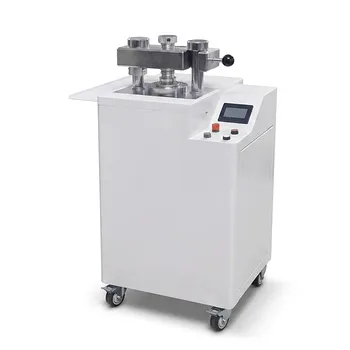
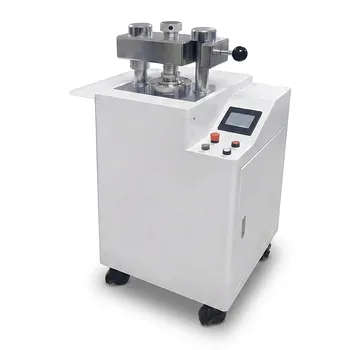
To achieve the perfect transparent pellet, high-quality equipment is just as critical as your KBr matrix. KINTEK specializes in comprehensive laboratory pressing solutions designed to eliminate light scattering and ensure sample integrity.
Our range of expertise includes:
- Manual & Automatic Hydraulic Presses for consistent pellet density.
- Heated & Multifunctional Models for advanced material research.
- Glovebox-Compatible & Isostatic Presses tailored for moisture-sensitive battery research and specialized applications.
Don't let moisture or poor dispersion ruin your spectral data. Contact KINTEK today to find the ideal pressing system for your lab’s unique requirements!
Related Products
- XRF KBR Plastic Ring Lab Powder Pellet Pressing Mold for FTIR
- Laboratory Hydraulic Press 2T Lab Pellet Press for KBR FTIR
- XRF KBR Steel Ring Lab Powder Pellet Pressing Mold for FTIR
- Automatic Laboratory Hydraulic Press for XRF and KBR Pellet Pressing
- Laboratory Hydraulic Pellet Press for XRF KBR FTIR Lab Press
People Also Ask
- What is the purpose of making KBr pellets for FTIR? Achieve Precise Molecular Analysis with Solid Samples
- What factors should be considered when choosing a lab press for XRF pellet preparation? Ensure Accurate and Consistent Results
- Why are pellets used in XRF analysis, and what is their limitation? Boost Accuracy and Speed in Your Lab
- How are pellets prepared for XRF analysis and what is a potential drawback? Master XRF Sample Prep and Accuracy
- What are the different types of XRF pellet preparation methods available? Manual, Hydraulic, and Automated Presses Explained