Cold isostatic pressing (CIP) creates value through the application of omnidirectional pressure, which allows for the compaction of complex shapes with a consistency that traditional methods cannot match. By utilizing a liquid medium to apply force evenly from all sides, this technique eliminates the internal density gradients and die-wall friction that typically compromise intricate designs.
Core Takeaway CIP leverages Pascal's principle to decouple part geometry from material density, ensuring that even the most complex or brittle shapes achieve a uniform internal microstructure. This uniformity is the critical foundation for high-performance sintering, preventing warping and cracking while maximizing material utilization.
The Physics of Uniformity
Leveraging Pascal’s Principle
The fundamental advantage of CIP is its use of a liquid medium to transmit pressure, often reaching levels as high as 300 MPa.
According to Pascal's principle, this pressure is applied equally and instantaneously to every surface of the object.
Eliminating Internal Pressure Gradients
Unlike uniaxial pressing, which compresses material from a single direction, CIP exerts hydrostatic pressure from all directions.
This effectively eliminates the internal pressure gradients that cause varying densities within a single part.
Achieving High Packing Density
The omnidirectional nature of the force enables powder particles to pack together extremely tightly.
This results in a high-performance foundation with a uniform internal microstructure, which is essential for the reliability of the final product.
Manufacturing and Material Advantages
Removing Die-Wall Friction
In rigid die compaction, friction between the powder and the die wall creates density variations.
CIP eliminates this die-wall friction entirely because the flexible mold deforms with the powder, ensuring consistent density throughout the component.
Eliminating the Need for Lubricants
Because friction is negated, the process removes the need for internal lubricants often required in other pressing methods.
This allows for higher pressed densities and significantly mitigates the challenges associated with lubricant removal during the subsequent sintering phase.
Enabling High Material Efficiency
The process is particularly valuable when working with difficult or expensive materials.
It allows for high material utilization efficiency, reducing waste while accommodating intricate designs that would be impossible or cost-prohibitive with standard tooling.
Addressing Common Compaction Pitfalls
Preventing Uneven Shrinkage
For components that are brittle or complex, such as battery parts, non-uniform density leads to disaster during sintering.
CIP ensures structural uniformity, which prevents uneven shrinkage and warping when the material is heated.
Mitigating Micro-Crack Expansion
Internal inconsistencies in a "green" (unsintered) part can evolve into structural failures.
By ensuring uniform density, CIP prevents the expansion of micro-cracks during sintering or operational cycling, a critical factor for high-stress applications.
Making the Right Choice for Your Project
To determine if Cold Isostatic Pressing is the correct solution for your manufacturing needs, consider your specific material and geometric requirements.
- If your primary focus is Geometric Complexity: Choose CIP to ensure uniform density distribution in intricate shapes where uniaxial pressing would result in weak spots or gradients.
- If your primary focus is Material Purity and Sintering: select CIP to eliminate the need for binders and lubricants, simplifying the sintering process and reducing potential contamination.
By replacing mechanical friction with hydrostatic force, you ensure the structural integrity of your most complex designs.
Summary Table:
| Feature | Cold Isostatic Pressing (CIP) | Traditional Uniaxial Pressing |
|---|---|---|
| Pressure Direction | Omnidirectional (Hydrostatic) | Single Direction (Uniaxial) |
| Density Consistency | Highly Uniform; no gradients | Variable; lower near die walls |
| Geometric Capability | High (Complex/Intricate shapes) | Limited (Simple geometries) |
| Internal Friction | Zero die-wall friction | High friction; requires lubricants |
| Post-Processing | Minimal warping during sintering | Higher risk of cracking/distortion |
Elevate Your Material Research with KINTEK Pressing Solutions
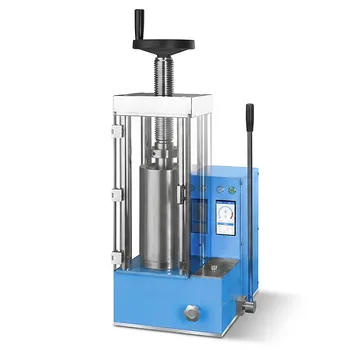
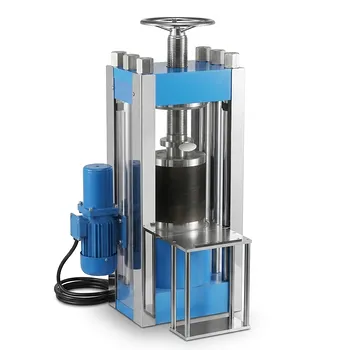
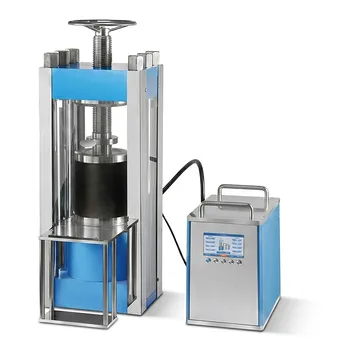
Unlock the full potential of your complex designs with KINTEK’s precision engineering. As specialists in comprehensive laboratory pressing solutions, we offer a versatile range of equipment including manual, automatic, heated, and multifunctional models, as well as cold and warm isostatic presses specifically optimized for high-performance applications like battery research.
By choosing KINTEK, you gain access to technology that eliminates density gradients and maximizes material utilization, ensuring your brittle or intricate components survive the sintering process without warping. Contact our technical experts today to find the perfect pressing solution for your lab and achieve the structural integrity your project demands.
Related Products
- Electric Lab Cold Isostatic Press CIP Machine
- Automatic Lab Cold Isostatic Pressing CIP Machine
- Electric Split Lab Cold Isostatic Pressing CIP Machine
- Manual Cold Isostatic Pressing CIP Machine Pellet Press
- Electric Isostatic Pressing Machine 40 Tons Automatic Laboratory Powder Compacting Press
People Also Ask
- What role do electric lab cold isostatic presses play in industrial contexts? Bridge R&D and Manufacturing with Precision
- What are the applications of electric lab cold isostatic presses in research settings? Advance Material R&D with High-Pressure CIPs
- How does electrical Cold Isostatic Pressing (CIP) contribute to cost savings? Unlock Efficiency and Reduce Expenses
- What are some research applications of electric lab CIPs? Unlock Uniform Powder Densification for Advanced Materials
- What are the characteristics of standard off-the-shelf electric lab CIP solutions? Achieve Immediate, Cost-Effective Processing