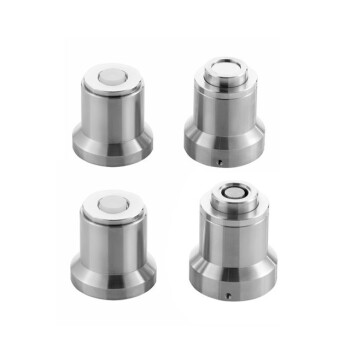
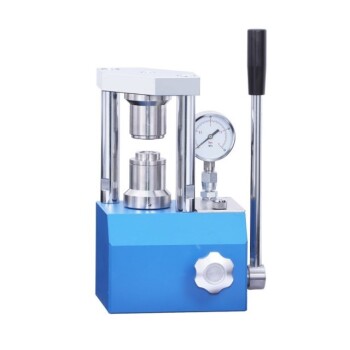
Specialized battery testing molds serve as the critical control variable in evaluating electrolyte viability. By offering a precisely adjustable external pressure environment, these molds allow researchers to simulate operating conditions ranging from extreme high pressure (up to 600 MPa) down to near-zero pressure (approximately 0.1 MPa), thereby isolating how physical stress impacts electrochemical performance.
The definitive role of these molds is to quantify the "pressure dependency" of a material. By simulating zero-pressure conditions, these tools prove that viscoelastic electrolytes like 1.2LiOH-FeCl3 can maintain high capacity (86.6% retention) without the heavy external pressurization required by traditional hard electrolytes.
The Mechanics of Pressure Simulation
Replicating Diverse Operating Environments
To accurately compare materials, testing hardware must replicate the physical stresses a battery endures. Specialized molds are engineered to apply adjustable external pressure, covering a vast spectrum from 600 MPa down to ambient levels (~0.1 MPa).
Isolating the Pressure Variable
In standard testing, poor contact can mimic chemical failure. These molds eliminate this variable by ensuring uniform interfacial contact between the electrode and electrolyte. This ensures that any observed performance degradation is due to the material's intrinsic properties, not testing artifacts.
Differentiating Material Behaviors
The Dependency of Traditional Hard Electrolytes
Hard solid electrolytes, such as sulfides, rely heavily on external pressure. As verified by supplementary data, these materials require constant, high stack pressure to compensate for volume changes and prevent interface cracking or contact loss during cycling.
The Independence of Viscoelastic Electrolytes
The testing molds highlight the unique advantage of viscoelastic materials like 1.2LiOH-FeCl3. Unlike their hard counterparts, these electrolytes demonstrate the ability to maintain 86.6% capacity retention even under zero-pressure conditions (0.1 MPa).
Implications for Battery Pack Design
This comparison is vital for engineering. By proving that a material works without high pressure, the molds demonstrate that battery packs using viscoelastic electrolytes can reduce or eliminate the need for heavy, complex pressurization equipment.
Understanding the Trade-offs
Idealized vs. Real-World Conditions
While specialized molds provide precise control, they are often high-rigidity devices (coin cells or flat fixtures). They may not perfectly replicate the flexible or uneven pressure distribution found in pouch cells or large-format automotive packs.
The Complexity of High-Pressure Testing
Testing at the upper limits (e.g., 600 MPa) requires robust, standardized encapsulation to prevent safety hazards. Mismanagement of torque control or pressure regulation at these levels can lead to sensor inaccuracies or mechanical failure of the test rig itself.
Making the Right Choice for Your Goal
When interpreting data from these testing molds, align your analysis with your end-use requirements:
- If your primary focus is fundamental chemical stability: Ensure the mold provides sufficient uniform pressure to eliminate contact resistance, allowing you to view the true electrochemical window without physical interference.
- If your primary focus is practical pack engineering: Prioritize data gathered at low or zero pressure (0.1 MPa) to determine if the material permits a lighter, simplified battery pack design.
By using these molds to expose the pressure-performance gap, you move beyond theoretical chemistry and address the practical realities of battery integration.
Summary Table:
| Feature | Hard Electrolytes (e.g., Sulfides) | Viscoelastic Electrolytes (1.2LiOH-FeCl3) |
|---|---|---|
| Pressure Requirement | High Stack Pressure (up to 600 MPa) | Near-Zero Pressure (0.1 MPa) |
| Interface Contact | Dependent on external force | Self-maintaining/Intrinsic |
| Capacity Retention | Poor without high pressure | High (86.6% at 0.1 MPa) |
| Pack Design Impact | Heavy, complex equipment needed | Simplified, lightweight design possible |
Optimize Your Battery Research with KINTEK Precision
Are you struggling to quantify the pressure dependency of your solid-state materials? KINTEK specializes in comprehensive laboratory pressing solutions designed for the rigors of modern battery research. Whether you are testing traditional hard electrolytes or innovative viscoelastic compounds, our range of manual, automatic, heated, and glovebox-compatible presses, alongside our specialized isostatic presses, ensures uniform interfacial contact and precise pressure control.
Empower your lab to:
- Simulate real-world operating environments from 0.1 MPa to 600 MPa.
- Isolate chemical variables from physical contact issues.
- Accelerate the development of lightweight, high-capacity battery packs.
Contact KINTEK today to find the perfect pressing solution for your lab
References
- H. Liu, X. Li. Capacity-expanding O/Cl-bridged catholyte boosts energy density in zero-pressure all-solid-state lithium batteries. DOI: 10.1093/nsr/nwaf584
This article is also based on technical information from Kintek Solution Knowledge Base .
Related Products
- Lab Button Battery Disassembly and Sealing Mold
- Carbide Lab Press Mold for Laboratory Sample Preparation
- Lab Button Battery Tablet Press Sealing Mold
- Lab Infrared Press Mold for Laboratory Applications
- Lab Cylindrical Press Mold for Laboratory Use
People Also Ask
- How does a sealed battery mold facilitate the assembly and testing of asymmetric supercapacitors using VO2?
- What is the function of specialized battery molds and sealing consumables? Optimize Your In-situ XRD Testing Today
- How does the geometry of laboratory molds influence mycelium-based composites? Optimize Density and Strength
- Why are specialized battery test molds used? Ensure Peak Performance for All-Solid-State Sodium Batteries (ASSIBs)
- Why are high-precision laboratory molds and specific compaction processes required? Ensure Data Integrity in Soil Research