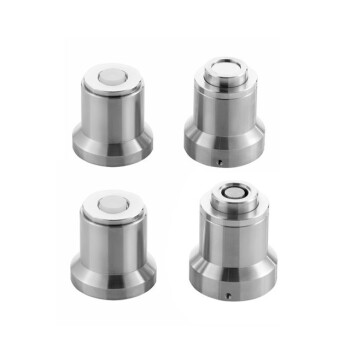
The primary role of Teflon reactors in Product Consistency Test (PCT) static leaching experiments is to provide a chemically inert and thermally stable containment system. By isolating the basalt glass sample in a sealed environment at 90 °C, these reactors ensure that the leaching process is not influenced by the vessel itself, preserving the integrity of the chemical analysis.
The core value of a Teflon reactor is the guarantee of purity. Its superior chemical resistance ensures that any nuclides detected in the solution originate exclusively from the basalt glass, eliminating the risk of data skewing caused by container degradation.
The Necessity of Chemical Inertness
Preventing Container Leaching
The validity of a leaching experiment rests on the purity of the environment. Standard materials often fail because they can react with the leaching solution over time.
Teflon (polytetrafluoroethylene) is utilized specifically because it creates an extremely inert environment. This property prevents the reactor walls from releasing impurities or reacting with the solution, even under stress.
Withstanding Elevated Temperatures
PCT static leaching experiments for basalt glass are standardly conducted at 90 °C.
At this temperature, many containment materials might soften or degrade chemically. Teflon reactors maintain their structural and chemical integrity, ensuring a consistent testing environment for the duration of the experiment.
Ensuring Analytical Accuracy
Isolating the Source of Nuclides
The ultimate goal of these experiments is to measure the concentration of leached nuclides using Inductively Coupled Plasma Mass Spectrometry (ICP-MS).
Because Teflon is non-reactive, researchers can be certain that the elements detected by the ICP-MS come solely from the basalt glass sample. This direct correlation is vital for accurately assessing the glass's durability.
Supporting Long-Duration Testing
Leaching behaviors often reveal themselves over extended periods. These experiments frequently run for durations as long as 56 days.
A sealed Teflon reactor guarantees that the specific conditions of the experiment remain stable and uncontaminated for nearly two months. This reliability is essential for gathering longitudinal data on glass corrosion.
Common Pitfalls in Material Selection
The Risk of Impurity Release
Using a vessel with inferior chemical resistance is the most significant error in static leaching.
If the container material reacts with the solution, it releases foreign elements into the leachate. This cross-contamination makes it impossible to distinguish between elements leached from the glass and those leached from the wall.
Compromising Sensitive Instruments
ICP-MS is a highly sensitive measurement technique capable of detecting trace elements.
If the reactor contributes "background noise" in the form of impurities, the high sensitivity of the ICP-MS becomes a liability rather than an asset. The resulting data will be skewed, leading to incorrect conclusions about the basalt glass's performance.
Ensuring Validity in Basalt Glass Testing
To ensure your PCT data is defensible and accurate, the quality of your containment vessel must match the precision of your analytical instruments.
- If your primary focus is accurate nuclide quantification: Use Teflon reactors to eliminate the variable of container interference during ICP-MS analysis.
- If your primary focus is long-term experimental stability: Rely on the thermal and chemical resistance of Teflon to maintain a sealed, inert environment for tests lasting up to 56 days.
By removing the container as a variable, you ensure that your results reflect the true chemical durability of the basalt glass.
Summary Table:
| Feature | Benefit in PCT Static Leaching Experiments |
|---|---|
| Chemical Inertness | Prevents vessel leaching and eliminates cross-contamination of elements. |
| Thermal Stability | Maintains structural integrity at standard 90 °C testing temperatures. |
| High-Purity Sealing | Ensures longitudinal data accuracy for long-duration tests up to 56 days. |
| Analytical Accuracy | Guarantees detected nuclides originate solely from the glass sample. |
| ICP-MS Compatibility | Minimizes background noise for ultra-sensitive mass spectrometry analysis. |
Maximize the Precision of Your Laboratory Research with KINTEK
Don't let container contamination compromise your analytical results. KINTEK specializes in comprehensive laboratory solutions, offering high-performance Teflon reactors and advanced pressing equipment—including manual, automatic, and isostatic models—perfect for battery research and material science.
Our equipment ensures your experiments meet the highest standards of chemical durability and consistency. Contact KINTEK today to discuss your laboratory requirements and find the perfect reactor solution!
References
- Qin Tong, Mei‐Ying Liao. Structure and quantification of Ce3+/Ce4+ and stability analysis of basaltic glasses for the immobilization of simulated tetravalent amines. DOI: 10.1038/s41598-025-86571-1
This article is also based on technical information from Kintek Solution Knowledge Base .
Related Products
- Lab Cylindrical Press Mold for Laboratory Use
- Lab Double Plate Heating Mold for Laboratory Use
- XRF KBR Plastic Ring Lab Powder Pellet Pressing Mold for FTIR
- XRF KBR Steel Ring Lab Powder Pellet Pressing Mold for FTIR
- Lab XRF Boric Acid Powder Pellet Pressing Mold for Laboratory Use
People Also Ask
- What is the purpose of incorporating cartridge heaters into a lab press mold for MLCC block compression? Optimize Results
- Why is precise cooling management of the lab press mold necessary? Protect Core Integrity in Thermoforming
- What is the function of a pressing tool in thermoplastic panels? Master Precision Shaping & Fusion Bonding
- Why is a high-performance laboratory molding press critical for in-situ electrolyte formation? Unlock Battery Success
- How does the geometry of laboratory molds influence mycelium-based composites? Optimize Density and Strength