A calender serves a dual purpose in the manufacturing of sulfide solid-state batteries: it mechanically reduces lithium ingots into ultra-thin foils and critically improves the surface quality of the anode. This process is essential for tailoring the physical dimensions of the lithium to meet specific battery design requirements while ensuring optimal electrochemical integration.
Core Takeaway By processing thick lithium precursors into precision foils, calendering maximizes volumetric energy density and creates a smooth, uniform surface that ensures tight lamination with sulfide solid-state electrolytes.
Optimizing Physical Dimensions for Energy Density
Processing Thick Ingots
The primary function of the calender is the mechanical reduction of raw material. It takes thick lithium ingots or ribbons and presses them into foils with precise dimensional tolerances.
Reducing Dead Volume
Achieving an ultra-thin lithium foil is vital for the overall performance of the cell. By minimizing the thickness of the anode, manufacturers reduce excess mass and volume, which directly contributes to maximizing the energy density of the battery.
Enhancing the Anode-Electrolyte Interface
Smoothing Surface Irregularities
Beyond simple reduction, the calendering process acts as a surface treatment. It smooths the surface of the lithium metal, eliminating roughness that could impede performance.
Improving Lamination
In sulfide solid-state batteries, the interface between components is a common failure point. Calendering ensures better physical contact and lamination between the lithium anode and the solid-state electrolyte.
Uniform Interfacial Contact
Drawing on principles of mechanical pressing, a flat, calendered surface helps eliminate irregular protrusions. This uniformity ensures tight interfacial contact, which is essential for maintaining consistent electrochemical reactions and potentially suppressing lithium dendrite growth.
The Criticality of Surface Uniformity
Avoiding Poor Contact
If the lithium surface is not sufficiently smoothed via calendering, gaps may form between the anode and the sulfide electrolyte. These voids hinder ion transport and reduce the overall efficiency of the cell.
The Role of Pressure
While chemistry is important, the mechanical pressure applied during calendering is what physically enables the anode to mate properly with the electrolyte. Without this step, the theoretical benefits of the solid-state design cannot be realized in practice.
Making the Right Choice for Your Goal
To optimize your lithium anode preparation strategy, consider which metric is your immediate priority:
- If your primary focus is Energy Density: Calibrate the calender to produce the thinnest possible foil without compromising structural integrity to minimize cell volume.
- If your primary focus is Cycle Life and Stability: Prioritize the surface finish capabilities of the calender to ensure a perfectly smooth interface that maximizes contact with the sulfide electrolyte.
Ultimately, the calender is not just a shaping tool; it is a critical enabler of the interfacial quality required for high-performance solid-state batteries.
Summary Table:
| Function | Key Benefit | Impact on Battery |
|---|---|---|
| Thickness Reduction | Ultra-thin lithium foil | Maximizes volumetric energy density |
| Surface Smoothing | Removes irregularities | Ensures tight interfacial lamination |
| Mechanical Pressing | Uniform contact | Suppresses dendrites and improves ion transport |
| Volume Control | Reduced 'dead volume' | Increases overall cell efficiency |
Elevate Your Battery Research with KINTEK Precision
Unlock the full potential of your sulfide solid-state batteries with KINTEK’s advanced laboratory solutions. Whether you are developing ultra-thin anodes or perfecting the electrolyte-anode interface, our specialized equipment delivers the precision your research demands.
KINTEK offers a comprehensive range of laboratory pressing solutions, including:
- Manual & Automatic Presses for tailored material processing.
- Heated & Multifunctional Models to meet complex experimental needs.
- Glovebox-Compatible Designs for air-sensitive lithium chemistry.
- Cold & Warm Isostatic Presses widely applied in cutting-edge battery research.
Don't let interfacial resistance hold back your innovation. Contact KINTEK today to find the perfect pressing solution for your lab!
Related Products
- Warm Isostatic Press for Solid State Battery Research Warm Isostatic Press
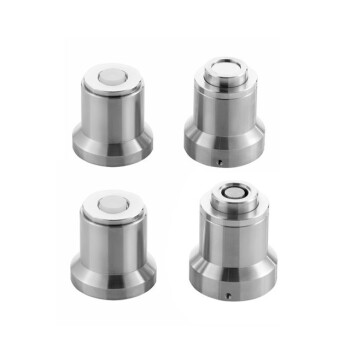
- Lab Button Battery Disassembly and Sealing Mold
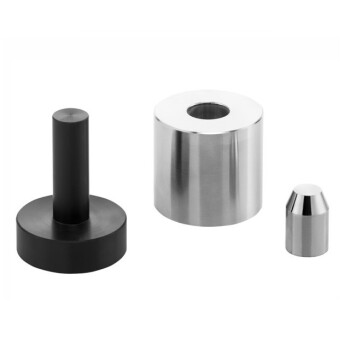
- Lab Cylindrical Press Mold for Laboratory Use
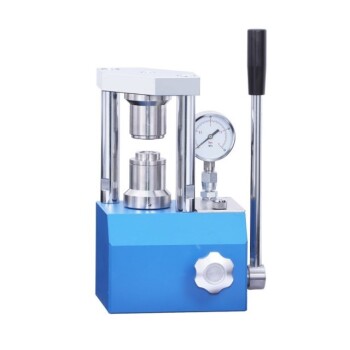
- Manual Button Battery Sealing Machine for Battery Sealing
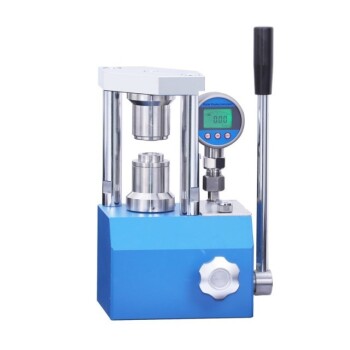
- Button Battery Sealing Machine for Button Batteries
People Also Ask
- Why must composite cathodes be sealed in vacuum lamination bags for WIP? Ensure Battery Stability and Density
- How do sacrificial volume materials (SVM) maintain microchannels in isostatic pressing? Ensure Structural Integrity
- What is the function of elastic molds in warm isostatic pressing? Achieve Uniform Density in Composite Particles
- What is the function of hydraulic pressure in warm isostatic pressing? Achieve Uniform Material Density
- What are the advantages of using a Warm Isostatic Press (WIP) for batteries? Achieve Superior Interface Contact