
Electric lab cold isostatic presses (CIP) are exceptionally versatile tools capable of compacting a wide spectrum of powdered materials, primarily metals, ceramics, plastics, and composites. Because these presses apply uniform hydrostatic pressure via a fluid medium, they can consolidate almost any powder type—including difficult-to-mold refractory metals and advanced technical ceramics—into high-density "green" bodies.
The Core Insight: The value of an electric lab CIP is not just material compatibility, but uniformity. Unlike rigid die pressing, CIP allows for the densification of complex shapes and expensive powders like Tungsten and Silicon Carbide without internal lubricants, resulting in green parts with significantly higher structural integrity.
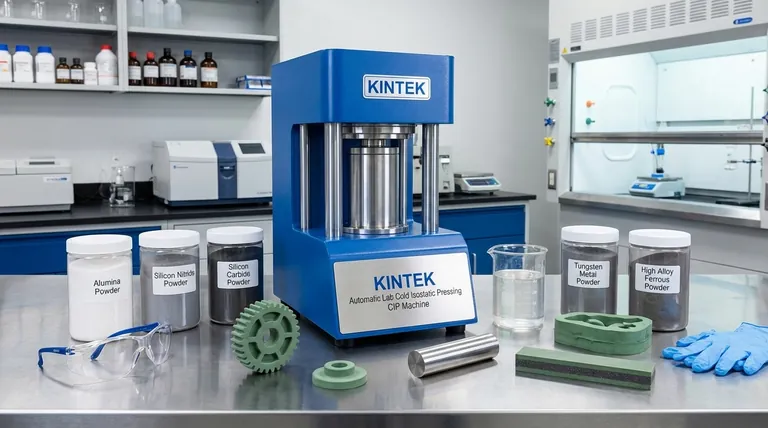
Supported Material Categories
The broad pressure range of electric lab CIP systems allows them to accommodate materials with vastly different physical properties.
Advanced Technical Ceramics
Ceramics are among the most common applications for this technology due to the need for high-density uniformity.
Specific materials successfully compacted include Alumina (Al2O3), often used for spark-plug shells, and Silicon Nitride (Si3N4).
The process is also ideal for Silicon Carbide (SiC) and Sialons (Si-Al-O-N), which require precise densification to maintain performance characteristics.
Refractory and High-Performance Metals
CIP is frequently used to process metals that are difficult to shape via traditional methods.
Tungsten powders can be formed into a variety of distinct shapes using this method.
It is also the standard for preparing high alloy ferrous billets. These are often compacted via CIP to create a dense pre-form before undergoing Hot Isostatic Pressing (HIP).
Plastics and Composites
Beyond metals and ceramics, the technology is effective for consolidating various plastics and composite material blends.
This versatility makes it suitable for experimental lab work where material composition may vary frequently.
Why CIP is Used for These Materials
Understanding why you would choose a cold isostatic press for these materials is just as important as knowing the materials list.
Achieving Uniform Density in Complex Shapes
CIP applies pressure uniformly from all directions using a working fluid (typically water with a corrosion inhibitor).
This eliminates die-wall friction, a common issue in mechanical pressing that leads to uneven density gradients.
Consequently, you can compact intricate designs that would be impossible to eject from a rigid metal die.
Elimination of Internal Lubricants
In traditional die compaction, lubricants must be mixed into the powder to prevent sticking, which weakens the pressed part.
CIP utilizes a flexible mold or vacuumed sample, requiring no added lubricant in the powder itself.
This results in "green" (un-sintered) strengths approximately 10 times greater than parts made via cold compaction in metal dies.
High Efficiency for Expensive Materials
The process offers high material utilization efficiency.
This makes it the preferred method for processing expensive or difficult materials, as waste is minimized and the density distribution is highly reliable.
Operational Considerations and Trade-offs
While effective, the CIP process introduces specific workflow requirements that differ from standard mechanical pressing.
The Requirement for Mold Preparation
You cannot simply pour powder into a cavity; the material must be placed into a mold or vacuumed sample bag before pressurization.
This creates a distinct "wet" processing environment, as the chamber is filled with a working fluid to transmit pressure.
Altered Sintering Cycle
Because no lubricant is added to the powder, the sintering cycle changes.
You can completely eliminate the lubricant burn-off stage typically required for die-compacted parts, streamlining the thermal processing steps.
Making the Right Choice for Your Goal
When deciding if an electric lab CIP is the right tool for your specific material, consider your end-goal requirements.
- If your primary focus is Advanced Ceramics: Use CIP to ensure uniform density in materials like Alumina and Silicon Nitride, preventing cracking during sintering.
- If your primary focus is Refractory Metals: Use CIP for Tungsten or high alloy billets to achieve high green strength without the contamination of binders or lubricants.
- If your primary focus is Complex Geometry: Choose this method to produce intricate shapes that cannot be ejected from a standard rigid die.
Electric lab cold isostatic pressing offers a definitive solution for achieving high-density, high-strength consolidation across the widest possible range of powder chemistries.
Summary Table:
| Material Category | Key Examples | Primary Benefit |
|---|---|---|
| Advanced Technical Ceramics | Alumina (Al2O3), Silicon Nitride (Si3N4), Silicon Carbide (SiC) | Uniform density, prevents sintering cracks |
| Refractory & High-Performance Metals | Tungsten, high alloy ferrous billets | High green strength, no lubricant contamination |
| Plastics & Composites | Various polymer and composite blends | Versatility for experimental lab work |
Ready to achieve superior powder compaction for your lab?
KINTEK specializes in electric lab cold isostatic presses (automatic lab press, isostatic press, heated lab press, etc.), delivering uniform density and high green strength for advanced ceramics, refractory metals, and complex composites.
Our CIP systems eliminate lubricants, streamline sintering, and handle intricate shapes—perfect for R&D and material testing.
Contact KINTEK today to explore the right press for your material challenges!
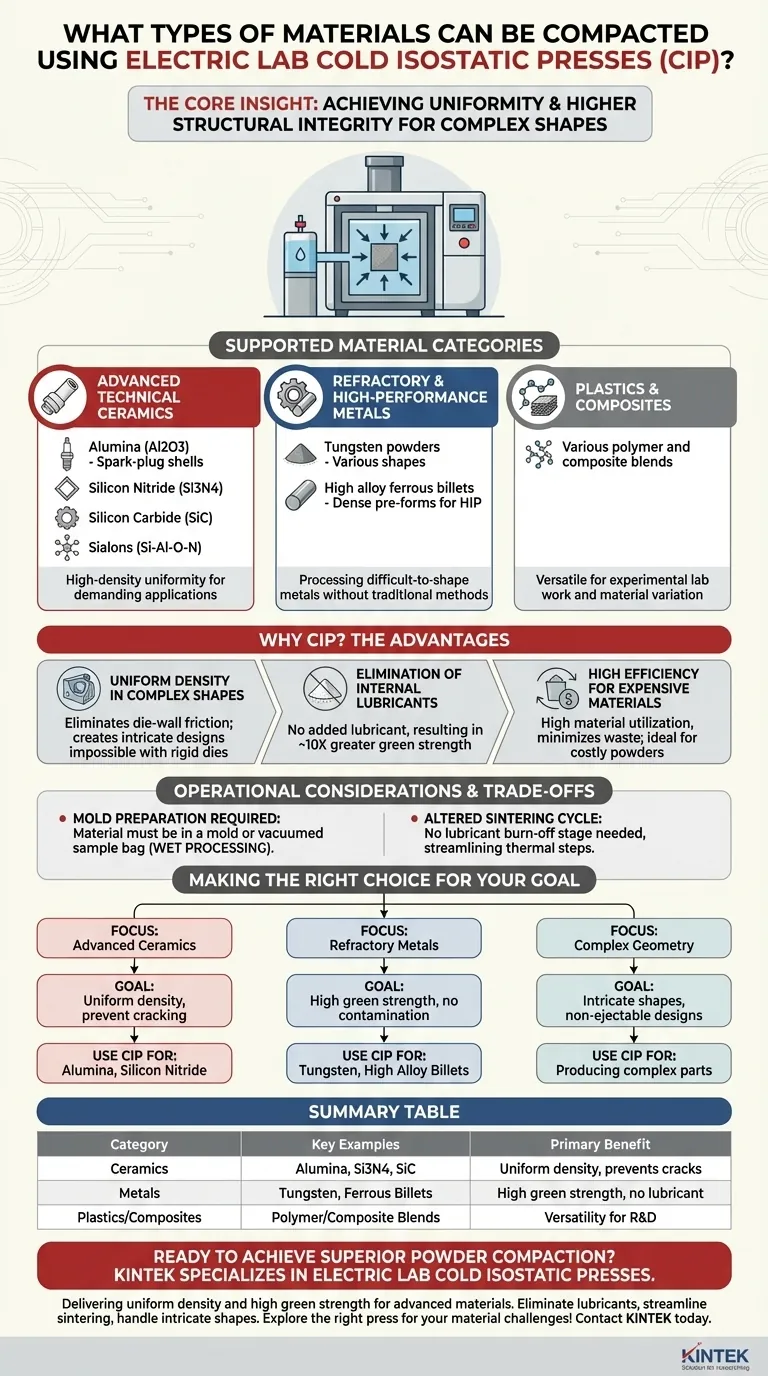
Visual Guide
Related Products
- Electric Lab Cold Isostatic Press CIP Machine
- Electric Split Lab Cold Isostatic Pressing CIP Machine
- Automatic Lab Cold Isostatic Pressing CIP Machine
- Manual Cold Isostatic Pressing CIP Machine Pellet Press
- Lab Isostatic Pressing Molds for Isostatic Molding
People Also Ask
- What are the applications of electric lab cold isostatic presses in research settings? Advance Material R&D with High-Pressure CIPs
- What role do electric lab cold isostatic presses play in industrial contexts? Bridge R&D and Manufacturing with Precision
- How does electrical Cold Isostatic Pressing (CIP) contribute to cost savings? Unlock Efficiency and Reduce Expenses
- What are some research applications of electric lab CIPs? Unlock Uniform Powder Densification for Advanced Materials
- What are the characteristics of standard off-the-shelf electric lab CIP solutions? Achieve Immediate, Cost-Effective Processing



















