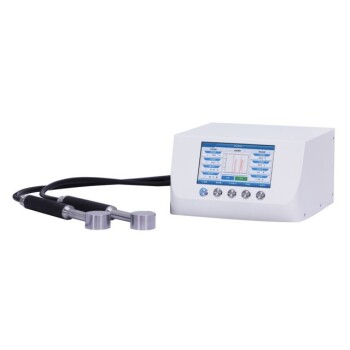
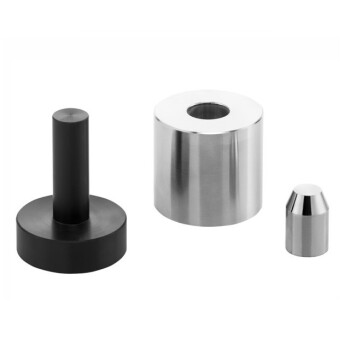
Accurate measurement of volume expansion is indispensable because Anion Exchange Membranes (AEMs) undergo significant physical dimensional changes when they absorb moisture. High-precision displacement sensors or precision molds are required to capture these fluctuations in thickness and area, which directly alter the internal pathways available for ion transport. Without the exact data provided by these tools, you cannot reliably correlate physical swelling with the membrane's electrochemical performance.
High-precision measurement serves as the critical bridge between physical observation and theoretical understanding. It converts macroscopic expansion data into the precise thermodynamic inputs necessary to define the relationship between moisture content, ion concentration, and conductivity.
The Physics of Membrane Expansion
Moisture Absorption and Dimensional Change
AEMs function dynamically in the presence of water. As they absorb moisture, the material undergoes a significant volume expansion. This is not merely a change in mass; it is a physical shifting of the membrane's boundaries.
Impact on Ion Transport Paths
This expansion is not structurally inert. As the volume changes, the ion transport paths inside the membrane are physically altered. The pathways through which ions travel stretch and distort based on the level of water activity.
The Need for High-Fidelity Recording
Standard measurement tools often miss the nuances of this expansion. High-precision equipment is required to record specific changes in both membrane thickness and area under varying conditions. This granular data is the only way to map the physical reality of the swelling membrane.
Connecting Physical Data to Thermodynamic Models
From Macroscopic to Microscopic
The primary goal of measuring expansion is to translate visible changes into invisible parameters. You are taking macroscopic volume expansion ratios—observable physical changes—and converting them into data for the microscopic realm.
Defining Model Inputs
Thermodynamic models rely on precise input parameters to function correctly. The expansion rate is a foundational variable in these equations. If the input data regarding expansion is imprecise, the resulting model will fail to reflect reality.
The Universal Relationship
Precision measurements allow researchers to define the universal relationship between three critical factors:
- Moisture volume fraction (how much water is inside).
- Internal ion concentration (the density of ions).
- Conductivity (how well the membrane performs).
Understanding the Trade-offs
The Cost of Low Precision
If you utilize low-precision tools, you introduce "noise" into your thermodynamic inputs. A minor error in measuring thickness can lead to a major miscalculation of internal ion concentration. This breaks the predictive link between the membrane's physical state and its conductivity.
Complexity vs. Accuracy
Using high-precision sensors or molds adds complexity to the experimental setup. However, this is a necessary trade-off. Attempting to simplify the measurement process usually results in data that cannot support robust thermodynamic modeling, rendering the experiment less valuable for predictive analysis.
Making the Right Choice for Your Goal
To effectively characterize Anion Exchange Membranes, align your measurement strategy with your end goals:
- If your primary focus is thermodynamic modeling: Prioritize high-precision displacement sensors to generate the exact input parameters needed to define the relationship between moisture volume and conductivity.
- If your primary focus is material characterization: Use precision molds to accurately benchmark how significant volume expansion alters the ion transport paths of different membrane formulations.
Ultimate accuracy in measuring volume expansion is the prerequisite for understanding the fundamental electrochemical behavior of your membrane.
Summary Table:
| Feature | High-Precision Measurement | Standard Measurement |
|---|---|---|
| Dimensional Capture | Precise thickness & area fluctuations | General approximations only |
| Ion Transport Analysis | Accurate mapping of internal pathways | Significant data noise/errors |
| Modeling Support | Essential for thermodynamic inputs | Unreliable for predictive analysis |
| Key Outcome | Defines moisture vs. conductivity | Inconsistent material benchmarking |
Elevate Your Membrane Research with KINTEK Precision Solutions
Precise data is the foundation of breakthrough battery and fuel cell research. KINTEK specializes in comprehensive laboratory pressing and material characterization solutions, offering a versatile range of manual, automatic, heated, and glovebox-compatible presses, as well as advanced cold and warm isostatic presses.
Whether you are characterizing Anion Exchange Membranes or developing next-generation battery components, our precision equipment ensures your volume expansion data is accurate and reproducible. Don't let measurement errors compromise your thermodynamic models.
Ready to achieve superior accuracy in your lab? Contact KINTEK today for a customized solution.
References
- Gervasio Zaldívar, Juan Pablo. The Role of Water Volume Fraction on Water Adsorption in Anion Exchange Membranes. DOI: 10.1021/acs.macromol.5c01256
This article is also based on technical information from Kintek Solution Knowledge Base .
Related Products
- Lab Polygon Press Mold
- Infrared Heating Quantitative Flat Plate Mold for Precise Temperature Control
- Lab Button Battery Tablet Press Sealing Mold
- Special Shape Lab Press Mold for Laboratory Applications
- Lab Round Bidirectional Press Mold
People Also Ask
- What is the purpose of incorporating cartridge heaters into a lab press mold for MLCC block compression? Optimize Results
- How do the design and geometric precision of pressing molds and mandrels affect the quality of PTFE composite samples?
- What role do precision positioning and pressure molds play in single-lap joints? Ensure 100% Data Integrity
- What are the requirements for pressing molds when using SSCG? Key Materials for Complex Single Crystal Production
- How do industrial-grade pressure molds affect zinc metal pouch cells? Maximize Energy Density & Performance