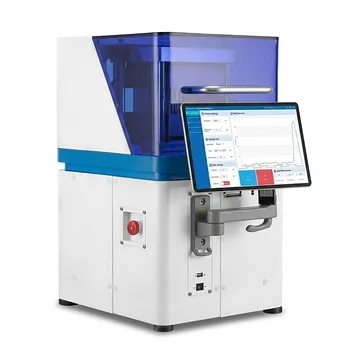
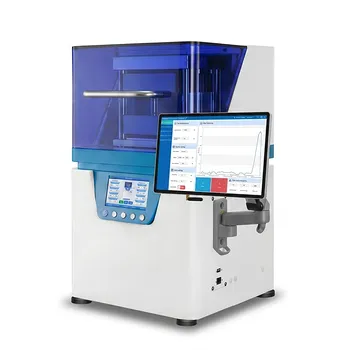
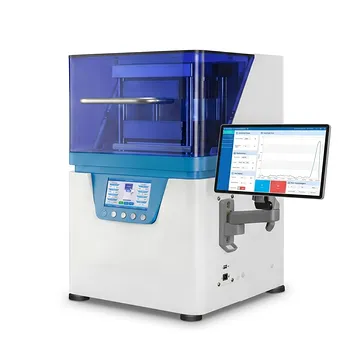
Precision and reliability define the modern laboratory press. Scientists and researchers prioritize these machines because they deliver the high precision required for exact data collection while withstanding the rigorous demands of experimental testing. Additionally, their design prioritizes ease of use, making them significantly more accessible and efficient than complex industrial alternatives.
In scientific research, the integrity of your data is paramount. Laboratory presses are the preferred solution because they combine extreme accuracy with the durability needed for rigorous testing, ensuring consistent results without the operational complexity of standard machinery.
The Pillars of Scientific Reliability
Unwavering Precision
Scientific inquiry demands data that is both accurate and reproducible. Laboratory presses are engineered specifically to apply force with high precision, minimizing variables that could skew results. This capability ensures that researchers can trust the validity of their findings across repeated trials.
Meeting Rigorous Demands
Experimental testing often pushes materials and equipment to their absolute limits. These presses are favored because they are capable of meeting these rigorous demands without failure. Whether subjecting a sample to extreme pressure or temperature, the machine maintains stability where other equipment might falter.
Durability and Longevity
A key factor in the preference for these machines is their robust construction. The durability of a laboratory press ensures a long operational life, providing value over many years of service. This reliability allows laboratories to maintain consistent testing schedules without frequent downtime for repairs.
Operational Simplicity
While industrial machinery is often complex and requires specialized training, laboratory presses are designed for the researcher. They are widely considered to be much easier to use compared to other types of presses. This user-friendly nature allows scientists to focus on the experiment itself rather than troubleshooting the equipment.
Understanding the Operational Context
Versatility vs. Volume
While laboratory presses are highly versatile, handling various processes within a testing environment, it is important to understand their intended scope. They are optimized for the nuance and accuracy of testing and development, rather than the high-speed throughput of mass manufacturing.
The Value of Consistency
The primary trade-off in selecting a laboratory press is prioritizing consistent results over raw production speed. These machines ensure that every cycle produces data you can rely on. If the goal is rapid, high-volume output with less regard for granular precision, a different class of press might be required.
Selecting the Right Tool for Your Research
When evaluating equipment for your laboratory, consider how the specific attributes of these presses align with your experimental goals.
- If your primary focus is data integrity: Leverage the high precision of a laboratory press to ensure every test yields accurate, reproducible figures.
- If your primary focus is workflow efficiency: Utilize the machine's ease of use to minimize operator error and reduce the time spent on training and setup.
- If your primary focus is long-term value: rely on the machine's durability to withstand rigorous daily use, ensuring a long and valuable operational lifespan.
By choosing a laboratory press, you are investing in a tool that transforms variable experimental conditions into controlled, measurable certainty.
Summary Table:
| Feature | Advantage for Researchers | Benefit to Experimentation |
|---|---|---|
| High Precision | Delivers exact force application | Ensures data reproducibility and accuracy |
| Ease of Use | Simple interface and operation | Reduces training time and operator error |
| Robust Durability | Built for rigorous testing | Long-term reliability and minimal downtime |
| Versatility | Supports varied testing processes | Adaptable to diverse material research goals |
Elevate Your Research with KINTEK Precision Solutions
Maximize your data integrity and laboratory efficiency with KINTEK’s industry-leading pressing technology. Whether you are conducting cutting-edge battery research or advanced material characterization, we provide the specialized equipment you need for consistent, reliable results.
Our comprehensive range includes:
- Manual & Automatic Presses for user-friendly operation.
- Heated & Multifunctional Models for complex experimental conditions.
- Glovebox-Compatible & Isostatic Presses (Cold/Warm) for specialized environments.
Don't compromise on the quality of your findings. Contact KINTEK today to find the perfect laboratory press tailored to your specific research demands.
Related Products
- Laboratory Hydraulic Press Lab Pellet Press Button Battery Press
- Laboratory Hydraulic Press Lab Pellet Press Machine for Glove Box
- Laboratory Hydraulic Pellet Press for XRF KBR FTIR Lab Press
- Laboratory Split Manual Heated Hydraulic Press Machine with Hot Plates
- Laboratory Hydraulic Split Electric Lab Pellet Press
People Also Ask
- How is a laboratory hydraulic press used for HAP composite gels? Master Mineral Substrate Standardization
- What role does a laboratory hydraulic press play in reaction pellets? Optimizing Lunar Soil and Metal Fuel Density
- What role does a laboratory hydraulic press play in the preparation of piezoelectric ceramic discs for DC-PG? | KINTEK
- Why is a laboratory hydraulic press required for PBAT and PLA sample preparation? Achieve Flawless Characterization
- What role does a laboratory hydraulic press play in the assembly of all-solid-state battery test cells? Expert Guide