Electrochemical Impedance Spectroscopy (EIS) serves as the definitive method for quantifying the ionic conductivity of PDA(Cu) modified separators within a symmetric cell. By measuring AC impedance, EIS provides the data necessary to calculate specific conductivity values, such as 5.02 x 10^-4 S/cm, confirming that the surface modification successfully enhances electrolyte wettability.
EIS does more than measure resistance; it validates the physical mechanism behind battery performance. It proves that PDA(Cu) coatings improve wettability and ionic conductivity, which is directly responsible for superior capacity retention during high-rate operations like 10 C.
The Mechanism of Measurement
Quantifying AC Impedance
To accurately determine ionic conductivity, one cannot simply measure direct current resistance. EIS measures the AC impedance of the system using a symmetric cell configuration.
Deriving Ionic Conductivity
The impedance data collected is mathematically converted into an ionic conductivity value. This calculation provides a standardized metric to compare the modified separator against unmodified versions.
Validating Wettability Improvements
The primary utility of this measurement is to confirm physical surface changes. The EIS results demonstrate that the PDA(Cu) coating significantly improves electrolyte wettability, allowing ions to pass through the separator more freely.
Linking Data to Battery Performance
Explaining High-Rate Capability
The data derived from EIS offers a physical explanation for operational success. The high ionic conductivity explains why the battery maintains capacity even under demanding conditions.
The 10 C Correlation
Specifically, the conductivity improvement supports operations at high rates, such as 10 C. Without the low impedance confirmed by EIS, the battery would likely suffer significant voltage drops and capacity loss at these speeds.
Understanding the Analytical Context
Beyond Simple Resistance
A common pitfall in separator analysis is relying on basic resistance checks. EIS is necessary because it isolates the ionic response from electronic resistance, providing a true picture of ion transport.
The Significance of the Value
The specific value recorded—5.02 x 10^-4 S/cm—is not arbitrary. It represents a threshold of efficiency required for high-performance applications, distinguishing the modified separator from standard alternatives.
Interpreting EIS for Development
If your primary focus is Material Synthesis:
Use EIS to verify that your PDA(Cu) coating has successfully altered the surface wettability, indicated by a marked increase in ionic conductivity.
If your primary focus is Battery Engineering:
Rely on the EIS-derived conductivity values to predict how well the cell will perform under high-rate discharge scenarios (like 10 C).
EIS provides the critical link between surface chemistry modifications and tangible electrical performance gains.
Summary Table:
| Metric | Value/Detail | Significance |
|---|---|---|
| Measurement Method | AC Impedance (Symmetric Cell) | Isolates ionic transport from electronic resistance |
| Key Performance Value | 5.02 x 10^-4 S/cm | High-efficiency threshold for performance apps |
| Surface Modification | PDA(Cu) Coating | Enhances electrolyte wettability and ion flow |
| Operational Link | 10 C Rate Support | Prevents voltage drops during high-speed discharge |
Precision Laboratory Solutions for Battery Research
Take your energy storage research to the next level with KINTEK’s specialized equipment. KINTEK offers a comprehensive range of laboratory pressing solutions, including manual, automatic, heated, and glovebox-compatible models, as well as cold and warm isostatic presses designed specifically for battery material development and separator characterization.
Whether you are refining PDA(Cu) coatings or optimizing electrode density, our tools ensure the precision required for high-performance battery engineering. Contact KINTEK today to find the perfect pressing solution for your research lab!
References
- Shixiang Liu, Xuan Zhang. Polydopamine Chelate Modified Separators for Lithium Metal Batteries with High‐Rate Capability and Ultra‐Long Cycling Life. DOI: 10.1002/advs.202501155
This article is also based on technical information from Kintek Solution Knowledge Base .
Related Products
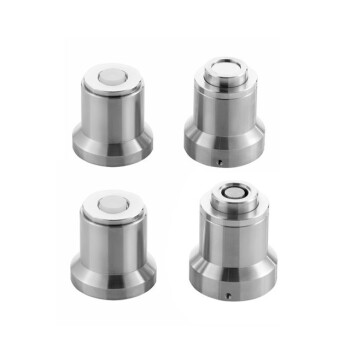
- Lab Cylindrical Press Mold for Laboratory Use
- Lab Button Battery Disassembly and Sealing Mold
- Laboratory Hydraulic Split Electric Lab Pellet Press
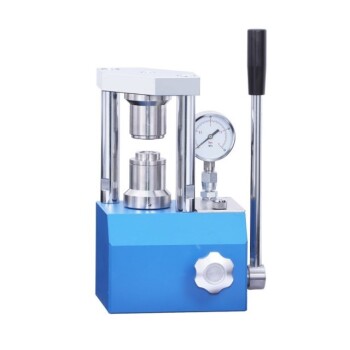
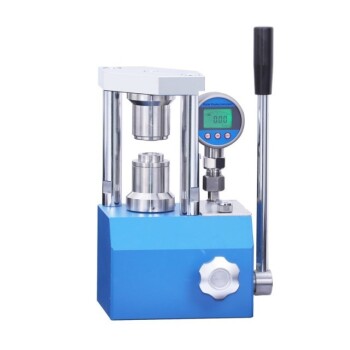
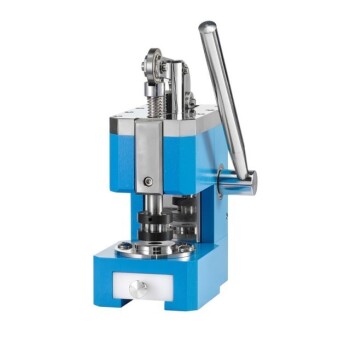
- Manual Button Battery Sealing Machine for Battery Sealing
- Button Battery Sealing Machine for Button Batteries
People Also Ask
- What is the purpose of incorporating cartridge heaters into a lab press mold for MLCC block compression? Optimize Results
- Why is precise cooling management of the lab press mold necessary? Protect Core Integrity in Thermoforming
- What is the function of a pressing tool in thermoplastic panels? Master Precision Shaping & Fusion Bonding
- Why is a high-performance laboratory molding press critical for in-situ electrolyte formation? Unlock Battery Success
- How does the geometry of laboratory molds influence mycelium-based composites? Optimize Density and Strength