Isostatic compaction is particularly suitable for materials characterized by high cost and a resistance to standard processing methods. Specifically, it is the ideal solution for difficult-to-compact materials including superalloys, titanium, tool steels, stainless steel, and beryllium.
The core value of isostatic compaction lies in its ability to handle premium materials that are difficult to consolidate. It is the preferred method when working with expensive alloys where material waste must be minimized and density uniformity is non-negotiable.
The Principles of Suitability
To understand why specific materials are chosen for isostatic compaction, one must look at the two primary driving factors: material behavior and material cost.
Handling "Difficult-to-Compact" Materials
Standard compaction methods often apply force from a single direction. This works for simple powders but fails with materials that have high internal friction or irregular particle shapes.
Isostatic compaction applies pressure uniformly from all directions. This allows it to successfully consolidate materials that would otherwise develop defects or uneven density under standard uniaxial pressure.
Justifying the Cost for "Expensive" Materials
The primary reference explicitly highlights that this method is suited for expensive materials.
When the raw material itself—such as titanium or beryllium—represents a significant investment, the processing method must guarantee a high yield. Isostatic compaction minimizes waste and rejects, making it an economically sound choice for high-value inputs.
Key Material Categories
Based on industry standards and the primary reference, the following specific materials are the prime candidates for this technology.
High-Performance Superalloys
Superalloys are engineered for extreme heat and stress resistance. Because they are inherently tough and expensive to produce, isostatic compaction is used to ensure they achieve near-net shape without compromising their internal structure.
Titanium
Titanium combines high strength with low weight, but it is notoriously difficult to process. Isostatic compaction allows manufacturers to achieve the necessary density in titanium components without the limitations of conventional pressing.
Tool Steels and Stainless Steel
Tool steels require exceptional hardness and durability. Isostatic compaction ensures these materials possess a uniform microstructure, which is critical for tools that must withstand high wear. Similarly, stainless steel benefits from the uniform density provided by this method.
Specialized Metals: Beryllium
Beryllium is explicitly identified as a material suitable for this process. Given its unique properties and high cost, isostatic compaction provides the control necessary to consolidate it safely and effectively.
Understanding the Trade-offs
While isostatic compaction is superior for the materials listed above, it is not the universal solution for all powder metallurgy.
Process Complexity vs. Material Value
This method is generally more complex and time-consuming than standard die compaction. It is typically not cost-effective for cheap, easily compacted powders where high throughput is the priority.
Suitability Threshold
The process is best reserved for scenarios where the material properties demand it. If a material is inexpensive and easy to compress, the added cost of isostatic processing offers diminishing returns.
Making the Right Choice for Your Project
Selecting the right compaction method depends entirely on the intersection of material cost and malleability.
- If your primary focus is High-Value Alloys (Titanium, Superalloys): You should utilize isostatic compaction to ensure uniform density and minimize the waste of expensive raw stock.
- If your primary focus is Hard-to-Process Metals (Tool Steels, Beryllium): You must rely on isostatic pressure to achieve consolidation that standard uniaxial pressing cannot provide.
Ultimately, isostatic compaction is the definitive choice for critical components where the cost of the material justifies the precision of the process.
Summary Table:
| Material Category | Key Examples | Primary Benefit of Isostatic Pressing |
|---|---|---|
| High-Performance Alloys | Superalloys, Titanium | Near-net shape consolidation with zero material waste |
| Hardened Tooling | Tool Steels, Stainless Steel | Uniform microstructure for extreme wear resistance |
| Specialized Metals | Beryllium | Precise control and safe consolidation of high-cost inputs |
| Difficult Powders | Irregularly shaped particles | Overcomes internal friction via uniform multi-directional pressure |
Elevate Your Material Research with KINTEK Isostatic Solutions
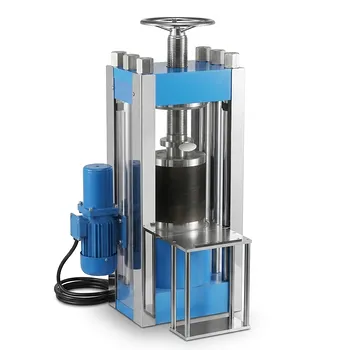
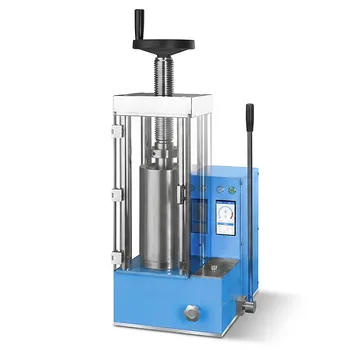
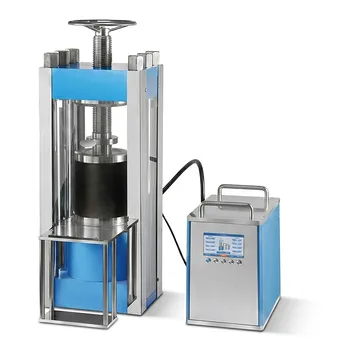
Maximize your high-value material yield and ensure uniform density with KINTEK’s precision laboratory pressing solutions. Whether you are working with expensive superalloys, titanium, or advanced battery research, our comprehensive range of manual, automatic, heated, and glovebox-compatible models—including specialized cold (CIP) and warm isostatic presses (WIP)—provides the versatility your lab demands.
Don't let expensive raw materials go to waste. Contact KINTEK today to consult with our experts and find the perfect compaction system for your specific research needs.
Related Products
- Split Warm Isostatic Lab Press 200 Ton Powder Compaction Chamber for Battery Research and Material Science
- Electric Isostatic Pressing Machine 40 Tons Automatic Laboratory Powder Compacting Press
- Automatic Lab Cold Isostatic Pressing CIP Machine
- Lab Isostatic Pressing Molds for Isostatic Molding
- Warm Isostatic Press for Solid State Battery Research Warm Isostatic Press
People Also Ask
- Why is Warm Isostatic Pressing suitable for materials that cannot be formed at room temperature? Master Material Density
- How is hydraulic pressure utilized as the pressure medium in warm isostatic pressing? Master Your Material Density
- What is the function of a booster source in the warm isostatic pressing process? Master Precision Fluid Injection
- What is the role of a heat generator in warm isostatic pressing? Master Thermal Precision for Superior WIP Results
- In which industries is Warm Isostatic Pressing (WIP) applied? Optimize High-Performance Material Densification