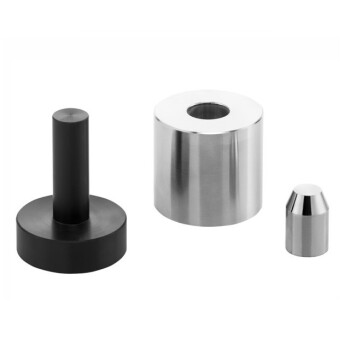
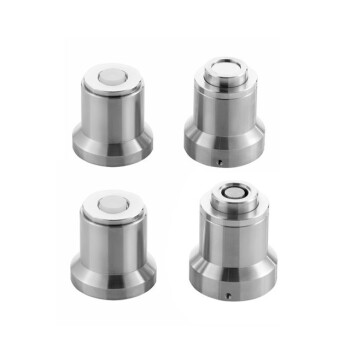
Precision laboratory molds transform electrolyte preparation by enforcing exact geometric consistency during the molding or pressing process. By strictly confining the gel electrolyte to specific dimensions—such as a defined radius and uniform thickness—these tools eliminate the irregularities inherent in manual shaping methods.
Standardization is the prerequisite for reliable data. By ensuring every electrolyte sample has identical physical dimensions, precision molds minimize assembly variables, allowing you to attribute performance changes to chemical properties rather than physical inconsistencies.
The Physics of Standardization
Achieving Geometric Consistency
In sandwich-type battery assemblies, the physical dimensions of the components dictate the quality of the build. Precision molds ensure that gel electrolytes achieve highly consistent geometric dimensions.
Controlling Thickness and Radius
The molds allow for the creation of electrolytes with exact specifications, such as a 3 mm thickness or a specific radius. This uniformity is impossible to achieve reliably with free-hand preparation techniques.
Optimizing the Battery Interface
Ensuring Tight Component Contact
A sandwich-type battery relies on the interaction between layers. Standardized dimensions are critical for ensuring tight interface contact between the electrolyte, the zinc foil, and the air electrode.
Reducing Interfacial Resistance
Gaps or uneven surfaces in the electrolyte layer impede the flow of ions. By guaranteeing precise contact through molding, you effectively reduce interfacial resistance, which is a primary factor in efficient battery operation.
Data Integrity and Reliability
Creating Comparable Samples
When running experimental trials, variable sample sizes introduce noise into your data. Precision molds ensure that performance data collected from different test samples remains comparable.
Ensuring Reliability of Results
Because the physical variables are controlled, you can trust that the results are reliable. The data reflects the intrinsic performance of the materials, not artifacts of a sloppy assembly process.
Understanding the Constraints
The Rigidity of Standardization
While precision molds offer superior consistency, they also impose strict geometric limits. The dimensions of your electrolyte are confined to the specifications of the mold (e.g., a fixed 3 mm thickness).
Dependency on Mold Accuracy
The quality of your sample is entirely dependent on the quality of the mold. If the mold itself is flawed or not perfectly aligned with your zinc foil and air electrode dimensions, the resulting tight interface contact will be compromised.
Making the Right Choice for Your Goal
To maximize the value of precision molding in your battery research, consider your specific objectives:
- If your primary focus is reducing experimental error: Prioritize molds that match the exact dimensions of your electrode components to ensure data comparability across all samples.
- If your primary focus is maximizing energy efficiency: Use precision molding to achieve the thinnest viable electrolyte layer, thereby minimizing the distance ions must travel and reducing interfacial resistance.
Precision molding is not just about shaping materials; it is about establishing the geometric baseline required for rigorous scientific inquiry.
Summary Table:
| Key Feature | Benefit for Battery Electrolytes | Impact on Research |
|---|---|---|
| Geometric Consistency | Exact radius and uniform thickness (e.g., 3mm) | Eliminates sample-to-sample physical variables |
| Interface Optimization | Ensures tight contact with zinc foil and air electrodes | Dramatically reduces interfacial resistance |
| Standardization | Replaces manual shaping with repeatable molding | Ensures comparable and reliable experimental data |
| Physical Precision | High-quality, perfectly aligned mold dimensions | Minimizes assembly noise for cleaner material analysis |
Optimize Your Battery Research with KINTEK Precision Solutions
Precision is the foundation of breakthrough battery technology. KINTEK specializes in comprehensive laboratory pressing solutions designed to eliminate variables and deliver repeatable results. Whether you are developing sandwich-type electrolytes or advanced solid-state cells, our equipment provides the exactness your data demands.
Our Specialized Range Includes:
- Manual & Automatic Presses: For versatile sample preparation.
- Heated & Multifunctional Models: To handle complex material requirements.
- Glovebox-Compatible Designs: Perfect for air-sensitive battery research.
- Cold & Warm Isostatic Presses (CIP/WIP): Ensuring peak density and uniformity.
Don't let physical inconsistencies compromise your chemical breakthroughs. Contact KINTEK today to find the perfect mold and press for your lab and take the guesswork out of your electrolyte preparation.
References
- Xianwei Li, zhongyi zhang. A β-cyclodextrin polymer/polyacrylate interpenetrating network gel electrolyte and its application in solid-state zinc-air batteries. DOI: 10.2139/ssrn.5658575
This article is also based on technical information from Kintek Solution Knowledge Base .
Related Products
- Carbide Lab Press Mold for Laboratory Sample Preparation
- Lab Cylindrical Press Mold for Laboratory Use
- Lab Button Battery Tablet Press Sealing Mold
- Lab Infrared Press Mold for Laboratory Applications
- Lab Polygon Press Mold
People Also Ask
- What is the purpose of incorporating cartridge heaters into a lab press mold for MLCC block compression? Optimize Results
- What is the function of a pressing tool in thermoplastic panels? Master Precision Shaping & Fusion Bonding
- Why is precise cooling management of the lab press mold necessary? Protect Core Integrity in Thermoforming
- How does the geometry of laboratory molds influence mycelium-based composites? Optimize Density and Strength
- What is the significance of standardized molds in lab presses? Ensure Precise Seal Material Evaluation