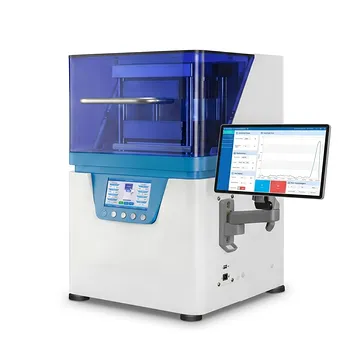
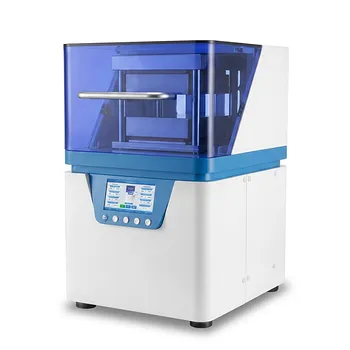
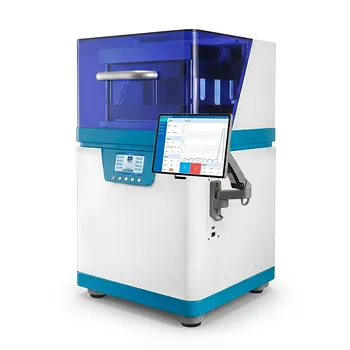
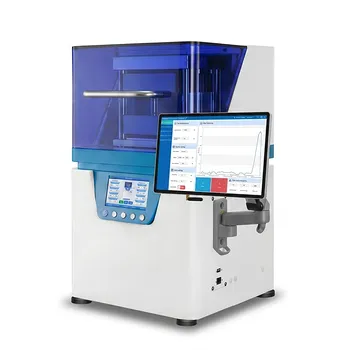
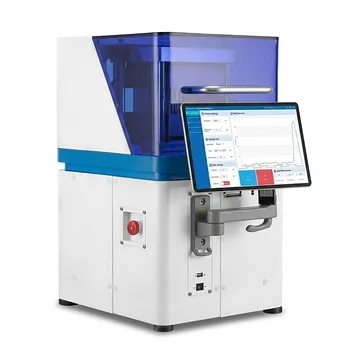
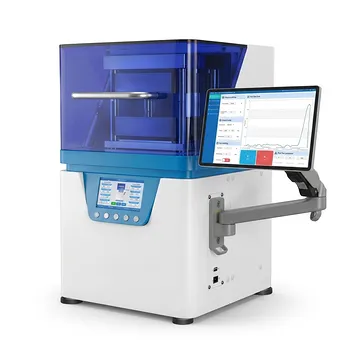
The integration of thermal energy with mechanical force allows a heated hydraulic press to transform raw electrode mixtures into highly efficient, cohesive layers. By simultaneously applying pressure and a controlled thermal field, the press induces thermoplastic flow and physical cross-linking between active materials, conductive agents, and binders. This synergy significantly reduces interfacial resistance and optimizes the internal pore structure, directly enhancing the electrochemical reaction kinetics required for high-performance batteries and biosensors.
Core Takeaway: A heated hydraulic press optimizes electrode molding by using thermal energy to soften binders and promote material integration, creating a dense, low-resistance conduction network that maximizes energy density and mechanical durability.
Enhancing Material Adhesion and Cohesion
Inducing Thermoplastic Flow in Binders
The application of heat during the pressing process allows the polymer binder to reach a viscous flow state. This softening ensures that the binder distributes uniformly throughout the electrode matrix, coating active material particles more effectively than cold pressing alone.
Strengthening the Current Collector Bond
Thermal pressing significantly improves the adhesion between the electrode layer and the current collector foil. By promoting better wetting and physical cross-linking at the interface, the press ensures the active material remains mechanically stable during the volume changes associated with charge-discharge cycles.
Facilitating Binder-Free Electrode Fabrication
In advanced applications using supercooled solvents, a heated press utilizes the intrinsic adhesion of the solvent to bond active materials directly to foils. This eliminates the need for traditional NMP solvents or polymer binders, creating a "cleaner" electrode with continuous ion transport paths.
Optimizing the Internal Electrode Structure
Precision Density and Thickness Control
A hydraulic press provides the high-precision pressure needed to compress powders into green bodies with specific densities. This compaction ensures tight contact between internal particles, which is critical for reducing contact resistance and increasing the overall energy density of the cell.
Regulating Porosity for Electrolyte Penetration
While increasing density is vital, the press is also used to optimize the internal pore structure. Precise control over the compaction force regulates the electrolyte penetration paths, ensuring that the ions can move efficiently through the electrode even at high current densities.
Improving Ionic and Electronic Conduction
By ensuring tight contact between the active material, conductive carbon, and the separator, the press creates a seamless conduction network. In semi-solid or solid-state batteries, this pressure is essential for maintaining the interfacial contact necessary for efficient ion transport.
Understanding the Trade-offs
The Risk of Over-Compaction
While high density is generally desirable, excessive pressure can collapse the micropore network entirely. If the porosity is too low, electrolyte wettability decreases, leading to poor ion mobility and reduced performance at high discharge rates.
Thermal Degradation of Components
Applying excessive heat can lead to the degradation of sensitive binders or the oxidation of conductive agents. It is critical to match the press temperature to the specific glass transition temperature ($T_g$) or melting point of the polymer matrix to avoid structural failure.
Pressure Non-Uniformity
In large-scale electrode molding, maintaining uniform pressure across the entire surface is a challenge. Any deviation in pressure can lead to "hot spots" or areas of high resistance, which causes uneven current distribution and shortens the lifespan of the battery or biosensor.
How to Apply This to Your Project
Recommendations for Material Optimization
- If your primary focus is maximizing energy density: Use higher compaction pressures and temperatures near the binder's softening point to achieve a high-density filling with minimal void space.
- If your primary focus is high-rate performance: Prioritize a moderate pressure setting that increases particle contact while preserving a well-distributed network of pores for rapid electrolyte diffusion.
- If your primary focus is solid-state or semi-solid systems: Utilize the heated press to ensure a seamless interface between the solid electrolyte and the electrode, as heat is necessary to merge these distinct layers into a single cohesive unit.
- If your primary focus is binder-free electrodes: Apply high pressure (e.g., 500 MPa) at specific temperatures to leverage the cohesive properties of specialized solvents or supercooled salts.
Through the precise calibration of heat and pressure, the hydraulic press serves as a critical bridge between raw chemical mixtures and high-functioning electrochemical architectures.
Summary Table:
| Optimization Factor | Mechanism | Impact on Performance |
|---|---|---|
| Material Adhesion | Induces thermoplastic flow in polymer binders | Stronger bonds and improved mechanical durability |
| Internal Structure | Precision density and thickness control | Higher energy density and lower contact resistance |
| Pore Regulation | Controlled compaction force | Optimized electrolyte penetration and ion mobility |
| Network Conduction | Enhanced contact between active materials | Faster electrochemical reaction kinetics |
Elevate Your Battery Research with KINTEK
Precision is paramount in electrode molding. KINTEK specializes in comprehensive laboratory pressing solutions designed to optimize your electrochemical architectures. From manual and automatic heated presses to multifunctional, glovebox-compatible models, and advanced cold/warm isostatic presses, we provide the tools necessary to achieve superior energy density and material cohesion.
Ready to enhance your lab's efficiency? Contact KINTEK today to find the perfect pressing solution for your research!
References
- D. M. Hoyle, Tom McLeish. Large amplitude oscillatory shear and Fourier transform rheology analysis of branched polymer melts. DOI: 10.1122/1.4881467
This article is also based on technical information from Kintek Solution Knowledge Base .
Related Products
- Heated Hydraulic Press Machine with Heated Plates for Vacuum Box Laboratory Hot Press
- Automatic High Temperature Heated Hydraulic Press Machine with Heated Plates for Lab
- Automatic Heated Hydraulic Lab Press with Programmable Touch Screen Controls and Precision Temperature Regulation
- Automatic Hydraulic Heat Press Machine with Multi Stage Programmable Control and Integrated Water Cooling Plate Size 180x180mm
- Automatic Hydraulic Hot Press with Large Plate and Precision Temperature Control for Advanced Material Sample Preparation and Industrial Research
People Also Ask
- What are the requirements for electrode pressing with high-viscosity ionic liquids like EMIM TFSI? Optimize Performance
- How does a laboratory heated hydraulic press facilitate PBN sample prep for WAXS? Achieve Precise X-Ray Scattering
- What are the industrial applications of heated hydraulic presses? Master Heat & Force for Precision Manufacturing
- Function of a Laboratory Hydraulic Press with Heated Platens in SSE? Enhance Battery Density & Conductivity
- How are heated hydraulic presses utilized in the preparation of thin films? Key Mechanisms and Applications