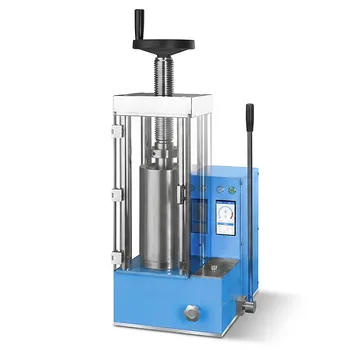
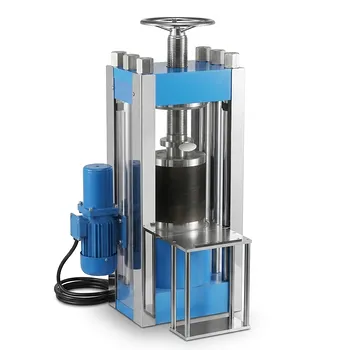
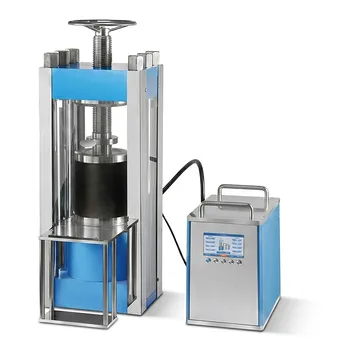
The fundamental distinction lies in the direction of pressure application. Metal mold pressing utilizes uniaxial pressure, applying force from a single axis using a rigid punch and die. Conversely, Cold Isostatic Pressing (CIP) employs isostatic pressure, utilizing a liquid medium to apply force uniformly from all directions simultaneously.
Core Takeaway While metal mold pressing is limited by friction and directional force, CIP utilizes fluid dynamics to apply equal pressure from every angle. This eliminates the density gradients inherent in uniaxial pressing, resulting in a product with superior homogeneity, uniform shrinkage during sintering, and the ability to maintain structural integrity in complex shapes.
The Mechanics of Pressure Application
Uniaxial vs. Isostatic Force
Metal mold pressing relies on a mechanical hydraulic press to drive a punch into a mold. This limits force vectors to a single axis (up and down).
In contrast, CIP places the powder within an elastomeric mold (a flexible bag) submerged in a liquid medium. The pressure is transmitted through the fluid, compressing the part equally from every side.
The Problem of Friction
A critical limitation of metal mold pressing is the friction generated between the powder and the rigid metal walls.
This friction causes significantly uneven pressure distribution. The edges near the punch may be highly compressed, while the center or bottom remains less dense.
CIP eliminates this friction. Because the liquid applies pressure to a flexible mold that moves with the powder, there is no drag against a rigid wall, ensuring the internal pressure remains consistent throughout the part.
Impact on Material Quality
Density and Homogeneity
The primary output of the CIP process is a dense green body with high uniformity.
Because the pressure is equalized, density variations are minimized. This leads to predictable compression and prevents the formation of "gradient properties," where one part of the component is stronger or denser than another.
Structural Integrity and Grains
The high pressure utilized in CIP induces plastic deformation and recrystallization in the powder.
This results in a body with fine grains, which directly contributes to improved material hardness, toughness, and wear resistance. The uniformity of the structure is critical for preventing cracking or distortion during subsequent vacuum sintering.
Shape Capabilities
Handling Complexity
Metal mold pressing is typically restricted to simple shapes with fixed dimensions due to the limitations of rigid tooling and ejection requirements.
CIP excels at producing complex shaped parts or billets. Because the mold is flexible and pressure is omnipresent, it can form geometries that would be impossible to eject from a rigid metal die.
Production Efficiency
CIP allows for "one-time molding" of complex shapes. By forming the shape correctly in the pressing stage, manufacturers can significantly reduce the complexity and cost of post-processing or machining.
Understanding the Trade-offs
While CIP offers superior density and shape flexibility, it is distinct from metal mold pressing in terms of tooling and dimensionality.
Tooling Rigidity
Metal mold pressing uses rigid dies, which provide excellent dimensional control for simple shapes.
CIP uses flexible elastomeric molds. While this allows for complex geometries, the flexible nature of the mold means the outer dimensions of the "green" (unfired) part may vary slightly more than those produced in a rigid steel die.
Process Medium
CIP requires the management of a liquid medium (wet or dry bag technology). This adds a layer of process management compared to the purely mechanical nature of a standard hydraulic press.
Making the Right Choice for Your Goal
To determine which method suits your manufacturing requirements, evaluate your priorities regarding shape complexity and internal consistency.
- If your primary focus is internal integrity: Choose CIP to ensure uniform density and eliminate the risk of cracking or deformation during sintering.
- If your primary focus is complex geometry: Choose CIP to mold intricate shapes in a single step, minimizing the need for expensive post-process machining.
- If your primary focus is simple, high-speed dimensioning: Acknowledge that metal mold pressing may suffice for simple geometries where internal density gradients are acceptable.
Ultimately, CIP is the superior choice when the mechanical properties and homogeneity of the final material are non-negotiable.
Summary Table:
| Feature | Metal Mold Pressing | Cold Isostatic Pressing (CIP) |
|---|---|---|
| Pressure Direction | Uniaxial (Single axis) | Isostatic (Uniform from all sides) |
| Pressure Medium | Rigid punch and die | Liquid (via elastomeric mold) |
| Friction Effects | High friction; uneven density | Negligible friction; uniform density |
| Shape Complexity | Limited to simple geometries | High; capable of complex shapes |
| Grain Structure | Variable density gradients | Fine grains; superior homogeneity |
| Sintering Result | Risk of warping or cracking | Uniform shrinkage; high integrity |
Elevate Your Material Research with KINTEK
Precision matters in battery research and advanced material science. KINTEK specializes in comprehensive laboratory pressing solutions, offering manual, automatic, heated, multifunctional, and glovebox-compatible models, as well as cold and warm isostatic presses tailored for your specific needs.
Whether you are looking to eliminate density gradients or form complex geometries, our expert team is ready to help you find the perfect press. Contact us today to optimize your lab's performance!
Related Products
- Electric Lab Cold Isostatic Press CIP Machine
- Electric Split Lab Cold Isostatic Pressing CIP Machine
- Automatic Lab Cold Isostatic Pressing CIP Machine
- Manual Cold Isostatic Pressing CIP Machine Pellet Press
- Electric Isostatic Pressing Machine 40 Tons Automatic Laboratory Powder Compacting Press
People Also Ask
- What role do electric lab cold isostatic presses play in industrial contexts? Bridge R&D and Manufacturing with Precision
- What are the applications of electric lab cold isostatic presses in research settings? Advance Material R&D with High-Pressure CIPs
- How does electrical Cold Isostatic Pressing (CIP) contribute to cost savings? Unlock Efficiency and Reduce Expenses
- What are some research applications of electric lab CIPs? Unlock Uniform Powder Densification for Advanced Materials
- What are the characteristics of standard off-the-shelf electric lab CIP solutions? Achieve Immediate, Cost-Effective Processing