Isostatic pressing is fundamentally utilized in the aerospace industry to manufacture critical, high-performance components such as jet engine parts, turbine blades, and complex structural castings. By applying equal pressure from every direction, this technique produces parts with exceptional strength-to-weight ratios and geometric complexity, which are prerequisites for modern aircraft efficiency and safety.
Core Takeaway In aerospace engineering, where material failure is not an option, isostatic pressing is the standard for achieving uniform density in complex parts. It allows for the creation of lightweight, high-strength components from advanced ceramics and composites that can withstand extreme thermal and mechanical stress.
Key Aerospace Applications
The aerospace sector relies on isostatic pressing to solve specific manufacturing challenges related to engine performance and structural integrity.
Jet Engine and Turbine Components
The most prominent application of this technology is in the production of aircraft engine components and turbine blades.
These parts operate under immense stress and heat. Isostatic pressing ensures they maintain structural integrity without the microscopic flaws often found in traditional casting methods.
Lightweight Aerospace Castings
Efficiency in aerospace is defined by the strength-to-weight ratio.
Isostatic pressing is used to create durable castings that are significantly lighter than standard counterparts. This weight reduction directly contributes to improved fuel economy and payload capacity.
Advanced Ceramics and Composites
Supplementary data indicates that Cold Isostatic Pressing (CIP) is specifically employed to shape advanced ceramics and composites.
These materials are essential for parts that must survive extreme temperature fluctuations and pressure environments where traditional metals might fail.
The Engineering Advantages
The "Deep Need" for isostatic pressing stems from the limitations of conventional unidirectional pressing.
Uniform Density and Strength
In traditional pressing, friction can cause uneven density, leading to weak points.
Isostatic pressing applies pressure using a liquid or gas medium from all directions equally. This results in uniform density throughout the component, which dramatically reduces component failure rates.
Complex Geometries
Aerospace designs often require intricate shapes for aerodynamics or cooling channels.
Because the pressure is omnidirectional, manufacturers can produce complex shapes that would be impossible or prohibitively expensive to machine using other methods.
Understanding the Process Requirements
While isostatic pressing offers superior material properties, it involves specific operational requirements that differ from standard manufacturing.
Containment Complexity
Unlike simple die pressing, isostatic pressing requires the raw material (metal powder) to be confined within a flexible membrane or a hermetic container.
This adds a layer of complexity to the tooling process. The container must be designed to deform uniformly to transfer pressure to the powder without rupturing.
The Necessity of High Pressure
To achieve the high compact densities required for aerospace durability, the process utilizes intense pressure via a liquid or gas medium.
This requires specialized, robust equipment capable of safely managing these high-energy states, distinguishing it from lower-stakes manufacturing environments.
Making the Right Choice for Your Project
When integrating isostatic pressing into your aerospace manufacturing chain, consider your specific material goals.
- If your primary focus is reliability: Utilize isostatic pressing to achieve uniform density, which is the key factor in reducing fatigue and failure rates in critical safety components.
- If your primary focus is efficiency: Leverage the process to maximize strength-to-weight ratios, allowing for lighter engine components that do not sacrifice durability.
- If your primary focus is material innovation: Use Cold Isostatic Pressing (CIP) to process advanced ceramics and composites that require high density to function in extreme temperatures.
Isostatic pressing transforms the theoretical potential of advanced materials into the reliable, tangible reality required for flight.
Summary Table:
| Application Feature | Impact on Aerospace Components | Benefit to Manufacturer |
|---|---|---|
| Omnidirectional Pressure | Eliminates microscopic flaws and weak points | Superior structural integrity and safety |
| Uniform Density | High strength-to-weight ratios | Improved fuel economy and payload capacity |
| Complex Geometries | Ability to form intricate aerodynamic shapes | Reduced machining costs and material waste |
| Advanced Material Compatibility | Processes ceramics and composites | Survival in extreme thermal/mechanical stress |
Elevate Your Aerospace Manufacturing with KINTEK
Precision is non-negotiable in aerospace engineering. KINTEK specializes in comprehensive laboratory pressing solutions designed to meet the rigorous demands of high-performance material research. Whether you are developing the next generation of battery technology or advanced aerospace composites, our diverse range of manual, automatic, heated, and multifunctional presses, alongside our specialized Cold and Warm Isostatic Presses, provides the uniform density and reliability your projects require.
Why choose KINTEK?
- Precision Engineering: Achieve uniform compaction for complex geometries.
- Versatile Solutions: Equipment suitable for ceramics, composites, and battery research.
- Expert Support: We help you select the right pressing technology to eliminate material failure.
Ready to transform your material innovation into flight-ready reality? Contact our technical experts today to find the perfect pressing solution for your lab.
Related Products
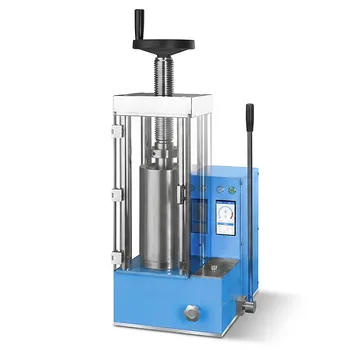
- Electric Isostatic Pressing Machine 40 Tons Automatic Laboratory Powder Compacting Press
- Warm Isostatic Press for Solid State Battery Research Warm Isostatic Press
- Split Warm Isostatic Lab Press 200 Ton Powder Compaction Chamber for Battery Research and Material Science
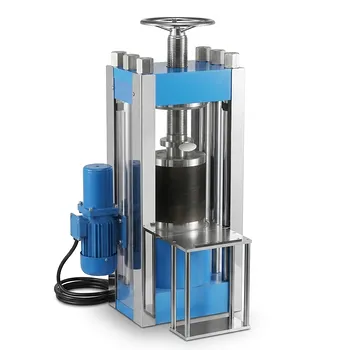
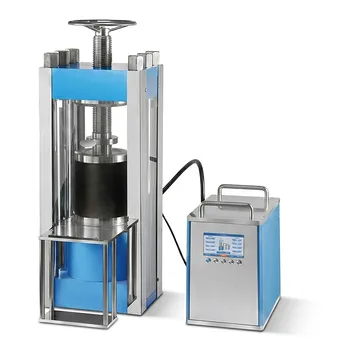
- Electric Lab Cold Isostatic Press CIP Machine
- Split Hot Isostatic Pressing Machine 150 Ton Laboratory Heated Isostatic Press
People Also Ask
- What are the key characteristics of the isostatic pressing process? Unlock Uniform Density and Complex Geometries
- Why is vacuum-sealed packaging necessary before isostatic pressing of CuPc thin films? Protect Integrity & Uniformity
- How is pressure applied to the material during isostatic pressing? Master Uniform Density and Complex Geometries
- How does pressure distribute during isostatic pressing of aluminum? Achieve Uniform Density for Your Lab Materials
- What are the applications of isostatic pressing in the automotive industry? Precision Manufacturing for High-Performance Parts