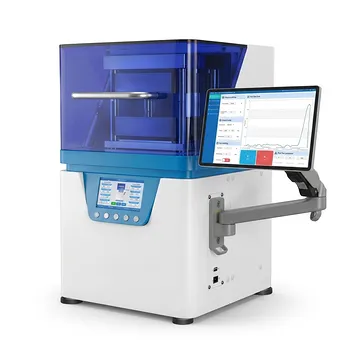
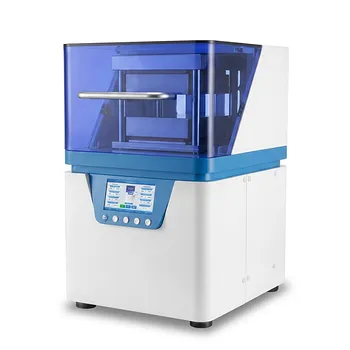
Determining the correct platen size begins with a direct assessment of the maximum physical dimensions of the samples or molds you intend to process. While the decision is primarily driven by sample geometry, you must also weigh the need for future flexibility against available laboratory space.
The ideal platen size balances current sample dimensions with the need for operational flexibility. While larger platens accommodate a wider variety of mold sizes, they often require larger equipment footprints and higher energy consumption.
Analyzing Sample Requirements
Matching Dimensions to the Application
The most fundamental factor in selecting a platen is the physical size of your sample. Whether measured in inches or millimeters, the platen must provide adequate surface area to fully support the sample or mold assembly.
If the sample extends beyond the platen edges, you risk uneven pressure distribution or incomplete processing.
Planning for Versatility
Laboratory requirements often change over time. If your lab handles a variety of applications, selecting a larger platen size offers greater flexibility.
A larger surface area allows you to process both small and large samples on the same machine. This prevents the need to purchase additional equipment if your sample sizes increase in the future.
Operational Constraints and Efficiency
Assessing Laboratory Space
There is a direct correlation between platen size and the overall footprint of the machine. Larger platens generally require a larger press frame.
If you are working in a space-constrained environment, such as a crowded benchtop, a smaller platen might be necessary. You must measure the available lab space to ensure the unit fits without obstructing workflow.
Energy and Heating Considerations
If you are selecting a heated press, platen size impacts energy usage. A larger platen has a greater thermal mass, which requires more energy to heat and may take longer to reach the desired temperature.
Additionally, you must consider the daylight opening, which is the vertical space within the sample compartment. While platen size dictates the horizontal area, the daylight opening ensures there is enough vertical clearance to insert and remove the sample.
Understanding the Trade-offs
The Cost of Flexibility
While opting for the largest available platen seems like a safe choice for versatility, it comes with downsides. Oversized platens on a hydraulic press can lead to inefficient energy usage if you primarily process small samples.
Furthermore, a larger machine typically incurs higher capital costs and may require more robust power systems or support structures.
Force Distribution Requirements
It is critical to evaluate the load or force required relative to the platen size.
A press rated for a specific tonnage will distribute that force across the platen area. Ensure that the press can deliver the necessary specific pressure (PSI) to your sample, regardless of the total platen size.
Making the Right Choice for Your Goal
To select the optimal platen size, prioritize your constraints based on your laboratory's specific operational needs.
- If your primary focus is Flexibility: Select a platen size larger than your current maximum sample to accommodate future, unforeseen applications.
- If your primary focus is Efficiency: Choose a platen size that closely matches your standard sample dimensions to minimize energy usage and warmup times.
- If your primary focus is Space Optimization: Limit the platen size to the minimum required for your largest sample to keep the equipment footprint compact.
Select the platen that covers your largest necessary sample without exceeding the physical and energy limitations of your facility.
Summary Table:
| Factor | Priority: Flexibility | Priority: Efficiency | Priority: Space |
|---|---|---|---|
| Platen Size | Larger than current max sample | Closely matches sample size | Minimum required for largest sample |
| Footprint | Large (Floor/Heavy Bench) | Moderate | Compact (Benchtop) |
| Energy Usage | Higher (Greater thermal mass) | Optimized | Minimal |
| Primary Benefit | Future-proof for varied molds | Faster heat-up & lower costs | Saves valuable lab workspace |
Maximize Your Lab’s Precision with KINTEK
Selecting the right platen size is critical for achieving uniform pressure and thermal consistency in battery research and material science. KINTEK specializes in comprehensive laboratory pressing solutions, offering manual, automatic, heated, multifunctional, and glovebox-compatible models, as well as cold and warm isostatic presses.
Whether you need a compact benchtop unit or a high-capacity system, our experts are ready to help you match the perfect press to your specific sample requirements.
Ready to optimize your pressing workflow? Contact us today to find the ideal solution for your laboratory!
Related Products
- Automatic Heated Hydraulic Lab Press Machine 200x200 Plate Size for Battery Research and Materials Science
- Automatic Large Format Laboratory Heated Hydraulic Press 400x400mm Plate Capacity
- Automatic Heated Hydraulic Lab Press 120x120mm Plate Fully Automated Material Research Press
- 24T 30T 60T Heated Hydraulic Lab Press Machine with Hot Plates for Laboratory
- Automatic Hydraulic Heat Press Machine with Multi Stage Programmable Control and Integrated Water Cooling Plate Size 180x180mm
People Also Ask
- How is the temperature of the hot plate controlled in a hydraulic lab press? Achieve Thermal Precision (20°C-200°C)
- What are the recommended cleaning procedures for a heated lab press? Ensure Precision and Longevity in Your Lab
- Function of a Laboratory Hydraulic Press with Heated Platens in SSE? Enhance Battery Density & Conductivity
- What are the industrial applications of heated hydraulic presses? Master Heat & Force for Precision Manufacturing
- Why is a laboratory heated hydraulic press required? Ensure Precise Vulcanization for NBR/EPDM Nanocomposites