Preparing a sample as a dense pellet fundamentally transforms X-ray Fluorescence (XRF) analysis from a rough estimation into a precise scientific measurement. By compressing loose powder into a solid, flat disc, you eliminate the variability caused by air gaps and irregular surfaces. This process significantly increases signal intensity, allowing for the accurate detection of elements present in the parts-per-million (ppm) range.
Core Takeaway While loose powders suffer from scattering and dilution caused by void spaces, pressed pellets offer a mechanically stable, homogeneous surface. This density creates a direct correlation between the sample's composition and the resulting spectral intensity, making it the superior method for analyzing trace elements and ensuring repeatability.
The Physics of Compaction
Elimination of Void Spaces
Loose powders naturally contain significant amounts of empty space (air) between particles. In XRF analysis, these voids act as a diluent.
By applying high pressure to create a dense pellet, you physically force particles together and eliminate these void spaces. This ensures the X-ray beam interacts with more actual sample material and less empty space.
Mitigation of Matrix Effects
"Matrix effects" refer to how the physical state of a sample interferes with X-ray transmission. Irregular surfaces and localized heterogeneities can unpredictably alter emission spectra.
Compacting the sample creates a uniform, flat surface. This standardization minimizes surface scattering and ensures the sample is homogeneous, representing the bulk material as accurately as possible.
Impact on Analytical Performance
Higher Signal Intensity
Because the sample is denser, the concentration of atoms in the X-ray beam's path is higher compared to loose powder.
This results in higher peak intensities for most elements. Stronger signals lead to better signal-to-noise ratios, which are essential for distinguishing real data from background static.
Superior Trace Element Sensitivity
The primary reference highlights that pressed pellets are "particularly excellent" for analyzing elements in the ppm (trace) range.
Supplementary data confirms this is critical for detecting heavy metals like arsenic, cadmium, and mercury. The reduced scattering allows the instrument to "see" these faint signals clearly, which would otherwise be lost in the noise of a loose powder sample.
Improved Repeatability
Scientific data must be reproducible. Loose powders can shift or settle, changing the geometry of the analysis surface between runs.
A pressed pellet is a solid artifact. Its surface flatness and density remain constant, ensuring that if you measure the sample three times, you get the same result three times.
Understanding the Trade-offs
Mineralogical Effects Persist
While pellets are superior to loose powder, they do not dissolve the sample. This means "grain-size effects" (where X-rays are blocked by large particles) can still occur if the powder wasn't ground finely enough before pressing.
The Role of Binders
Some powders will not stick together under pressure alone. You may need to mix the sample with a binder, such as cellulose wax.
While this ensures a stable pellet, be aware that the binder slightly dilutes the sample. This is a necessary compromise to achieve the mechanical stability required for the vacuum environment of many XRF instruments.
Pellets vs. Fused Discs
It is important to distinguish pellets from fused discs.
- Pressed Pellets are the standard for trace analysis and minor elements.
- Fused Discs (melting the sample into glass) are superior for major elements because they completely eliminate mineralogical effects, but they are often less suitable for volatile trace elements.
Making the Right Choice for Your Goal
To maximize the quality of your XRF data, align your preparation method with your specific analytical targets:
- If your primary focus is Trace Analysis (ppm range): Rely on pressed pellets, as they offer the best balance of high signal intensity and low background scattering for heavy metals.
- If your primary focus is Major Elements (high precision): Acknowledge that while pellets are good, fused discs may offer higher accuracy by fully eliminating grain-size effects.
- If your primary focus is Speed/Rough Screening: You may skip pelletizing, but you must accept that loose powder results will be semi-quantitative at best due to air voids.
The effort invested in pressing a dense pellet yields a direct return in the reliability and sensitivity of your final data.
Summary Table:
| Feature | Loose Powder | Pressed Pellet | Fused Bead |
|---|---|---|---|
| Analytical Precision | Low (Semi-quantitative) | High | Very High |
| Trace Element Detection | Poor | Excellent (ppm range) | Moderate (due to dilution) |
| Surface Uniformity | Irregular / Low | Flat / Homogeneous | Perfectly Homogeneous |
| Preparation Time | Minimal | Moderate | High |
| Void Space Effect | Significant (Air gaps) | Minimized | Eliminated |
Elevate Your XRF Accuracy with KINTEK Pressing Solutions
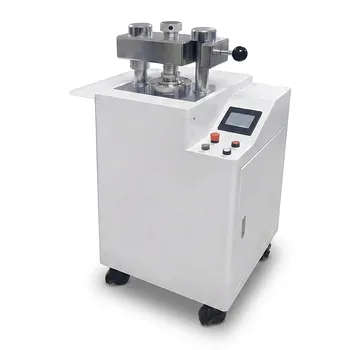
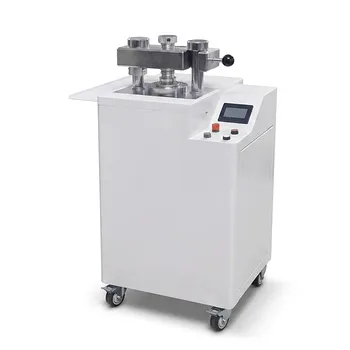
Precise XRF results start with perfect sample preparation. KINTEK specializes in comprehensive laboratory pressing solutions designed to eliminate variability and maximize signal intensity in your research. Whether you are conducting battery research or environmental trace analysis, our equipment ensures the mechanical stability and surface flatness required for repeatable data.
Our specialized range includes:
- Manual & Automatic Presses: For flexible, high-throughput pelletizing.
- Heated & Multifunctional Models: To handle complex material behaviors.
- Glovebox-Compatible & Isostatic Presses: Specialized solutions for air-sensitive samples and uniform density.
Don't let void spaces compromise your trace element detection. Contact KINTEK today to find the perfect press for your lab and transform your powders into high-density analytical standards.
Related Products
- Automatic Fluorescence Sample Preparation Press 40 Ton Lab Pellet Press for XRF Analysis
- Automatic XRF Pellet Press for Laboratory Spectrometry Sample Preparation
- Lab XRF Boric Acid Powder Pellet Pressing Mold for Laboratory Use
- XRF KBR Plastic Ring Lab Powder Pellet Pressing Mold for FTIR
- XRF KBR Steel Ring Lab Powder Pellet Pressing Mold for FTIR
People Also Ask
- What is the general process for preparing a sample pellet for XRF? Master Consistency for Accurate Analysis
- What are the common operational types of lab pellet presses? Choosing the Right Manual, Automatic, or Hydraulic System
- What are the emerging trends in the design and materials of lab pellet presses? Modernize Your Lab Efficiency
- What are common lab pellet press issues? Expert Troubleshooting Guide for Reliable Material Research
- What is the role of a laboratory press in COF electrolyte prep? Achieving High-Performance Pellet Densification