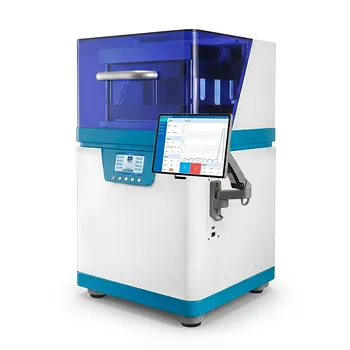
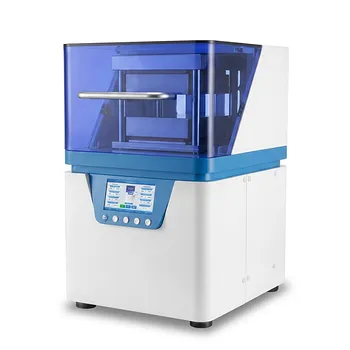
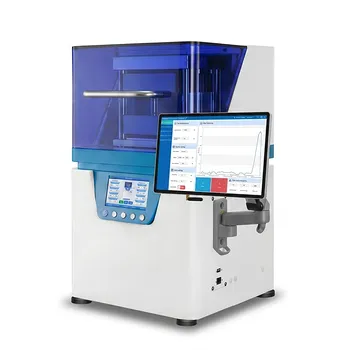
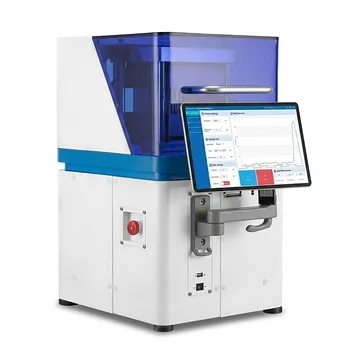
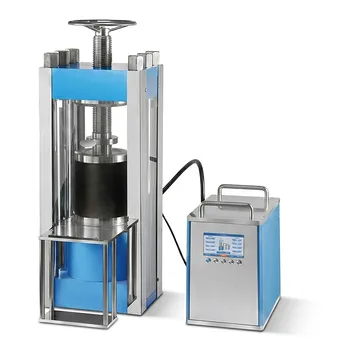
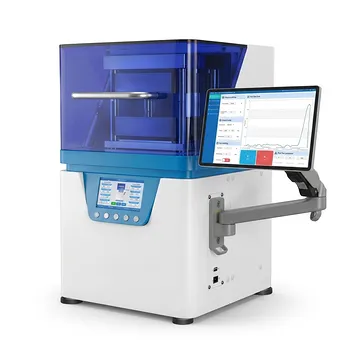
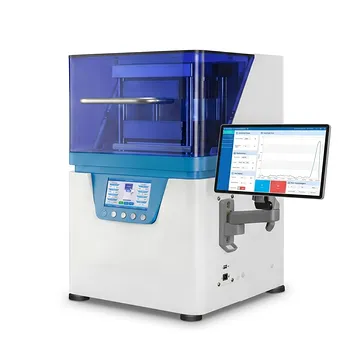
Hot pressing is a high-value manufacturing technique that distinguishes itself through a unique combination of cost-efficiency and technical precision. By applying simultaneous heat and pressure, it delivers superior material density and uniformity while requiring significantly lower initial capital investment than comparable methods like isostatic pressing.
Core Takeaway Hot pressing breaks the traditional trade-off between affordability and performance. It allows manufacturers to produce large, high-density components with exceptional temperature uniformity and energy efficiency, all while leveraging modern IT integration for precise quality control.
Economic and Operational Efficiency
Lower Capital Investment
One of the most immediate advantages of hot pressing is its cost-effectiveness regarding equipment. The initial investment required for hot pressing machinery is significantly lower compared to complex alternatives such as isostatic pressing. This lowers the barrier to entry for producing high-performance materials.
Reduced Energy Consumption
The technique is designed to be highly energy-efficient during operation. It minimizes energy waste by effectively limiting longitudinal heat flow during the heating process. This reduction in power consumption contributes to lower long-term operational costs.
Material Quality and Versatility
Superior Temperature Uniformity
Achieving consistent material properties requires an even distribution of heat. Hot pressing provides a superior temperature field within the workpiece. This uniformity ensures that the final product maintains consistent mechanical and thermal characteristics throughout its structure.
Capability for Large Components
Unlike some sintering methods that are restricted to small parts, hot pressing is highly versatile regarding size. It is capable of processing materials with large diameters effectively. This makes it an ideal solution for industries requiring substantial, single-piece components.
Enhanced Densification
The combination of heat and pressure facilitates the production of high-density materials. By softening the material to make it pliable and applying pressure, the process ensures uniform flow and bonding. This leads to improved mechanical strength and reduced porosity.
Process Control and Modernization
IT Integration for Precision
Modern hot pressing machines can be fully integrated with Information Technology (IT) systems. This connectivity allows for precise, real-time control over the densification process.
consistent Quality Management
The integration of digital technology ensures rigorous quality management. Operators can monitor and adjust parameters instantly, enhancing production efficiency and ensuring that every batch meets strict specifications.
Understanding the Trade-offs
Environmental Requirements
To fully realize benefits like improved density and reduced oxidation, the process often requires a controlled environment, such as a vacuum. While this enhances properties like electrical conductivity, it introduces the need for specialized vacuum systems alongside the pressing equipment.
Managing Variable Complexity
Hot pressing is not merely about applying force; it requires the synchronized control of both temperature and pressure. Achieving the "superior temperature field uniformity" mentioned requires careful calibration. Errors in balancing these variables can lead to deformation rather than the desired densification.
Making the Right Choice for Your Goal
When evaluating whether to integrate hot pressing into your production line, consider your specific constraints and objectives:
- If your primary focus is Cost Efficiency: Leverage hot pressing for its lower initial equipment investment and reduced ongoing energy consumption compared to isostatic methods.
- If your primary focus is Material Quality: Rely on this technique to achieve superior temperature uniformity and high density across large-diameter components.
- If your primary focus is Process Control: Utilize the machine's IT integration capabilities to strictly manage densification parameters and ensure repeatable results.
Hot pressing offers a robust solution for manufacturers seeking to scale production of high-performance materials without incurring prohibitive capital costs.
Summary Table:
| Advantage | Key Benefit | Impact |
|---|---|---|
| Economic Efficiency | Lower capital investment than isostatic pressing | Reduced entry barrier and faster ROI |
| Material Density | Simultaneous heat and pressure application | High-strength, low-porosity components |
| Thermal Precision | Superior temperature field uniformity | Consistent mechanical properties across parts |
| Energy Savings | Minimized longitudinal heat flow | Significant reduction in long-term operational costs |
| Scalability | Capable of processing large diameters | Ideal for substantial, single-piece industrial parts |
Elevate Your Material Production with KINTEK
Ready to achieve superior densification and technical precision in your manufacturing? KINTEK specializes in comprehensive laboratory pressing solutions designed to meet the rigorous demands of modern research and production.
Whether you require manual, automatic, heated, or multifunctional models—including glovebox-compatible systems and advanced cold or warm isostatic presses for battery research—we have the expertise to optimize your workflow.
Contact us today to discover how our hot pressing solutions can reduce your energy costs and enhance your material quality.
Related Products
- Automatic Hydraulic Hot Press with Large Plate and Precision Temperature Control for Advanced Material Sample Preparation and Industrial Research
- Heated Hydraulic Press Machine with Heated Plates for Vacuum Box Laboratory Hot Press
- Automatic High Temperature Heated Hydraulic Press Machine with Heated Plates for Lab
- Automatic Heated Hydraulic Press Machine with Hot Plates for Laboratory
- Automatic Hydraulic Heat Press Machine with Multi Stage Programmable Control and Integrated Water Cooling Plate Size 180x180mm
People Also Ask
- What are the specific features and applications of hydraulic hot press machines? Precision Solutions for Modern Labs
- How does an automatic hydraulic press operate? Achieve Precision and Consistency in Lab Pelleting
- What are the advantages and common applications of an automatic hydraulic press? Elevate Your Lab's Precision
- What is the technical significance of setting a precise dwell time? Achieve Peak Material Density and Stability
- When is an automatic hydraulic press more suitable than a manual press? Scale Your Lab with Precision & Speed