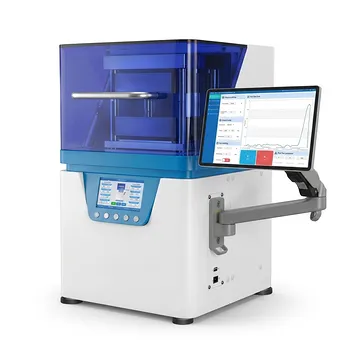
The transition from room temperature curing to heated compression molding for CNT-PDMS composites represents a shift from passive setting to active consolidation. By integrating thermal energy with mechanical pressure, this process reduces curing cycles from several hours to just a few minutes. This rapid stabilization is critical for maintaining the internal architecture of the composite, as it prevents the nanomaterials from settling or clumping before the polymer matrix solidifies.
Core Takeaway: Heated compression molding dramatically optimizes CNT-PDMS fabrication by "freezing" carbon nanotubes in a dispersed state and eliminating internal voids, resulting in a significantly denser and more structurally uniform material than room temperature methods can achieve.
Accelerating Kinetics and Network Stability
Rapid Cross-linking of the PDMS Matrix
Traditional room temperature curing of PDMS is a slow process that often requires a full day to reach maximum mechanical properties. Heated compression presses utilize high-temperature plates to trigger the curing catalyst immediately, shortening the production window to a fraction of its original duration.
Preserving Nanotube Dispersion
Because the matrix transitions from a liquid to a solid state so quickly, the carbon nanotubes (CNTs) have no time to migrate or re-agglomerate. Rapid curing effectively "locks" the CNTs in their processed state, ensuring the conductive network remains uniform throughout the entire part.
Mitigation of Re-agglomeration
In slow-curing environments, van der Waals forces often pull dispersed nanotubes back into bundles, which degrades the composite's electrical and mechanical performance. The thermal-mechanical coupling of a heated press prevents this degradation by completing the polymer cross-linking before significant particle movement can occur.
Enhancing Physical Integrity and Precision
Elimination of Internal Voids and Air
PDMS mixtures are notorious for trapping micro-bubbles during the mixing of fillers like CNTs. The compression mechanism forces residual air and volatiles out of the mold cavity, minimizing porosity defects that would otherwise act as stress concentrators or electrical insulators.
Achieving High Material Density
Unlike room temperature pouring, which relies on gravity, a heated press applies constant pressure to reach a higher green density. This process facilitates the flow of the polymer into every micro-pore of the filler network, creating a near-fully dense component with superior flexural strength and hardness.
Superior Surface Quality and Dimensional Control
The use of rigid, heated mold plates ensures that the resulting composite sheets have a consistent thickness and high-quality surface finish. This precision is vital for applications in flexible electronics or sensors where even slight variations in thickness can lead to inconsistent signal readings.
Understanding the Trade-offs
Thermal Management Challenges
While heat accelerates curing, excessive temperatures can lead to thermal degradation of the PDMS matrix or cause unintended chemical reactions with specific additives. Precise temperature control is required to find the "sweet spot" between speed and material integrity.
Stress and Deformation
Rapid cooling after a high-heat pressing cycle can introduce internal residual stresses within the composite. If not managed through a controlled cooling phase, these stresses can lead to warping or microscopic delamination at the CNT-polymer interface.
Increased Equipment Complexity
Heated compression requires a significant investment in specialized machinery and precisely machined molds. For simple prototyping where dimensional precision and high-fill density are not required, the complexity of a heated press may outweigh the benefits of speed.
How to Apply Detailed Pressing to Your Project
Identifying the right curing strategy depends on your specific performance requirements and production scale.
- If your primary focus is high-throughput manufacturing: Utilize a heated press to reduce cycle times to minutes, allowing for rapid iteration or industrial-scale production.
- If your primary focus is maximum electrical conductivity: Prioritize heated compression to "lock in" your CNT dispersion and prevent the re-agglomeration that occurs during slow, room-temperature cures.
- If your primary focus is mechanical durability in harsh environments: Use the pressurized environment of the lab press to eliminate internal voids and air pockets, which are the leading cause of structural failure in composites.
By moving beyond ambient curing, you gain the ability to engineer the microstructure of your composite with a level of precision that passive methods simply cannot match.
Summary Table:
| Feature | Room Temperature Curing | Heated Compression Molding |
|---|---|---|
| Curing Cycle | Several hours to days | A few minutes |
| CNT Network | High risk of re-agglomeration | Locked in dispersed state |
| Material Density | Standard (gravity-based) | High (pressure-consolidated) |
| Porosity | Trapped air/micro-bubbles | Minimal (voids forced out) |
| Precision | Variable thickness | Consistent dimensional control |
Elevate Your Composite Fabrication with KINTEK
Unlock superior material performance with KINTEK’s comprehensive laboratory pressing solutions. Whether you are conducting advanced battery research or developing flexible electronics, our equipment is designed for precision and efficiency. Our range includes:
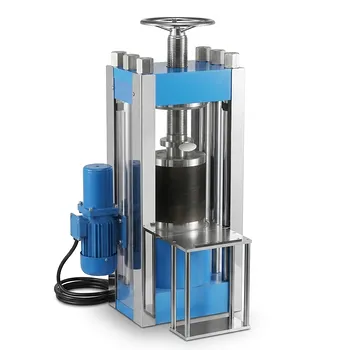
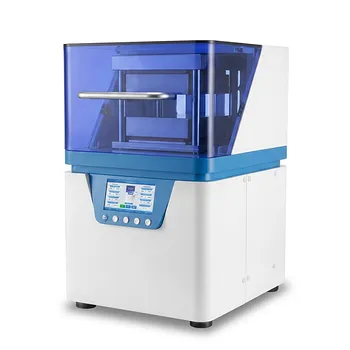
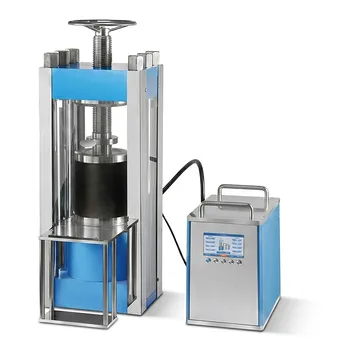
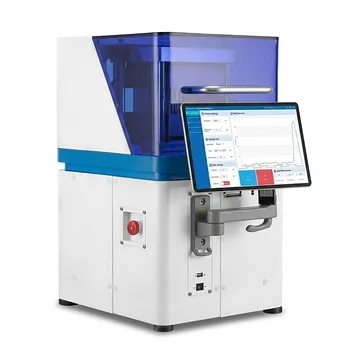
- Manual & Automatic Heated Presses for rapid, active consolidation.
- Multifunctional & Glovebox-Compatible Models for specialized environments.
- Cold and Warm Isostatic Presses for high-density material requirements.
Ready to eliminate internal voids and 'lock in' your nanomaterial dispersion? Contact KINTEK today to discover how our pressing technology can transform your research outcomes.
References
- Farouk Wahsh, Aleksander Czekanski. The Effect Of High Strain Rate On The Piezo-Resistance Of Polydimethylsiloxane With Carbon Nanotubes. DOI: 10.25071/10315/35243
This article is also based on technical information from Kintek Solution Knowledge Base .
Related Products
- Cylindrical Lab Electric Heating Press Mold for Laboratory Use
- Lab Heat Press Special Mold
- Lab Polygon Press Mold
- Split Warm Isostatic Lab Press 200 Ton Powder Compaction Chamber for Battery Research and Material Science
- Lab Round Bidirectional Press Mold
People Also Ask
- How does a laboratory electric heated press ensure sample quality? Optimize SiR-EPDM vulcanization and molding.
- What role does a laboratory electric heated press play in polymer composite fabrication? Key for Standardized Specimens
- What role does a laboratory electric heating press play in NBR molding? Master Vulcanization & Material Density
- Why is a laboratory electric heating press required for PP/EPDM molding? Achieve Superior Specimen Integrity
- What is the purpose of incorporating cartridge heaters into a lab press mold for MLCC block compression? Optimize Results