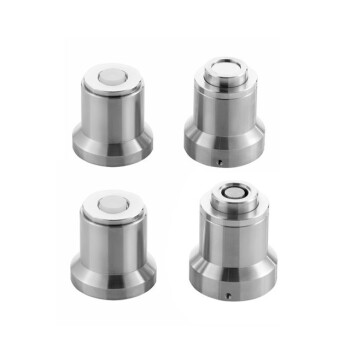
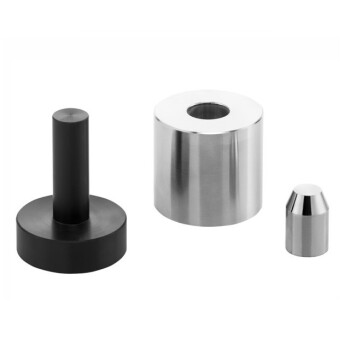
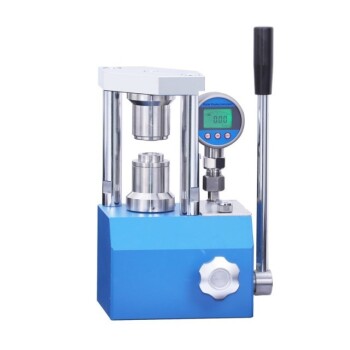
PEEK-lined airtight press cells are the definitive standard for ensuring data integrity during the evaluation of all-solid-state batteries. These specialized cells provide a three-fold advantage: they electrically isolate the active materials to prevent short circuits, hermetically seal the environment to protect sensitive electrolytes, and apply the mechanical pressure required to stabilize solid-state interfaces.
By integrating electrical insulation, environmental protection, and mechanical pressure control, these cells directly address the chemical sensitivity and mechanical instability inherent in sulfide-based solid-state battery testing.
Ensuring Electrical and Chemical Integrity
To obtain reliable electrochemical data, you must isolate the internal components from both external contaminants and the cell hardware itself.
Preventing Internal Short Circuits
The primary function of the PEEK (Polyether ether ketone) lining is superior electrical insulation.
Without this lining, conductive active materials could come into contact with the metallic body of the test cell.
This contact would cause electrical short circuits, rendering the test data invalid and potentially damaging the equipment.
Protecting Sulfide-Based Electrolytes
Solid-state batteries, particularly those using sulfide-based electrolytes, are highly reactive to moisture and oxygen in the air.
The airtight design of these press cells acts as a barrier against atmospheric degradation.
By maintaining a sealed environment, the cell ensures that the electrolyte retains its ionic conductivity and chemical structure throughout the testing period.
Managing Mechanical Stability
Unlike liquid electrolytes, solid-state batteries rely on physical contact between particles to facilitate ion movement.
Maintaining Solid-Solid Interfaces
To function correctly, the internal components of the battery must maintain constant physical contact.
These cells are designed to apply constant stack pressure to the battery stack.
This pressure ensures that the solid-solid interfaces remain intact, promoting efficient ion transfer and reducing resistance.
Accommodating Volume Changes
During electrochemical cycling (charging and discharging), active materials naturally expand and contract.
In a rigid, unpressurized setup, this volume change can lead to contact loss and cell failure.
The press cell is engineered to accommodate these volume changes, preserving the structural integrity of the battery stack over repeated cycles.
Operational Constraints and Considerations
While these cells are superior for solid-state testing, proper usage is required to avoid compromising the data.
The Necessity of the Seal
The "airtight" feature is only effective if the assembly process is flawless.
If the seal is compromised even slightly, atmospheric degradation will occur immediately upon removal from an inert environment (like a glovebox).
Pressure Application Nuances
While applying pressure is vital, it must be uniform.
The cell design facilitates this, but the user must ensure the stack pressure is calibrated correctly for the specific active materials being tested.
Making the Right Choice for Your Research
When configuring your test setup, align the cell's capabilities with your specific testing goals.
- If your primary focus is Electrolyte Stability: Rely on the airtight design to prevent atmospheric reactions, particularly when working with sulfide chemistries.
- If your primary focus is Cycle Life and Durability: Leverage the constant stack pressure capabilities to mitigate the mechanical fatigue caused by material volume expansion.
- If your primary focus is Data Accuracy: Depend on the PEEK lining to eliminate the noise and failure risks associated with internal short circuits.
Using the correct hardware is not just a logistical detail; it is the prerequisite for reproducible solid-state battery science.
Summary Table:
| Feature | Advantage for All-Solid-State Batteries |
|---|---|
| PEEK Lining | Provides superior electrical insulation to prevent internal short circuits. |
| Airtight Design | Protects moisture-sensitive sulfide electrolytes from atmospheric degradation. |
| Stack Pressure | Maintains critical solid-solid interfaces and ensures low interface resistance. |
| Volume Control | Accommodates material expansion and contraction during electrochemical cycling. |
Maximize Your Battery Research Precision with KINTEK
Are you looking to eliminate experimental variables in your all-solid-state battery testing? KINTEK specializes in comprehensive laboratory pressing solutions tailored for high-stakes research. From PEEK-lined airtight press cells to manual, automatic, and isostatic presses (CIP/WIP), our equipment is designed to meet the rigorous demands of sulfide-based electrolyte stability and interface management.
Why choose KINTEK?
- Versatile Solutions: Offering heated, multifunctional, and glovebox-compatible models.
- Optimized for Research: Specifically engineered for battery material characterization and electrode fabrication.
- Expert Support: Our team helps you select the right pressure and insulation setup to ensure reproducible data.
Ready to upgrade your lab's capabilities? Contact KINTEK today for a consultation and find the perfect press solution for your battery research.
References
- P.M. Heuer, Wolfgang G. Zeier. Attaining a fast-conducting, hybrid solid state separator for all solid-state batteries through a facile wet infiltration method. DOI: 10.1039/d5ya00141b
This article is also based on technical information from Kintek Solution Knowledge Base .
Related Products
- Laboratory Hydraulic Press Lab Pellet Press Machine for Glove Box
- Button Battery Sealing Press Machine for Lab
- Laboratory Hydraulic Split Electric Lab Pellet Press
- Manual Laboratory Hydraulic Press Lab Pellet Press
- Automatic Laboratory Hydraulic Press for XRF and KBR Pellet Pressing
People Also Ask
- How does a laboratory hydraulic press contribute to the preparation of Li3-3xScxSb samples? Optimize Ionic Conductivity
- What is the function of a laboratory hydraulic press in FT-IR of curcumin-coated MWCNTs? Achieve Optical Clarity.
- Why is a laboratory hydraulic press required for compression molding boron-siloxane? Solve High-Loading Density Challenges
- What role does a laboratory hydraulic press play in the preparation of piezoelectric ceramic discs for DC-PG? | KINTEK
- What role does a laboratory hydraulic press play in reaction pellets? Optimizing Lunar Soil and Metal Fuel Density