Cold Isostatic Pressing (CIP) is primarily applied to consolidate powdered materials into high-density "green" bodies prior to sintering. It is the manufacturing standard for producing components that require uniform internal density and complex geometries, ranging from heavy industrial refractory materials to delicate medical ceramics.
Core Takeaway CIP is fundamentally a pre-processing consolidation technique. By applying uniform hydraulic pressure from all sides, it creates parts with 60% to 80% theoretical density that are ready for machining or sintering, solving the density variation problems inherent in traditional uniaxial pressing.
Advanced Material Consolidation
The primary function of CIP is the consolidation of powders that are difficult to mold using other methods.
High-Performance Ceramics
The technology is extensively used to consolidate ceramic powders into coherent solid forms.
Common materials include silicon nitride, silicon carbide, and boron nitride. These materials are difficult to shape but are essential for high-temperature and high-wear environments.
Refractories and Graphite
CIP is a standard method for compressing graphite and refractory materials.
These components are critical for high-temperature industrial processes, including crucible manufacturing and furnace linings.
Powder Metallurgy and Carbides
The process is widely used in powdered metallurgy and the production of cemented carbides.
This application is vital for creating extremely hard materials used in cutting tools and wear-resistant machinery.
Critical Industry Applications
CIP allows engineers to produce components for sectors where material failure is not an option.
Aerospace and Automotive
In these sectors, CIP is used to create strong yet lightweight components.
Specific applications include turbine blades and engine parts. It is also used for coatings on engine valve components, where high durability is required to withstand extreme operational stress.
Medical and Dental
The medical field relies on CIP for producing fine ceramics used in implants and prosthetics.
The process ensures high performance and biocompatibility. Because CIP creates uniform density, these complex parts maintain their structural integrity better than those formed by varying pressure gradients.
Electronics and Telecommunications
CIP is utilized to manufacture electrical insulators and sputtering targets.
It is also applied in the production of ferrites and components for advanced energy storage, ensuring consistent electrical properties throughout the material.
Industrial and General Manufacturing
Beyond specialized high-tech sectors, CIP is a workhorse for general heavy industry.
Tooling and Wear Parts
The process creates complex parts like molds and tooling.
It is also used to produce wear-resistant components for heavy machinery. By extending the lifespan of these parts, CIP helps reduce long-term maintenance costs in industrial operations.
Specialized Chemical and Energy Applications
CIP is adaptable enough for use in nuclear fuel production and the chemical processing industry.
It is even utilized in the handling of explosives, leveraging the safety of isostatic pressure over mechanical compaction.
Understanding the Process Trade-offs
While CIP offers unique advantages for complex shapes, it is critical to understand its role in the manufacturing chain.
It Creates "Green Bodies"
CIP typically produces a part with 60% to 80% of its theoretical density.
The output is a "green body," not a finished product. It requires subsequent firing, sintering, or Hot Isostatic Pressing (HIP) to achieve full density and final strength.
Dimensional Shrinkage
Because the part is not fully dense, it will undergo shrinkage during the final sintering phase.
However, a major advantage of CIP is that this density is uniform, meaning the shrinkage is predictable and manageable, unlike the warping often seen in uniaxial pressing.
Making the Right Choice for Your Goal
CIP is rarely the cheapest option for simple shapes, but it is often the only option for complex, high-performance needs.
- If your primary focus is Geometric Complexity: Choose CIP to form intricate shapes that are too complex for uniaxial die presses, as the pressure is applied evenly from every direction.
- If your primary focus is Machinability: Utilize CIP to create high-strength green bodies that can be easily machined into near-net shapes before the final hardening (firing) process.
- If your primary focus is Material Integrity: Rely on CIP to minimize internal defects and mechanical scatter, ensuring the highest possible reliability for critical aerospace or medical components.
CIP is the definitive solution when the structural uniformity of the material is just as critical as the external shape of the component.
Summary Table:
| Industry | Key Applications | Primary Materials Used |
|---|---|---|
| Aerospace & Auto | Turbine blades, engine valves, coatings | Superalloys, Carbides |
| Medical & Dental | Implants, prosthetics, dental ceramics | Fine ceramics, Bio-materials |
| Industrial | Refractory bricks, crucibles, tooling | Graphite, Silicon Nitride |
| Electronics | Sputtering targets, insulators, ferrites | High-purity powders |
| Energy | Nuclear fuel rods, battery components | Uranium oxides, Solid electrolytes |
Elevate Your Material Research with KINTEK Solutions
Maximize the potential of your powder consolidation with KINTEK’s precision laboratory pressing solutions. Whether you are advancing battery research or developing high-performance ceramics, our comprehensive range of manual, automatic, heated, and multifunctional presses—including specialized Cold and Warm Isostatic Presses (CIP/WIP)—ensures uniform density and superior material integrity for every sample.
Ready to achieve 80% theoretical density with predictable shrinkage? Contact our laboratory experts today to find the perfect glovebox-compatible or industrial-grade press for your application.
Related Products
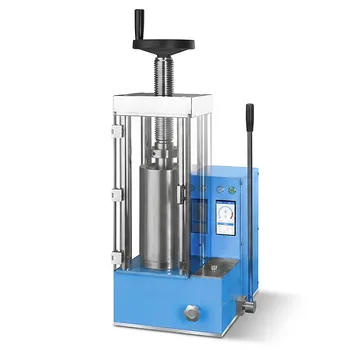
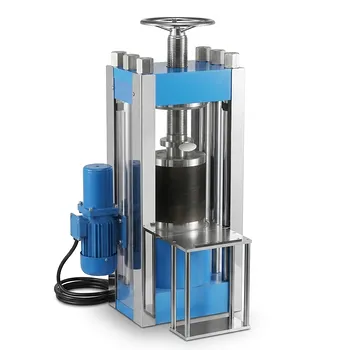
- Electric Lab Cold Isostatic Press CIP Machine
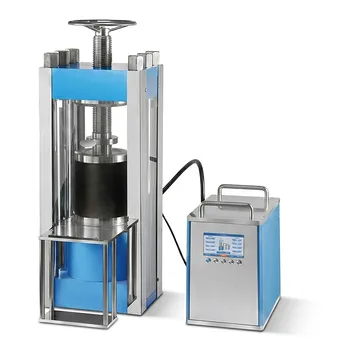
- Electric Split Lab Cold Isostatic Pressing CIP Machine
- Automatic Lab Cold Isostatic Pressing CIP Machine
- Manual Cold Isostatic Pressing CIP Machine Pellet Press
- Electric Isostatic Pressing Machine 40 Tons Automatic Laboratory Powder Compacting Press
People Also Ask
- What role do electric lab cold isostatic presses play in industrial contexts? Bridge R&D and Manufacturing with Precision
- What are the applications of electric lab cold isostatic presses in research settings? Advance Material R&D with High-Pressure CIPs
- How does electrical Cold Isostatic Pressing (CIP) contribute to cost savings? Unlock Efficiency and Reduce Expenses
- What are some research applications of electric lab CIPs? Unlock Uniform Powder Densification for Advanced Materials
- What are the characteristics of standard off-the-shelf electric lab CIP solutions? Achieve Immediate, Cost-Effective Processing