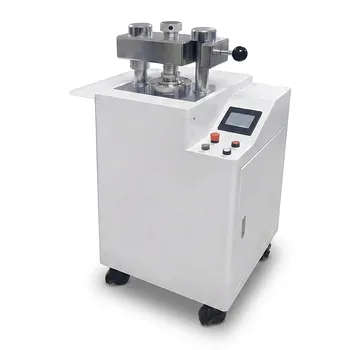
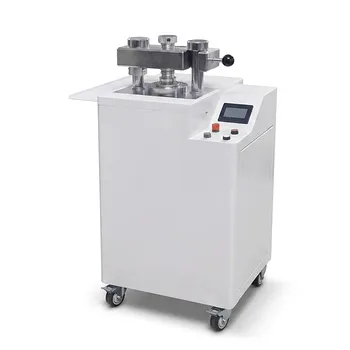
Selecting the correct die shape and type is fundamental to sample integrity. The most common die shapes used in pellet presses are circular, square/rectangular, and ring (annular). Within the dominant category of circular dies, you will find specialized functional types including standard, vacuum, low profile, and custom designs.
While circular dies are the standard for most analytical applications, the specific choice of die configuration—particularly vacuum capabilities—determines the optical clarity and structural stability of the final pellet.
Primary Die Shapes
Circular Dies
These are the widely accepted standard for analytical techniques like XRF and FTIR.
They offer the most consistent pressure distribution during the pressing cycle.
Most laboratory protocols are written specifically for circular sample geometries.
Square and Rectangular Dies
These dies are engineered for applications requiring specific geometric profiles.
They are often utilized when the sample must fit into a specialized holder or testing apparatus that cannot accommodate a round disc.
Ring (Annular) Dies
Ring dies are designed to create pellets with a hollow center.
This shape is essential for specific industrial applications or specialized spectroscopic setups requiring a through-hole configuration.
Specialized Circular Die Configurations
Standard vs. Vacuum Dies
Standard dies are sufficient for robust materials that compact easily.
Vacuum dies are critical for high-quality spectroscopy.
They allow air and moisture to escape during pressing, preventing the pellet from clouding or cracking after pressure is released.
Low Profile and Custom Dies
Low profile dies are designed for setups with limited vertical clearance or specific handling requirements.
Custom dies address unique research needs, such as creating pellets with curved surfaces or non-standard profiles.
Operational Considerations and Trade-offs
Press Compatibility
The effectiveness of a die is heavily influenced by the type of press driving it.
Manual presses are labor-intensive and best for occasional use, but human error can lead to inconsistent pellet density.
Automatic presses provide preset pressure and holding times, ensuring that the die produces identical pellets every time.
Pressure Limitations
Not all dies are rated for the high forces generated by hydraulic presses.
When working with resistant materials like ceramics or polymers, you must ensure the die metallurgy can withstand the required tonnage without deforming.
Making the Right Choice for Your Application
To select the optimal die for your laboratory, match the die geometry to your analytical goals.
- If your primary focus is general spectroscopy (FTIR/XRF): Stick to standard circular dies, but upgrade to a vacuum type if sample transparency is critical.
- If your primary focus is unique geometric testing: Utilize square or rectangular dies to match the specific form factor of your sample holder.
- If your primary focus is high-throughput consistency: Ensure your dies are compatible with an automatic hydraulic press to eliminate operator variability.
The right die does not just shape the powder; it ensures the data derived from that sample is reproducible and accurate.
Summary Table:
| Die Type | Common Shapes | Key Feature | Primary Application |
|---|---|---|---|
| Standard Circular | Round | Uniform pressure distribution | General XRF & FTIR spectroscopy |
| Vacuum Die | Round | Air/moisture extraction | High-clarity, crack-free pellets |
| Square/Rectangular | 4-sided | Specific geometric profiles | Specialized holders & material testing |
| Ring (Annular) | Hollow center | Creates through-hole samples | Industrial & specialized spectroscopy |
| Low Profile | Round | Reduced vertical height | Space-constrained lab environments |
Elevate Your Sample Preparation with KINTEK
Precise research demands flawless pellets. KINTEK specializes in comprehensive laboratory pressing solutions, offering a full range of manual, automatic, heated, and multifunctional presses, as well as cold and warm isostatic systems designed for battery research and beyond.
Whether you need standard circular dies for spectroscopy or custom geometries for advanced material science, our expert-grade equipment ensures consistent density and optical clarity. Contact KINTEK today to find the perfect die and press configuration for your laboratory's unique requirements.
Related Products
- Lab XRF Boric Acid Powder Pellet Pressing Mold for Laboratory Use
- Lab Ring Press Mold for Sample Preparation
- XRF KBR Plastic Ring Lab Powder Pellet Pressing Mold for FTIR
- Lab Infrared Press Mold for No Demolding
- Laboratory Hydraulic Split Electric Lab Pellet Press
People Also Ask
- Why are pellets used in XRF analysis, and what is their limitation? Boost Accuracy and Speed in Your Lab
- What are the primary factors to consider when deciding between a manual and an automatic XRF pellet press? Optimize Your Lab's Efficiency
- What are the differences between manual and automatic XRF pellet presses? Choose the Right Press for Your Lab's Needs
- What are the different pellet pressing options for XRF sample preparation? Choose the Best Method for Accurate Analysis
- What are specialized XRF pellet preparation presses designed for? Boost Lab Efficiency with High-Throughput Automation