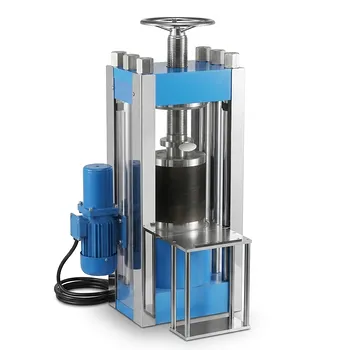
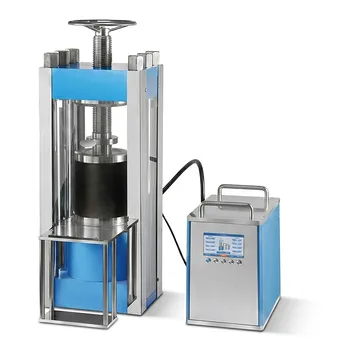
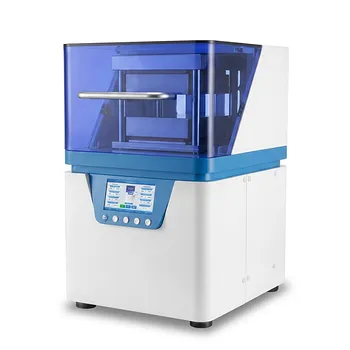
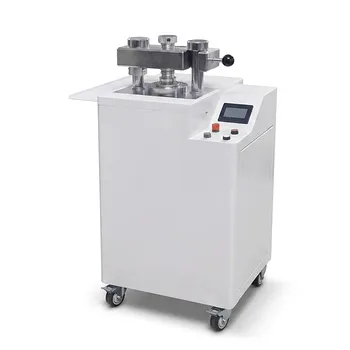
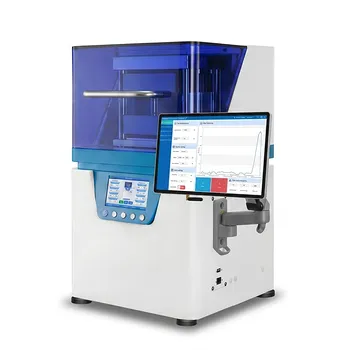
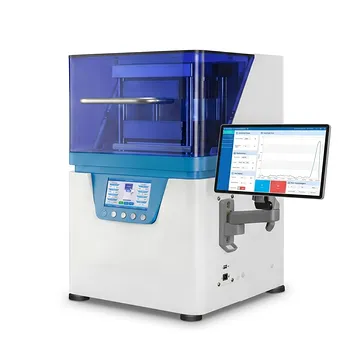
The primary advantages of a Split manual press are its compact footprint, operational simplicity, cost efficiency, and high precision. This device is specifically engineered to deliver professional-grade experimental samples in laboratory environments where space and budget are constrained, without requiring extensive operator training.
A Split manual press offers the ideal balance of accessibility and accuracy, allowing small-scale operations to produce high-quality samples without the overhead of heavy industrial machinery.
Optimizing the Laboratory Environment
Maximizing Limited Workspace
The compact design is one of the most immediate benefits of this machinery. It is specifically built to fit easily into laboratories with limited square footage, preserving valuable workspace for other essential equipment.
Simplified Operation
The machine operates using simple manual controls, making it highly intuitive. This user-friendly nature eliminates the need for extensive technical training, allowing researchers to focus on their experiments rather than learning complex machinery.
The "Split" Advantage: Maintenance
A distinct feature of this specific type of press is the ability to easily separate the mold cavity. As noted in technical documentation, this design choice significantly simplifies cleaning and maintenance compared to traditional, non-split presses.
Performance and Economic Value
Cost-Effective for Small Batches
For small-scale production and experimental sampling, this press is a highly cost-effective solution. It allows facilities to avoid the massive capital expenditure required for large, automated machinery that is often overkill for research and development tasks.
High Precision Output
Despite its small size and manual operation, the press delivers high precision. It ensures that samples are produced with consistent quality and exact dimensions, which is critical for valid experimental data.
Versatility in Application
The machine is capable of processing materials of various sizes, shapes, and compositions. This versatility makes it an excellent tool for diverse research and development projects that require frequent changes in sample parameters.
Understanding the Trade-offs
Volume Limitations
While excellent for sampling, a manual press is not designed for high-volume mass production. The reliance on manual operation makes it inefficient for manufacturing thousands of units, where an automated press would be superior.
Operator Effort
Because the system is manual, it relies on physical interaction from the user. For extensive, back-to-back pressing sessions, this can lead to operator fatigue that is not present in hydraulic or electric alternatives.
Making the Right Choice for Your Goal
To determine if a Split manual press fits your specific needs, consider your production targets:
- If your primary focus is R&D and Prototyping: This press is ideal due to its low cost, high precision, and ease of cleaning between different material experiments.
- If your primary focus is Mass Production: You should likely look for automated alternatives, as the manual workflow will become a bottleneck for high-volume output.
By choosing a Split manual press, you are prioritizing precision and flexibility over raw production speed.
Summary Table:
| Feature | Benefit |
|---|---|
| Split Design | Easy mold separation for fast cleaning and maintenance |
| Compact Footprint | Maximizes workspace in small or crowded laboratories |
| Manual Controls | Simple operation without the need for extensive training |
| High Precision | Ensures consistent sample quality and exact dimensions |
| Cost-Efficiency | Professional results without high capital expenditure |
Elevate Your Laboratory Research with KINTEK
Are you looking to optimize your material sampling process without the complexity of industrial machinery? KINTEK specializes in comprehensive laboratory pressing solutions tailored to your specific research needs. Whether you require a manual, automatic, heated, or multifunctional press, or need specialized cold and warm isostatic presses for advanced battery research, we have the expertise to help.
Why choose KINTEK?
- Versatility: Equipment designed for diverse shapes, sizes, and material compositions.
- Precision: High-accuracy systems that ensure valid, repeatable experimental data.
- Support: Expert guidance to select the perfect model for your lab space and budget.
Contact us today to find the ideal pressing solution and take your R&D capabilities to the next level!
Related Products
- Split Automatic Heated Hydraulic Press Machine with Heated Plates
- Split Warm Isostatic Lab Press 200 Ton Powder Compaction Chamber for Battery Research and Material Science
- Split Hot Isostatic Pressing Machine 150 Ton Laboratory Heated Isostatic Press
- Electric Split Lab Cold Isostatic Pressing CIP Machine
- Laboratory Hydraulic Split Electric Lab Pellet Press
People Also Ask
- What are the requirements for electrode pressing with high-viscosity ionic liquids like EMIM TFSI? Optimize Performance
- How does a laboratory heated hydraulic press facilitate PBN sample prep for WAXS? Achieve Precise X-Ray Scattering
- What are the industrial applications of heated hydraulic presses? Master Heat & Force for Precision Manufacturing
- Why is a laboratory hydraulic press with heating plates required for PLA/TEC films? Achieve Precise Sample Integrity
- Function of a Laboratory Hydraulic Press with Heated Platens in SSE? Enhance Battery Density & Conductivity