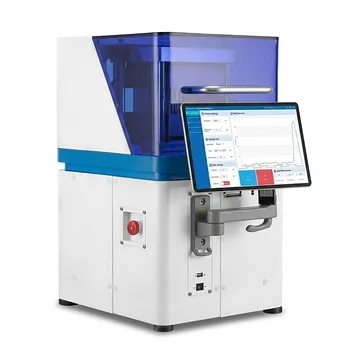
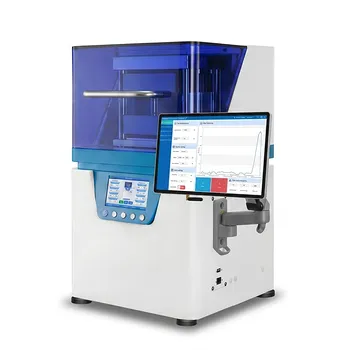
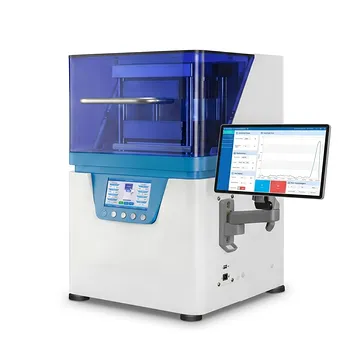
Laboratory presses typically utilize a robust pillar-type construction to ensure structural stability and precise alignment during high-pressure operations. Regarding industry benchmarks, these units are often manufactured to conform to geometric tolerances outlined in JIS b 6403: 1973, while simultaneously adhering to critical safety regulations such as CE or OSHA standards.
The core value of a laboratory press lies in its combination of pillar-based architecture and strict adherence to hydraulic performance codes. This design philosophy ensures the high-precision results necessary for sensitive applications like spectroscopy and pharmaceutical development.
The Architecture of Precision
Pillar-Type Construction
The fundamental design of many laboratory presses relies on a pillar-type construction. This structural choice is not merely aesthetic; it is engineered to withstand significant force without deforming.
By utilizing pillars, the press maintains rigid parallel alignment between the platens. This ensures that pressure is applied evenly across the sample, which is critical for consistency.
Geometric Tolerances
To guarantee accuracy, high-quality presses are often built to satisfy JIS b 6403: 1973. This is the specific "Test code for performance and accuracy for hydraulic presses."
Adherence to this standard ensures that the machine meets strict criteria for geometric tolerances. It validates that the press behaves predictably under load, minimizing mechanical error.
Critical Safety Standards
Regulatory Compliance
Beyond mechanical performance, the design of laboratory presses is heavily influenced by safety norms. Manufacturers frequently build these units to meet CE requirements (for European conformity) or OSHA standards (for the US).
Operator Protection
Compliance with these norms ensures the equipment includes necessary safeguards. This is vital in laboratory environments where operators frequently handle high-pressure equipment for tasks like creating compressed pellets or bomb calorimetry.
Understanding the Trade-offs
Certification vs. Cost
Presses that strictly adhere to standards like JIS b 6403: 1973 or carry official CE/OSHA certifications often come with a higher initial investment. The engineering required to meet these tolerances adds to the manufacturing complexity.
Rigidity vs. Flexibility
The pillar-type construction offers immense stability, but it can limit the workspace accessibility compared to C-frame designs. While pillars ensure the highest precision for pelletizing and material testing, they define a rigid working envelope that cannot easily accommodate oversized or odd-shaped samples.
Selecting the Right Press for Your Lab
To choose the correct equipment, you must weigh the necessity of strict tolerances against your specific application requirements.
- If your primary focus is analytical precision (e.g., Spectroscopy): Prioritize units compliant with JIS b 6403: 1973 to ensure the geometric accuracy required for uniform pellet creation.
- If your primary focus is operator safety and compliance: Ensure the equipment explicitly meets OSHA or CE norms to satisfy institutional safety audits and protect personnel.
Ultimately, a press built to these rigorous construction standards transforms force into a reliable, repeatable scientific tool.
Summary Table:
| Feature | Specification/Standard | Primary Benefit |
|---|---|---|
| Frame Design | Pillar-Type Construction | Ensures rigid alignment and even pressure distribution. |
| Accuracy Code | JIS b 6403: 1973 | Guarantees strict geometric tolerances for hydraulic performance. |
| Safety Compliance | CE / OSHA Standards | Protects operators and ensures institutional regulatory compliance. |
| Main Applications | Analytical Research | Ideal for spectroscopy, pelletizing, and material testing. |
Elevate Your Research with KINTEK Precision
At KINTEK, we specialize in comprehensive laboratory pressing solutions designed to meet the most rigorous scientific standards. Whether you are conducting advanced battery research or pharmaceutical development, our diverse range of equipment—including manual, automatic, heated, multifunctional, and glovebox-compatible models, as well as cold and warm isostatic presses—ensures unmatched accuracy and reliability.
Don't compromise on the integrity of your samples. Experience the stability of our pillar-based architecture and the safety of our CE/OSHA compliant designs. Contact KINTEK today to find the perfect press for your lab's unique requirements!
Related Products
- Laboratory Hydraulic Press Lab Pellet Press Button Battery Press
- Laboratory Hydraulic Press Lab Pellet Press Machine for Glove Box
- Laboratory Split Manual Heated Hydraulic Press Machine with Hot Plates
- Laboratory Hydraulic Pellet Press for XRF KBR FTIR Lab Press
- Laboratory Hydraulic Split Electric Lab Pellet Press
People Also Ask
- How is a laboratory hydraulic press used for HAP composite gels? Master Mineral Substrate Standardization
- What role does a laboratory hydraulic press play in the preparation of piezoelectric ceramic discs for DC-PG? | KINTEK
- What role does a laboratory hydraulic press play in reaction pellets? Optimizing Lunar Soil and Metal Fuel Density
- Why is a laboratory hydraulic press required for PBAT and PLA sample preparation? Achieve Flawless Characterization
- What role does a laboratory hydraulic press play in the assembly of all-solid-state battery test cells? Expert Guide