Evacuating air from loose powder prior to isostatic compaction is a specific refinement that directly improves the physical integrity of the final part. Specifically, this step ensures the resulting compact achieves increased density and exhibits fewer defects.
While often considered an optional step in the isostatic compaction process, air evacuation is a powerful method for enhancing material properties. It is the key to minimizing internal flaws and maximizing density, particularly when working with challenging material compositions.
Enhancing Compact Quality
Boosting Final Density
The primary technical benefit of removing air is the facilitation of tighter particle packing. By eliminating interstitial air pockets that resist compression, the powder can be compacted into a form with significantly increased density.
Reducing Internal Defects
Trapped air within a loose powder mass can create structural inconsistencies during the compaction cycle. Evacuating this air prior to pressurization helps ensure a more homogeneous structure with fewer defects, leading to a more reliable component.
Optimization for Specific Materials
While this technique can improve results for various materials, it is particularly advantageous for specific powder types. Experts recommend this practice especially when compacting brittle or fine powders, which are more susceptible to the negative effects of entrapped air.
Understanding the Trade-offs
An Optional Process Step
It is important to recognize that air evacuation is technically an optional step rather than a mandatory requirement for all isostatic compaction scenarios.
Balancing Quality vs. Complexity
Because this step is optional, it introduces a decision point regarding process efficiency. Implementing evacuation adds a layer of complexity to the manufacturing cycle, which must be weighed against the necessity for higher density in the specific application.
Making the Right Choice for Your Goal
Deciding whether to implement air evacuation depends on your specific material constraints and quality requirements.
- If your primary focus is component quality: Implement air evacuation to guarantee increased density and reduced defects, particularly if you are using fine or brittle powders.
- If your primary focus is process speed: You may consider bypassing this optional step if working with coarse powders where the risk of defects from trapped air is minimal.
By actively managing the air content within your loose powder, you gain direct control over the structural reliability of your final compacted parts.
Summary Table:
| Benefit | Technical Impact | Ideal Material Types |
|---|---|---|
| Increased Density | Eliminates air pockets for tighter particle packing | Fine Powders |
| Fewer Defects | Prevents structural inconsistencies & internal flaws | Brittle Materials |
| Structural Integrity | Ensures a more homogeneous final component | Challenging Compositions |
| Quality Control | Precise management of material reliability | High-Performance Alloys |
Maximize Your Material Density with KINTEK
Are internal defects compromising your research? KINTEK specializes in comprehensive laboratory pressing solutions, including manual, automatic, and glovebox-compatible models designed to handle the most challenging powder compositions. Whether you require cold or warm isostatic presses for advanced battery research or precision material science, our expert tools ensure the structural reliability your project demands.
Take control of your compaction quality—Contact KINTEK today for a consultation!
Related Products
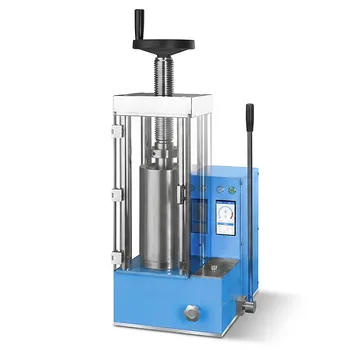
- Electric Isostatic Pressing Machine 40 Tons Automatic Laboratory Powder Compacting Press
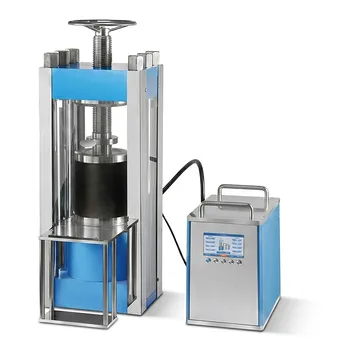
- Warm Isostatic Press for Solid State Battery Research Warm Isostatic Press
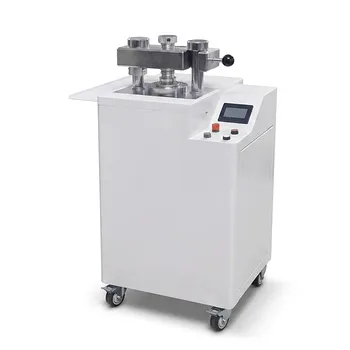
- Split Warm Isostatic Lab Press 200 Ton Powder Compaction Chamber for Battery Research and Material Science
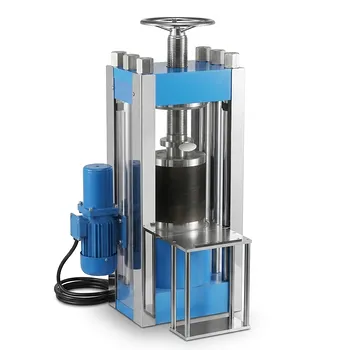
- Electric Lab Cold Isostatic Press CIP Machine
- Split Hot Isostatic Pressing Machine 150 Ton Laboratory Heated Isostatic Press
People Also Ask
- What are the key characteristics of the isostatic pressing process? Unlock Uniform Density and Complex Geometries
- Why is vacuum-sealed packaging necessary before isostatic pressing of CuPc thin films? Protect Integrity & Uniformity
- How is pressure applied to the material during isostatic pressing? Master Uniform Density and Complex Geometries
- How does pressure distribute during isostatic pressing of aluminum? Achieve Uniform Density for Your Lab Materials
- What are the applications of isostatic pressing in the automotive industry? Precision Manufacturing for High-Performance Parts