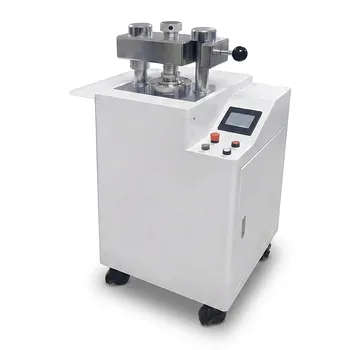
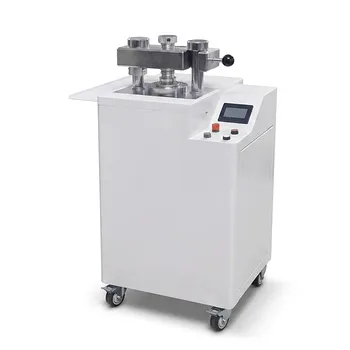
The primary function of a binder in the XRF pelletising process is to act as a structural adhesive that forces sample powders to cohere into a solid, durable disc. By introducing a material like a cellulose/wax mixture, you prevent the pressed pellet from crumbling or shedding loose particles, ensuring the physical integrity of the sample during analysis.
The use of a binder is a critical safeguard for both data quality and instrument health. A pellet that fails to bind not only produces distorted analytical results but can also release loose powder into the spectrometer, leading to severe contamination and costly maintenance.
The Critical Role of Sample Integrity
Preventing Physical Breakdown
Many sample materials do not naturally adhere to themselves when pressed. Without a binding agent, these powders may form a pellet that appears solid initially but cracks or disintegrates upon handling or placement in the vacuum environment of the spectrometer.
Protecting Sensitive Instrumentation
The most practical reason for using a binder is to contain the sample. Loose powder is a major hazard for XRF spectrometers; if a pellet breaks, dust can contaminate the X-ray tube or detector, requiring downtime for cleaning and repair.
Ensuring Homogeneity
A binder does more than just glue particles together; it aids in the distribution of the sample. When a cellulose/wax binder is used, it homogenizes well with the sample powder, creating a uniform matrix that supports consistent and reproducible analysis.
Application and Best Practices
Timing the Addition
To achieve the best results, the binder should be introduced early in the preparation process. It is typically added to the sample during the milling or mixing stage, ensuring it is evenly distributed throughout the powder before any pressure is applied.
Choosing the Right Material
Standard binders are often composed of a cellulose and wax mixture. These are preferred because they are clean, effectively bind powders during the pressing stage, and do not generally interfere with the spectral lines of common analytes.
Understanding the Trade-offs
The Dilution Factor
While binders are necessary for structural strength, they are not part of the sample being analyzed. Adding a binder inevitably dilutes the concentration of the elements you are trying to measure.
The "Minimum Necessary" Rule
Because of the dilution effect, you must balance strength with analytical accuracy. It is vital to use the minimum amount of binder necessary to achieve a stable pellet. Overusing the binder reduces the signal intensity of your sample elements, potentially obscuring trace elements.
Making the Right Choice for Your Goal
To ensure high-quality XRF analysis, tailor your binder usage to the specific physical characteristics of your sample:
- If your primary focus is sample durability: Use a wax-based binder for materials that are brittle or lack natural cohesion to prevent the pellet from breaking apart after pressing.
- If your primary focus is analytical precision: Use the smallest ratio of binder possible to maintain sample concentration and avoid excessive dilution of your results.
Correctly applying a binder is the difference between a pristine, accurate analysis and a contaminated spectrometer.
Summary Table:
| Feature | Purpose in XRF Pelletising |
|---|---|
| Primary Function | Acts as a structural adhesive to prevent pellet crumbling |
| Instrument Protection | Prevents loose powder from contaminating X-ray tubes and detectors |
| Homogeneity | Creates a uniform matrix for reproducible spectral analysis |
| Common Materials | Cellulose and wax mixtures |
| Critical Balance | Using the minimum amount necessary to avoid sample dilution |
Optimize Your Sample Preparation with KINTEK
Don't let sample disintegration compromise your data or damage your instrumentation. KINTEK specializes in comprehensive laboratory pressing solutions, providing the precision equipment you need for flawless XRF analysis.
Our range includes manual, automatic, heated, multifunctional, and glovebox-compatible models, alongside advanced cold and warm isostatic presses trusted in battery research and material science. Whether you need the perfect binder ratio or a robust press to ensure pellet durability, our experts are here to help.
Contact KINTEK today to find your perfect pressing solution
Related Products
- XRF KBR Plastic Ring Lab Powder Pellet Pressing Mold for FTIR
- Automatic Fluorescence Sample Preparation Press 40 Ton Lab Pellet Press for XRF Analysis
- Lab XRF Boric Acid Powder Pellet Pressing Mold for Laboratory Use
- XRF KBR Steel Ring Lab Powder Pellet Pressing Mold for FTIR
- Automatic XRF Pellet Press for Laboratory Spectrometry Sample Preparation
People Also Ask
- What is the purpose of making KBr pellets for FTIR? Achieve Precise Molecular Analysis with Solid Samples
- What factors should be considered when choosing a lab press for XRF pellet preparation? Ensure Accurate and Consistent Results
- Why are pellets used in XRF analysis, and what is their limitation? Boost Accuracy and Speed in Your Lab
- How are pellets prepared for XRF analysis and what is a potential drawback? Master XRF Sample Prep and Accuracy
- What are the different types of XRF pellet preparation methods available? Manual, Hydraulic, and Automated Presses Explained