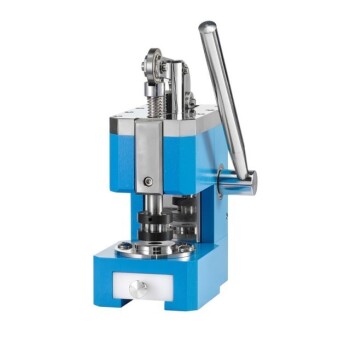
A high-energy bead mill functions as the primary mechanism for cell lysis in the protein analysis workflow. By subjecting bacterial cells to intense mechanical impact and shear forces using glass beads, it rapidly destroys cell walls to release intracellular active proteins, specifically enabling the extraction of monooxygenase subunits like the ZmoABCD complex for downstream analysis.
The bead mill converts intact bacterial cells into a high-concentration crude extract through mechanical lysis, ensuring the full release of complex proteins like ZmoABCD for accurate identification via SDS-PAGE or LC-MS.
The Mechanism of Mechanical Disruption
Utilizing Glass Beads
The core component of this extraction method is the use of glass beads. These act as the physical grinding media within the mill.
Generating Shear Forces
The mill applies intense mechanical impact to the sample. This creates significant shear forces that act directly on the bacterial suspension.
Breaking Physical Barriers
These forces are designed to rapidly break down robust cellular structures. The process effectively shatters both cell walls and cell membranes, which are otherwise resistant to gentler extraction methods.
The Outcome: High-Quality Protein Release
Accessing Intracellular Proteins
The primary function of this destruction is to fully release intracellular active proteins. Without this mechanical breach, proteins sequestered inside the cell remain inaccessible.
Targeting the ZmoABCD Complex
This method is specifically noted for its ability to release subunits of the ZmoABCD complex. These monooxygenase components are crucial for subsequent analysis.
Enabling Downstream Identification
The process yields a high-concentration crude extract. This concentrated lysate is the required input for identification techniques such as SDS-PAGE or liquid chromatography-mass spectrometry (LC-MS).
Understanding the Trade-offs
Intensity Management
The "high-energy" nature of this equipment is a double-edged sword. While it ensures complete lysis, the mechanical impact is intense.
Sample Integrity
The goal is to release proteins in an active state. However, the physical stress must be sufficient to break the cell wall without destroying the proteins of interest in the process.
Making the Right Choice for Your Goal
To maximize the efficacy of your monooxygenase analysis, consider your specific analytical endpoint:
- If your primary focus is Visual Confirmation (SDS-PAGE): The bead mill ensures the complete release of all subunits, allowing for the distinct separation and visualization of the ZmoABCD complex.
- If your primary focus is Molecular Identification (LC-MS): This method provides the high-concentration crude extract necessary to achieve the signal intensity required for accurate mass spectrometry analysis.
Mechanical disruption via bead milling acts as the vital gateway between intact bacterial cells and high-fidelity protein data.
Summary Table:
| Feature | High-Energy Bead Mill Function |
|---|---|
| Primary Mechanism | Mechanical cell lysis via glass bead impact and shear forces |
| Target Structures | Bacterial cell walls and membranes |
| Key Protein Release | Monooxygenase subunits (ZmoABCD complex) |
| Downstream Compatibility | SDS-PAGE visualization & LC-MS identification |
| Output Quality | High-concentration crude extract |
Maximize Your Protein Recovery with KINTEK
Precision in protein analysis begins with effective sample preparation. KINTEK specializes in comprehensive laboratory pressing and preparation solutions, offering manual, automatic, and multifunctional tools designed for high-fidelity research. Whether you are extracting complex monooxygenase subunits or preparing samples for battery research, our range of cold and warm isostatic presses and grinding solutions ensures maximum yield without compromising sample integrity.
Ready to elevate your lab's performance? Contact KINTEK today to find the perfect fit for your workflow!
References
- Sui Nin Nicholas Yang, Nicholas V. Coleman. A novel soluble di‐iron monooxygenase from the soil bacterium <scp> <i>Solimonas soli</i> </scp>. DOI: 10.1111/1462-2920.16567
This article is also based on technical information from Kintek Solution Knowledge Base .
Related Products
- Laboratory Hydraulic Split Electric Lab Pellet Press
- Automatic Laboratory Hydraulic Press for XRF and KBR Pellet Pressing
- Lab Cylindrical Press Mold for Laboratory Use
- Laboratory Hydraulic Pellet Press for XRF KBR FTIR Lab Press
- Laboratory Hydraulic Press Lab Pellet Press Button Battery Press
People Also Ask
- What are the emerging trends in the design and materials of lab pellet presses? Modernize Your Lab Efficiency
- How do lab pellet presses support customization and flexibility? Optimize Your Sample Prep for Any Material
- What are common lab pellet press issues? Expert Troubleshooting Guide for Reliable Material Research
- What are the common operational types of lab pellet presses? Choosing the Right Manual, Automatic, or Hydraulic System
- Why use a laboratory pellet press for solid-state battery evaluation? Ensure Accuracy in Interface Stability Testing