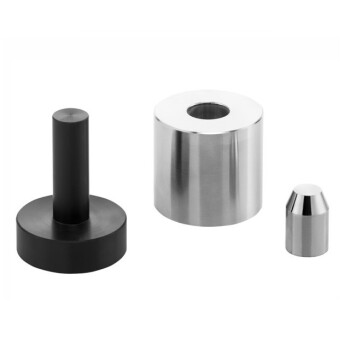
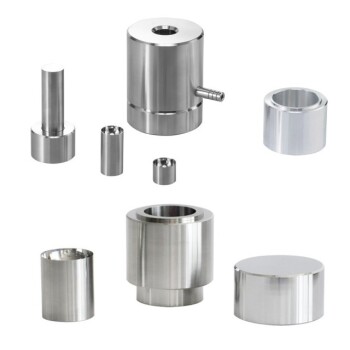
Precision metal molds act as the definitive structural framework in the creation of triboelectric sensor prototypes. They function to strictly define the geometric shape and thickness of the active silicone rubber layers while simultaneously anchoring the underlying textile electrodes. By controlling the casting and curing environment, these molds ensure the sensor components are integrated into a single, cohesive unit.
The primary value of a precision mold lies in its ability to enforce a tight, uniform contact between the electrode and the friction layer. This structural consistency is the key factor in achieving uniform force distribution and a stable, repeatable output voltage.
The Role of Structural Definition
Controlling Layer Geometry
The mold is responsible for establishing the exact physical dimensions of the sensor.
It strictly defines the thickness of the active layers, specifically the silicone rubber.
Securing the Electrodes
Beyond shaping the rubber, the mold serves a critical retention function.
It secures the underlying textile electrodes in position during the fabrication process.
Enhancing Sensor Performance
Achieving Structural Encapsulation
The fabrication process involves casting and curing the rubber directly within the metal mold.
This technique achieves a tight contact and complete structural encapsulation between the electrode and the friction layer.
Ensuring Electrical Consistency
Because the mold creates a unified structure, it ensures force is distributed uniformly across the sensor when compressed.
This mechanical uniformity directly translates to a consistent output voltage, eliminating signal irregularities.
Understanding the Criticality of Precision
The Risk of Poor Contact
If the active layers are not cured within a precision mold, the contact between the electrode and friction layer may be compromised.
A loose or irregular interface prevents the tight encapsulation necessary for durable sensor performance.
Signal Stability vs. Irregularity
The mold's regulation of thickness and shape is the primary defense against erratic sensor data.
Without the uniform force distribution provided by the mold, the output voltage becomes inconsistent and unreliable.
Making the Right Choice for Your Goal
To maximize the effectiveness of your triboelectric sensor prototypes, focus on the specific benefits the mold provides:
- If your primary focus is mechanical durability: Ensure the mold is designed to facilitate deep encapsulation, creating a tight bond between the silicone and the textile electrode.
- If your primary focus is signal accuracy: Leverage the mold's precision to guarantee uniform layer thickness, which is essential for consistent output voltage.
Ultimately, the precision metal mold transforms raw materials into a calibrated instrument capable of delivering repeatable, high-quality performance.
Summary Table:
| Feature | Function in Sensor Fabrication | Impact on Performance |
|---|---|---|
| Structural Framework | Defines thickness and geometry of silicone layers | Ensures uniform force distribution |
| Electrode Retention | Anchors textile electrodes during casting | Prevents delamination and shifting |
| Direct Encapsulation | Integrates layers into a cohesive unit | Enhances mechanical durability |
| Precision Tolerance | Eliminates irregular air gaps at interfaces | Guarantees stable and repeatable voltage |
Elevate Your Material Research with KINTEK Precision Solutions
Achieving consistent electrical output in triboelectric sensors requires more than just high-quality materials; it requires structural precision. KINTEK specializes in comprehensive laboratory pressing and molding solutions designed for the most demanding research applications.
Whether you are developing battery technologies or advanced sensors, our range of manual, automatic, and heated presses, as well as cold and warm isostatic presses, provides the exact control needed for perfect encapsulation and layer uniformity.
Ready to transform your prototypes into calibrated instruments? Contact KINTEK today to find the ideal pressing solution for your lab's unique requirements!
References
- David Seixas Esteves, Elsa W. Sequeiros. Development of Thermoplastic Bi-Component Electrodes for Triboelectric Impact Detection in Smart Textile Applications. DOI: 10.3390/polym17020210
This article is also based on technical information from Kintek Solution Knowledge Base .
Related Products
- Lab Polygon Press Mold
- Lab Anti-Cracking Press Mold
- Infrared Heating Quantitative Flat Plate Mold for Precise Temperature Control
- Lab Button Battery Tablet Press Sealing Mold
- Special Shape Lab Press Mold for Laboratory Applications
People Also Ask
- What is the purpose of incorporating cartridge heaters into a lab press mold for MLCC block compression? Optimize Results
- How do the design and geometric precision of pressing molds and mandrels affect the quality of PTFE composite samples?
- What role do precision positioning and pressure molds play in single-lap joints? Ensure 100% Data Integrity
- What are the requirements for pressing molds when using SSCG? Key Materials for Complex Single Crystal Production
- How do industrial-grade pressure molds affect zinc metal pouch cells? Maximize Energy Density & Performance