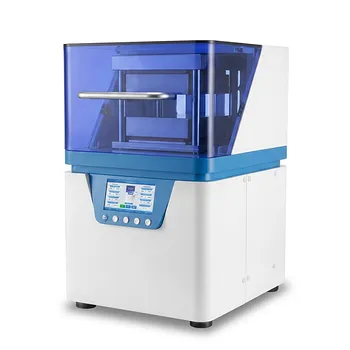
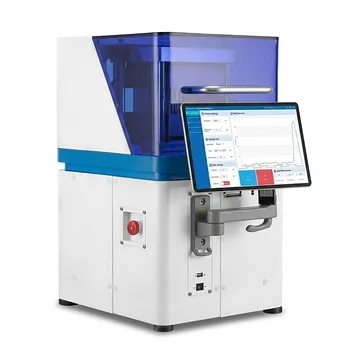
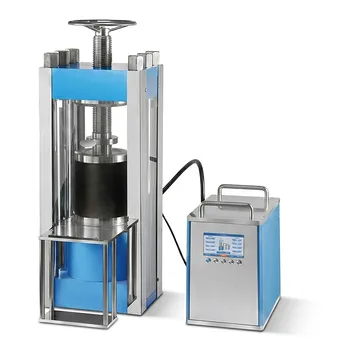
The primary purpose of using a heated press and cylindrical cutting tools is to ensure geometric precision and material density, which are critical for minimizing measurement errors during electrical testing. By transforming raw materials into thin, flat layers with exact diameters, these tools eliminate air gaps at the electrode interface and remove internal voids that would otherwise skew dielectric results.
Preparing specimens through thermal pressing and precise cutting creates a high-quality physical interface. This process ensures that the measured electrical properties reflect the material's intrinsic characteristics rather than inconsistencies in the sample's shape or internal structure.
Achieving Geometric Precision and Surface Integrity
The Necessity of Surface Flatness
A heated press reshapes composite materials into uniform thin layers with high surface flatness. This flatness is essential because any microscopic peaks or valleys on the specimen surface create interface gaps between the material and the testing electrodes.
Eliminating Interface Measurement Errors
When interface gaps exist, the electrical field must pass through air before reaching the sample, which significantly increases measurement error. A pressed specimen ensures tight electrical contact, allowing for the accurate determination of properties like dielectric constant and loss tangent.
Defining Precise Specimen Dimensions
Cylindrical cutting tools are used to produce specimens with exact diameters and clean edges. Standardized dimensions are vital because electrical calculations, such as AC conductivity and impedance, rely on the precise surface area and thickness of the specimen to produce valid data.
Optimizing Internal Material Structure
Eliminating Voids and Air Pockets
The simultaneous application of heat and pressure forces the material into a molten state, allowing it to flow and fill internal spaces. This process eliminates internal voids and air bubbles, which are common in 3D-printed or manually molded samples and can lead to false dielectric readings.
Increasing Material Density
High pressure during the pressing process increases the material density by compacting the polymer chains and fillers, such as SiO2L-PLA nanocomposites. A fully densified specimen provides a consistent medium for the electric field, ensuring that the test results are repeatable and scientifically valid.
Regulating Polymer Crystallization
For polymers like Poly(lactic acid) (PLA), a heated press provides a controlled thermal environment that can regulate crystallization behavior. Controlled cooling after pressing ensures the internal structure is uniform, reducing data scatter across multiple test samples.
Understanding the Trade-offs and Pitfalls
Thermal Degradation Risks
Applying excessive heat during the pressing process can lead to the thermal degradation of the polymer matrix or the chemical additives. If the temperature exceeds the material's stability threshold, the resulting electrical data will reflect a damaged material rather than the intended composite.
Impact of Over-Pressing
While high pressure is necessary for densification, excessive force can sometimes displace or damage nanofillers within a composite. This can alter the internal network of the material, potentially leading to misleading results regarding its conductive properties or mechanical strength.
Consistency in Cooling Rates
The rate at which a specimen cools after being pressed can drastically change its physical properties. Inconsistent cooling between batches can lead to variations in crystallinity, making it difficult to compare results across different experimental runs.
Applying This Process to Your Material Testing
Successful specimen preparation requires balancing thermal energy with mechanical force to preserve the material's integrity while achieving the necessary geometry.
- If your primary focus is dielectric accuracy: Prioritize surface flatness and the removal of internal voids to ensure the highest possible contact quality with electrodes.
- If your primary focus is material comparison: Maintain strictly identical temperature, pressure, and cooling cycles to ensure that differences in data reflect material changes rather than processing variations.
- If your primary focus is chemical analysis (like FTIR): Use the heated press to create uniform, translucent pellets that allow for consistent light or X-ray penetration.
By mastering the transition from raw composite to a precision-engineered disc, you ensure that your electrical testing captures the true potential of your material.
Summary Table:
| Process/Tool | Key Function | Impact on Electrical Testing |
|---|---|---|
| Heated Pressing | Achieves surface flatness & eliminates internal voids | Minimizes measurement errors and air gap interference |
| Thermal Control | Regulates polymer crystallization & density | Ensures repeatable data and consistent material structure |
| Cylindrical Cutting | Produces exact diameters and clean edges | Provides precise surface area for AC conductivity calculations |
| High Pressure | Compacts polymer chains and fillers | Increases material density for a consistent electric field medium |
Ready to elevate your material research with superior specimen precision? KINTEK specializes in comprehensive laboratory pressing solutions, offering manual, automatic, heated, multifunctional, and glovebox-compatible models, as well as cold and warm isostatic presses widely applied in battery research and advanced electronics. Whether you need to eliminate air gaps for dielectric accuracy or ensure uniform density for conductivity tests, our precision-engineered equipment is designed to deliver consistent, valid results every time. Contact us today to discover how KINTEK can enhance your lab's testing efficiency and data integrity!
References
- Jacek Fal, Gaweł Żyła. Electrical and Optical Properties of Silicon Oxide Lignin Polylactide (SiO2-L-PLA). DOI: 10.3390/molecules25061354
This article is also based on technical information from Kintek Solution Knowledge Base .
Related Products
- Heated Hydraulic Press Machine with Heated Plates for Vacuum Box Laboratory Hot Press
- Automatic Hydraulic Heat Press Machine with Multi Stage Programmable Control and Integrated Water Cooling Plate Size 180x180mm
- Automatic Hydraulic Hot Press with Large Plate and Precision Temperature Control for Advanced Material Sample Preparation and Industrial Research
- Automatic High Temperature Heated Hydraulic Press Machine with Heated Plates for Lab
- Heated Hydraulic Press Machine With Heated Plates For Vacuum Box Laboratory Hot Press
People Also Ask
- What are the requirements for electrode pressing with high-viscosity ionic liquids like EMIM TFSI? Optimize Performance
- How does a laboratory heated hydraulic press facilitate PBN sample prep for WAXS? Achieve Precise X-Ray Scattering
- What are the industrial applications of heated hydraulic presses? Master Heat & Force for Precision Manufacturing
- Function of a Laboratory Hydraulic Press with Heated Platens in SSE? Enhance Battery Density & Conductivity
- How are heated hydraulic presses utilized in the preparation of thin films? Key Mechanisms and Applications