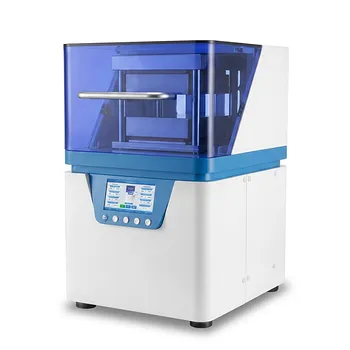
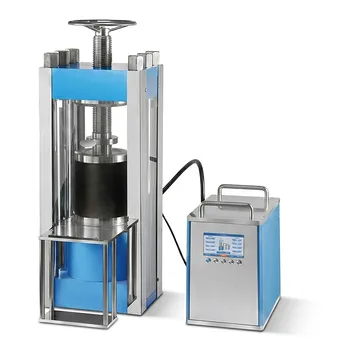
Heated hydraulic presses serve a critical role in industrial manufacturing by applying simultaneous heat and pressure to mold, shape, and bond materials. While standard presses rely solely on force, heated variants are indispensable for operations requiring thermal curing and material flow, such as laminating, forging, and forming complex composite materials.
Core Insight: The definitive value of a heated hydraulic press lies in its ability to facilitate chemical and physical changes—such as curing resins or fusing layers—that force alone cannot achieve. This synergy of thermal energy and hydraulic pressure is the foundation for creating durable, high-integrity components across diverse sectors.
Manufacturing Composites and Laminates
Bonding Multi-Layered Materials
In the production of composite materials, heated presses are essential for bonding distinct layers into a single, cohesive unit. This process is standard in the manufacturing of wooden panels and plastic sheets.
Curing Resins for Durability
Heat is the catalyst for curing the resins used in composite products. By maintaining precise temperatures during compression, manufacturers ensure the structural integrity of items like furniture elements and industrial conveyor belts.
Precision Electronics and Energy Applications
Semiconductor Fabrication
The electronics industry relies on heated hydraulic presses for the production of semiconductors and silicon wafers. These components require exacting pressure and temperature control to ensure electrical performance and material stability.
Renewable Energy Technologies
These presses are increasingly used to fabricate printable solar cells. The ability to control process parameters tightly is vital for ensuring the efficiency and longevity of these optoelectronic materials.
Molding and Shaping Operations
Rubber and Plastic Molding
Heated presses are the standard solution for molding rubber components and shaping thermoplastics. The heat softens the material, allowing it to flow into complex molds, while the pressure ensures the final part retains its shape upon cooling.
Industrial Forging
For tougher materials, such as metals, heated hydraulic presses facilitate forging operations. Applying heat reduces the yield strength of the metal, making it easier to shape without cracking, while hydraulic force creates the final form.
Understanding the Trade-offs
Thermal Uniformity Challenges
The effectiveness of these presses depends entirely on uniform heat distribution across the platen. If the heating elements fail to provide consistent temperatures, the resulting product may suffer from uneven curing or structural weak points.
Complexity vs. Standard Presses
Heated hydraulic presses are significantly more complex than their "cold" counterparts. They require robust maintenance of heating elements and thermal control systems, making them a higher initial investment and requiring more skilled operation to manage the added variable of temperature.
Making the Right Choice for Your Goal
When selecting or utilizing a heated hydraulic press, your objective dictates the critical parameters.
- If your primary focus is Composite Manufacturing: Prioritize machines with exceptional pressure stability to ensure uniform bonding of layers like wood or rubber.
- If your primary focus is High-Tech Electronics: Prioritize precise thermal control systems to handle delicate materials like silicon wafers or solar cells without damage.
- If your primary focus is Material Shaping: Ensure the press can reach and maintain the specific softening temperatures required for your metal or thermoplastic stock.
Heated hydraulic presses transform raw potential into industrial reality by mastering the precise intersection of heat and force.
Summary Table:
| Industry Sector | Primary Applications | Key Benefit of Heat |
|---|---|---|
| Electronics | Semiconductor fabrication, silicon wafers | Ensures material stability and performance |
| Renewable Energy | Printable solar cells | Precise control for optoelectronic efficiency |
| Composites | Laminated wood panels, plastic sheets | Cures resins and bonds multi-layered materials |
| Automotive/Heavy | Rubber molding, industrial metal forging | Softens materials for complex mold flow |
| Material Science | Thermoplastics, conveyor belts | Facilitates chemical and physical bonding |
Elevate Your Laboratory Precision with KINTEK
At KINTEK, we specialize in comprehensive laboratory pressing solutions designed to meet the rigorous demands of battery research and material science. Whether you require manual, automatic, heated, or multifunctional systems, our equipment ensures the thermal uniformity and pressure stability essential for high-integrity results.
From glovebox-compatible models to advanced cold and warm isostatic presses, KINTEK provides the technology you need to transform raw materials into industrial innovation.
Ready to optimize your pressing workflow? Contact KINTEK today to find your perfect solution.
Related Products
- Heated Hydraulic Press Machine with Heated Plates for Vacuum Box Laboratory Hot Press
- Automatic Heated Hydraulic Lab Press with Programmable Touch Screen Controls and Precision Temperature Regulation
- Automatic High Temperature Heated Hydraulic Press Machine with Heated Plates for Lab
- Heated Hydraulic Press Machine With Heated Plates For Vacuum Box Laboratory Hot Press
- 24T 30T 60T Heated Hydraulic Lab Press Machine with Hot Plates for Laboratory
People Also Ask
- How does a laboratory heated hydraulic press facilitate PBN sample prep for WAXS? Achieve Precise X-Ray Scattering
- What are the requirements for electrode pressing with high-viscosity ionic liquids like EMIM TFSI? Optimize Performance
- Function of a Laboratory Hydraulic Press with Heated Platens in SSE? Enhance Battery Density & Conductivity
- How are heated hydraulic presses utilized in the preparation of thin films? Key Mechanisms and Applications
- What industrial applications does a heated hydraulic press have beyond laboratories? Powering Manufacturing from Aerospace to Consumer Goods