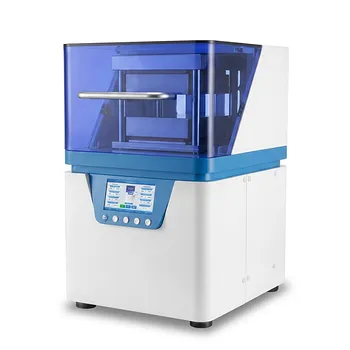
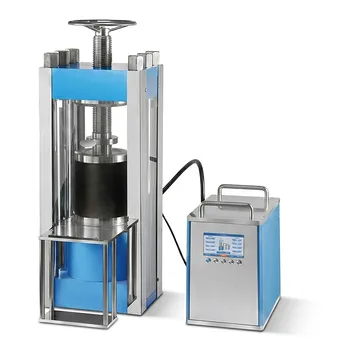
The key technical requirements for a hot press machine rely on the integration of rigid structural integrity with precise hydraulic and thermal control. Specifically, the machine requires a hydraulic system capable of applying high, balanced pressure with automatic replenishment to maintain consistency. This must be supported by a solid steel frame to prevent deformation and a heating system engineered for uniform heat transfer and electrical efficiency.
Success in hot pressing is not just about force; it is about the sustained stability of that force over time. The equipment must balance heavy-duty physical construction with sensitive control systems to ensure that temperature and pressure remain uniform across the entire surface area of the product.
The Core Mechanical Systems
Hydraulic Pressure Stability
The heart of the machine is a hydraulic core system comprised of heavy-duty cylinders and valves. This system must generate high pressure while maintaining a controllable fluctuation range.
Automatic Pressure Replenishment
Static pressure is rarely sufficient for high-quality results. The technical specification must include an automatic pressure replenishment function. This ensures that if pressure drops slightly during the cycle, the system immediately compensates to maintain the set bond strength.
Structural Rigidity
To ensure accuracy, the machine’s frame must be constructed from solid steel. This prevents mechanical deformation, which is a common cause of uneven thickness in finished products. A four-column and three-plate structure is often specified to ensure high precision and parallelism between the platens.
Thermal Dynamics and Control
Heat Plate Construction
The composition of the heat plate is critical for durability and precision. The standard requirement is a solid steel plate that has been longitudinally drilled. This design resists warping and allows for optimal internal flow of the heating medium.
Uniform Heat Transfer
The heating system must be designed to minimize heat consumption while maximizing uniformity. Uneven heat conduction leads to weak spots in the bond; therefore, the system must deliver consistent thermal energy across the entire plate surface.
Digital Precision and Monitoring
Modern technical requirements demand digital controls for the precise regulation of temperature, pressure, and timing. Advanced units utilize pulse heating technology with rapid sampling frequencies (as fast as 0.1 seconds) and real-time temperature curve displays to ensure repeatability.
Understanding the Trade-offs
Durability vs. Energy Consumption
Solid steel plates and heavy-duty frames provide superior longevity and product consistency. However, they possess high thermal mass, which can require more energy to bring up to temperature initially compared to lighter, less durable alternatives.
Automation vs. Maintenance Complexity
Advanced features such as CCD vision systems for alignment and multi-stage temperature controls significantly improve accuracy. The trade-off is increased operational complexity and the potential need for specialized maintenance compared to simpler, manual systems.
Making the Right Choice for Your Goal
Selecting the correct specifications depends entirely on your production volume and precision requirements.
- If your primary focus is heavy-duty bonding: Prioritize a solid steel frame and a hydraulic system with automatic pressure replenishment to prevent deformation under load.
- If your primary focus is delicate electronic components: Prioritize pulse heating technology and CCD vision alignment to ensure precise temperature control and positioning.
- If your primary focus is energy efficiency: Look for a heating and heat conduction system specifically designed for low heat consumption and effective insulation.
Ultimately, the best hot press machine is one where the rigidity of the frame matches the precision of the thermal control system.
Summary Table:
| Technical Category | Key Requirement | Purpose |
|---|---|---|
| Hydraulic System | Automatic Pressure Replenishment | Maintains consistent bond strength throughout the cycle |
| Structural Frame | Solid Steel / 4-Column Design | Prevents mechanical deformation and ensures platen parallelism |
| Heating Plates | Longitudinally Drilled Solid Steel | Resists warping and ensures uniform heat conduction |
| Thermal Control | Pulse Heating & Digital Monitoring | Provides rapid response and precise temperature repeatability |
| Alignment | CCD Vision Systems | Ensures high-precision positioning for delicate components |
Elevate Your Research with KINTEK’s Precision Pressing Solutions
Maximize your laboratory efficiency and material consistency with KINTEK. As specialists in comprehensive laboratory pressing solutions, we provide the cutting-edge technology required for the most demanding applications, including advanced battery research and material science.
Why choose KINTEK?
- Versatile Model Range: From manual and automatic to heated and multifunctional units.
- Specialized Equipment: High-performance cold and warm isostatic presses.
- Precision Engineered: Every machine is designed to meet strict structural and thermal requirements, ensuring uniform heat transfer and pressure stability.
- Research Ready: Our glovebox-compatible models are perfect for sensitive atmospheric research.
Ready to find the perfect press for your specific needs? Contact our technical experts today to discuss your project requirements!
Related Products
- Automatic High Temperature Heated Hydraulic Press Machine with Heated Plates for Lab
- Automatic Hydraulic Heat Press Machine with Multi Stage Programmable Control and Integrated Water Cooling Plate Size 180x180mm
- Heated Hydraulic Press Machine with Heated Plates for Vacuum Box Laboratory Hot Press
- Automatic Heated Hydraulic Press Machine with Hot Plates for Laboratory
- Laboratory Split Manual Heated Hydraulic Press Machine with Hot Plates
People Also Ask
- Function of a Laboratory Hydraulic Press with Heated Platens in SSE? Enhance Battery Density & Conductivity
- What are the requirements for electrode pressing with high-viscosity ionic liquids like EMIM TFSI? Optimize Performance
- How does a laboratory heated hydraulic press facilitate PBN sample prep for WAXS? Achieve Precise X-Ray Scattering
- What are the industrial applications of heated hydraulic presses? Master Heat & Force for Precision Manufacturing
- Why is a laboratory hydraulic press with heating plates required for PLA/TEC films? Achieve Precise Sample Integrity