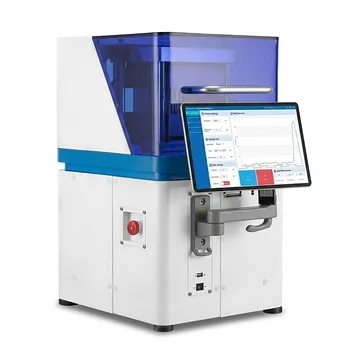
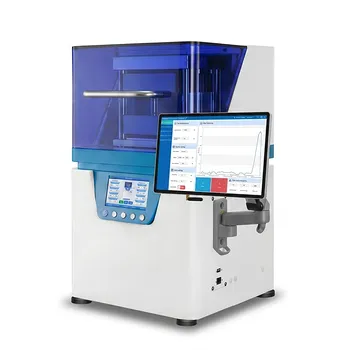
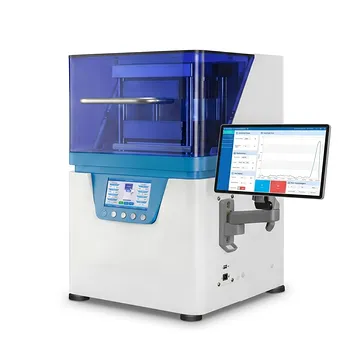
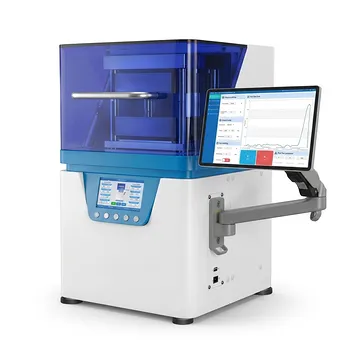
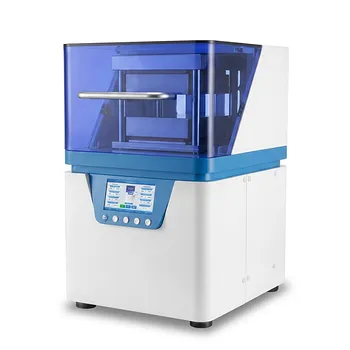
Electric heating technology is the primary mechanism used to control hot plate temperatures in hydraulic lab presses. This system utilizes precise circuitry to regulate heat within a specific operating range, typically between 20°C and 200°C. Once the target temperature is achieved, the system automatically stabilizes to maintain a constant thermal environment for the material.
Reliability in vulcanization relies on the system's ability to lock in a specific temperature. By automatically maintaining the set level via control circuits, the press eliminates thermal fluctuations that could compromise the curing process.
The Mechanics of Thermal Regulation
Electric Heating Elements
The core of the temperature control system involves electric heating technology.
This method provides the energy required to heat the plates effectively for processes such as vulcanization.
Automatic Stabilization Circuits
A critical feature of the hydraulic lab press is its automated control loop.
Once the operator's set temperature is reached, the internal circuit takes over to maintain the heat at a constant level.
This automation ensures that the temperature remains stable throughout the duration of the process without requiring manual intervention.
Operational Temperature Range
The system is designed to offer flexibility for various laboratory applications.
Users can adjust the temperature within a broad spectrum of 20°C to 200°C.
This range covers the vast majority of standard curing and vulcanization requirements for lab-scale materials.
Understanding Operational Limits
Upper Temperature Caps
It is vital to recognize that the control system has a hard ceiling at 200°C.
While suitable for many polymers and rubbers, this specific configuration is not designed for materials requiring ultra-high temperature sintering or processing above this threshold.
System Dependencies
The consistency of your results is directly tied to the stability of the power supply and the control circuit.
Because the system relies on automatic maintenance, any electrical faults or interruptions in the circuit will result in immediate temperature deviations, potentially ruining the sample.
Optimizing Your Process Control
To ensure your lab press delivers the best results, match your testing requirements to the machine's thermal capabilities.
- If your primary focus is material consistency: Allow the automatic circuit to fully stabilize at the target temperature before applying pressure to ensure uniform curing.
- If your primary focus is material versatility: Verify that your material's required processing temperature falls strictly within the 20°C to 200°C range to avoid under-curing or equipment damage.
Precise thermal regulation is the foundation of reproducible laboratory results, turning variable heat into a controlled constant.
Summary Table:
| Feature | Specification/Detail |
|---|---|
| Heating Technology | Electric Heating Elements |
| Control Mechanism | Automatic Stabilization Circuits |
| Temperature Range | 20°C to 200°C |
| Primary Application | Vulcanization, Curing, & Polymer Testing |
| Key Benefit | Elimination of Thermal Fluctuations |
Elevate Your Research with KINTEK Precision
Maximize your material consistency with KINTEK’s advanced laboratory pressing solutions. Whether you require manual control or fully automated heating systems, our range of manual, automatic, heated, and multifunctional presses—including specialized isostatic and glovebox-compatible models—is engineered for the rigorous demands of battery research and polymer science.
Unlock reproducible results today. Contact KINTEK Experts to find the perfect thermal regulation solution for your laboratory.
Related Products
- Automatic Heated Hydraulic Lab Press Machine 200x200 Plate Size for Battery Research and Materials Science
- Automatic High Temperature Heated Hydraulic Press Machine with Heated Plates for Lab
- 24T 30T 60T Heated Hydraulic Lab Press Machine with Hot Plates for Laboratory
- Automatic Heated Hydraulic Lab Press 120x120mm Plate Fully Automated Material Research Press
- Automatic Hydraulic Hot Press with Large Plate and Precision Temperature Control for Advanced Material Sample Preparation and Industrial Research
People Also Ask
- How should platen size be determined when selecting a laboratory press? Expert Guide to Optimal Sample Processing
- What are the recommended cleaning procedures for a heated lab press? Ensure Precision and Longevity in Your Lab
- Function of a Laboratory Hydraulic Press with Heated Platens in SSE? Enhance Battery Density & Conductivity
- What are the industrial applications of heated hydraulic presses? Master Heat & Force for Precision Manufacturing
- Why is a laboratory heated hydraulic press required? Ensure Precise Vulcanization for NBR/EPDM Nanocomposites