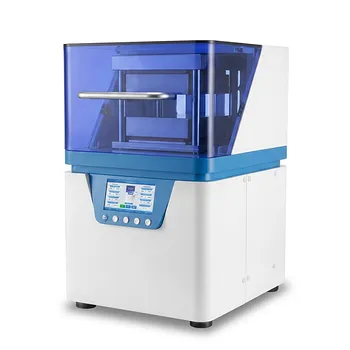
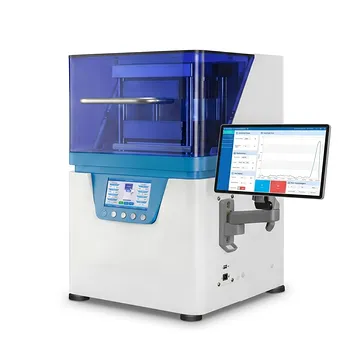
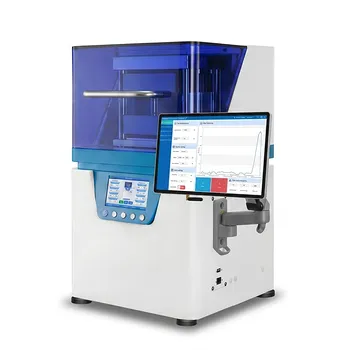
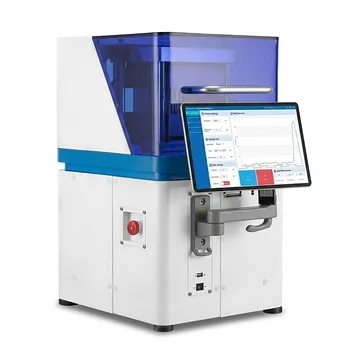
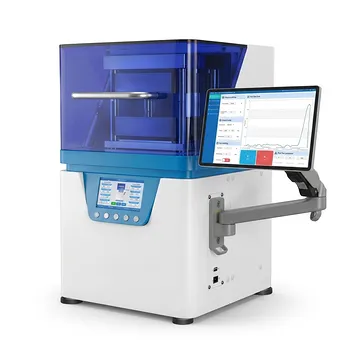
A hydraulic heat press acts as a fundamental instrument for validating material integrity under stress. By applying simultaneous high pressure and elevated temperatures, it allows researchers to rigorously evaluate the strength, durability, and behavior of materials before they reach the manufacturing stage.
The core function of a hydraulic heat press is to simulate extreme environmental conditions—specifically the combination of heat and compressive force—to reveal mechanical properties and prepare consistent samples for analytical testing.
Simulating Extreme Environmental Conditions
Evaluating Strength and Durability
The primary role of a hydraulic heat press is to subject materials to high pressure and temperature simultaneously.
This allows researchers to determine exactly how a material will hold up under the harsh conditions it might face in real-world applications, such as in construction or industrial manufacturing.
Understanding Material Behavior
Beyond simple breakage, researchers use these presses to investigate subtle changes in material behavior under stress.
This provides deep insights for material science, revealing how substances deform, compress, or react when pushed to their thermal and physical limits.
Analyzing Mechanical Properties
Tension and Hardness Testing
While often associated with compression, these presses are versatile enough to assist in tension testing to evaluate mechanical properties.
They enable researchers to assess critical metrics such as ductility and hardness, ensuring the material meets specific engineering standards.
Assessing Manufacturing Performance
A hydraulic press is also used to predict how a material will perform during the manufacturing process itself.
For example, researchers can test "blocking resistance," which measures a material's ability (such as print media) to resist adhering to itself when stacked under pressure.
Critical Role in Sample Preparation
Creating Uniform Samples for Spectroscopy
Beyond stress testing, heated hydraulic presses are essential for preparing samples for compositional analysis.
They are frequently used to create pellets for techniques like Fourier-transform infrared spectroscopy (FTIR) and X-ray fluorescence (XRF).
Ensuring Component Distribution
The application of heat and pressure ensures that powder mixtures are compacted uniformly.
This uniform distribution is vital for obtaining accurate analytical results, as it eliminates inconsistencies that could skew chemical data.
Understanding the Trade-offs
The Necessity of Precision Control
While powerful, the utility of a hydraulic heat press relies entirely on controlled force.
If the pressure or temperature fluctuates unexpectedly, the data regarding strength and durability becomes unreliable.
Specialized vs. General Application
Using a press for multiple applications (e.g., crushing samples vs. delicate tension testing) requires careful calibration.
Researchers must ensure the machine is configured correctly for the specific mechanical property being tested to avoid damaging the equipment or the specimen.
Making the Right Choice for Your Goal
To maximize the utility of a hydraulic heat press, align its application with your specific research objectives:
- If your primary focus is mechanical engineering: Prioritize the press's ability to perform tension and compression testing to validate strength and ductility under heat.
- If your primary focus is chemical analysis: Focus on the press's ability to create uniform, compacted pellets (such as KBr) to ensure accurate spectroscopic results.
- If your primary focus is quality control: Use the press to simulate manufacturing conditions, such as blocking resistance, to predict product performance.
By leveraging the dual power of heat and pressure, you transform raw material data into actionable engineering insights.
Summary Table:
| Application Category | Key Functions | Research & Testing Benefits |
|---|---|---|
| Mechanical Testing | Compression & Tension | Validates strength, ductility, and durability under stress |
| Sample Preparation | Pelletizing & Compaction | Creates uniform samples for FTIR/XRF spectroscopic analysis |
| Manufacturing Simulation | Heat & Pressure Application | Predicts material behavior and blocking resistance in production |
| Material Science | Thermal/Physical Stress | Investigates deformation and reaction at extreme limits |
Elevate Your Research Precision with KINTEK
At KINTEK, we specialize in comprehensive laboratory pressing solutions tailored for the most demanding material science applications. Whether you are conducting cutting-edge battery research or precise compositional analysis, our range of manual, automatic, heated, and multifunctional presses provides the exact control you need.
Our equipment—including glovebox-compatible models, cold isostatic presses (CIP), and warm isostatic presses (WIP)—is engineered to ensure uniform sample distribution and reliable mechanical testing.
Ready to transform your raw data into actionable engineering insights?
Contact KINTEK today to find the perfect press for your lab
Related Products
- Automatic Hydraulic Heat Press Machine with Multi Stage Programmable Control and Integrated Water Cooling Plate Size 180x180mm
- Automatic Hydraulic Hot Press with Large Plate and Precision Temperature Control for Advanced Material Sample Preparation and Industrial Research
- Heated Hydraulic Press Machine with Heated Plates for Vacuum Box Laboratory Hot Press
- Automatic Heated Hydraulic Lab Press with Programmable Touch Screen Controls and Precision Temperature Regulation
- Automatic High Temperature Heated Hydraulic Press Machine with Heated Plates for Lab
People Also Ask
- How does a laboratory hydraulic heat press facilitate the molding of cellulose composite specimens? Precision Molding
- How is a hydraulic heat press used for sample preparation? Achieve Uniform, Void-Free Samples for Lab Analysis
- What is a hydraulic heat press? Discover Precision Material Bonding and Sample Preparation
- What are the industrial applications of a hydraulic heat press? Powering Lamination, Bonding, and R&D Efficiency
- What is a hydraulic hot press machine? Master Material Bonding with Precise Thermal Pressure Control