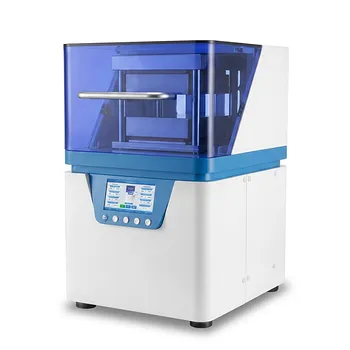
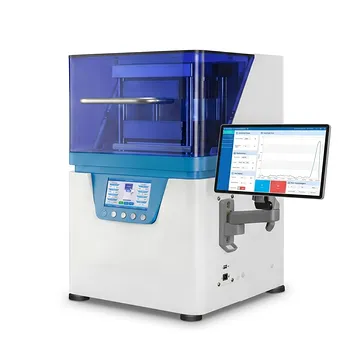
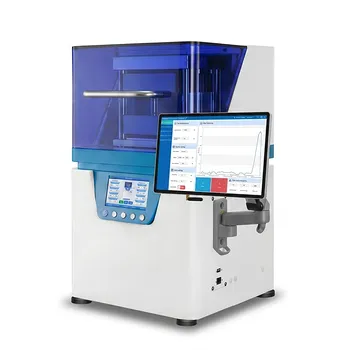
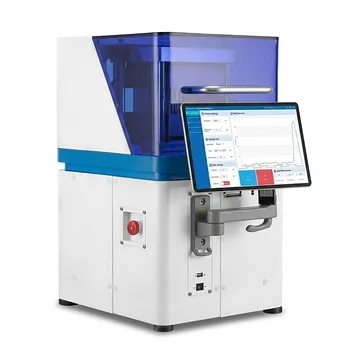
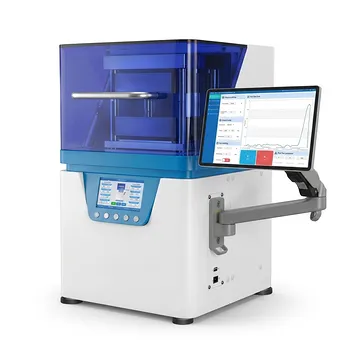
Hydraulic heat presses are fundamental to industrial manufacturing, primarily utilized for soldering, laminating, and bonding operations. These machines heat solder-coated parts to melt the solder, creating strong connections between components. Additionally, they are essential in the production of composite materials, where heat and pressure are applied simultaneously to fuse multiple layers of material together.
The core value of a hydraulic heat press lies in its ability to apply controlled heating and hydraulic force simultaneously. This dual action reduces processing time and ensures high structural integrity, making it indispensable for creating uniform composites and reliable component assemblies.
Primary Manufacturing Processes
Bonding and Laminating
The most prominent application of these presses is in the creation of composite materials.
By applying significant pressure alongside heat, the press bonds multiple layers of distinct materials into a single, cohesive unit. This process is critical for industries requiring materials that possess specific structural properties derived from layering.
Industrial Soldering
Hydraulic heat presses are frequently used to assemble components via soldering.
The machine applies heat directly to parts that have been pre-coated with solder. As the solder melts under the controlled temperature, the hydraulic pressure ensures a tight fit, forming a robust and durable connection between the parts.
Research and Development Applications
Material Testing
While mass production is a primary use, these presses are also vital for material testing within industrial R&D labs.
Engineers use them to investigate how different substances react to high pressure and temperature. This includes testing the strength and durability of new material formulations before they enter full-scale production.
Sample Preparation
In laboratory settings, hydraulic heat presses are used for sample preparation.
They can compress materials into pellets or specific shapes required for spectroscopic analysis or other testing protocols. This allows for the precise shaping and molding necessary for accurate analytical results.
Why Industries Rely on This Technology
Enhanced Efficiency
The ability to apply heat and pressure in a single step significantly reduces processing time.
Instead of heating a material and then transferring it to a separate press, the simultaneous action streamlines the workflow. This improves overall throughput in a manufacturing line.
Precision and Consistency
Hydraulic heat presses offer precise control over the compression and bonding process.
This control ensures that every unit produced meets the same rigorous standards. This is particularly important for tasks requiring high material integrity, where variations in pressure or heat could lead to product failure.
Understanding the Operational Trade-offs
Parameter Sensitivity
Achieving the desired result requires distinct control over two variables: temperature and pressure.
If the temperature is too high, materials may degrade; if pressure is uneven, the bond may be weak. Operators must strictly monitor these parameters to avoid costly waste.
Scale vs. Precision
There is often a divergence between laboratory presses and industrial production presses.
A laboratory press creates pellets and tests samples with extreme precision but low volume. Conversely, a production press prioritizes throughput and force. Using the wrong class of machine for the task will result in either inefficiency or a lack of necessary data granularity.
Making the Right Choice for Your Goal
When integrating a hydraulic heat press into your workflow, consider your immediate objective:
- If your primary focus is Mass Production: Prioritize a machine with high throughput capabilities specifically designed for soldering and laminating composites to ensure efficient cycle times.
- If your primary focus is R&D or Quality Control: Select a laboratory-grade press that emphasizes precise parameter control for material testing and sample pellet preparation.
Success depends on matching the machine’s capacity for heat and force to the specific material properties of your product.
Summary Table:
| Application Category | Primary Process | Key Industry Benefit |
|---|---|---|
| Manufacturing | Soldering & Bonding | Creates robust, durable component connections via controlled melting. |
| Composite Production | Laminating | Fuses material layers into high-integrity cohesive units. |
| Research & Development | Material Testing | Analyzes substance reactions to simultaneous heat and pressure. |
| Laboratory Analysis | Sample Preparation | Compresses materials into precise pellets for spectroscopic analysis. |
Elevate Your Laboratory Precision with KINTEK
Are you looking to streamline your material research or industrial testing? KINTEK specializes in comprehensive laboratory pressing solutions tailored to your specific needs. From manual and automatic models to heated, multifunctional, and glovebox-compatible presses, we provide the tools necessary for superior sample preparation and material analysis.
Whether you require cold or warm isostatic presses for battery research or high-precision heat presses for composite testing, our team is ready to deliver the perfect solution. Contact us today to find the ideal press for your application and benefit from our industry-leading expertise in pressure and temperature control.
Related Products
- Automatic Hydraulic Heat Press Machine with Multi Stage Programmable Control and Integrated Water Cooling Plate Size 180x180mm
- Automatic Hydraulic Hot Press with Large Plate and Precision Temperature Control for Advanced Material Sample Preparation and Industrial Research
- Heated Hydraulic Press Machine with Heated Plates for Vacuum Box Laboratory Hot Press
- Automatic Heated Hydraulic Lab Press with Programmable Touch Screen Controls and Precision Temperature Regulation
- Automatic High Temperature Heated Hydraulic Press Machine with Heated Plates for Lab
People Also Ask
- How does a laboratory hydraulic heat press facilitate the molding of cellulose composite specimens? Precision Molding
- How is a hydraulic heat press used for sample preparation? Achieve Uniform, Void-Free Samples for Lab Analysis
- What is the role of a hydraulic heat press in material testing? Unlock Superior Data for Research & QC
- What is a hydraulic heat press? Discover Precision Material Bonding and Sample Preparation
- What is a hydraulic hot press machine? Master Material Bonding with Precise Thermal Pressure Control