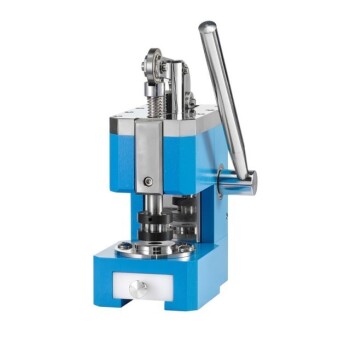
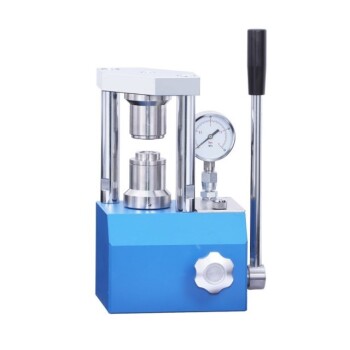
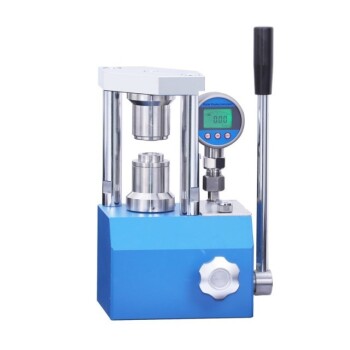
Precision sample preparation is the foundation of reliable geotechnical testing. Laboratory manual compaction equipment and precision molds serve as the critical interface between raw soil mixtures and standardized data, transforming loose material into cylindrical specimens with a specific dry density. This equipment is essential for controlling compaction energy to ensure the soil reaches a targeted relative compaction degree, typically 90%.
Core Takeaway The primary function of this equipment is to bridge the gap between laboratory models and on-site reality. By simulating the rolling effect of construction machinery, manual compaction ensures that the specimen's internal structure accurately reflects the foundation engineering conditions required for valid unconfined compressive strength testing.
Achieving Structural Fidelity
Controlled Density and Porosity
The immediate role of manual compaction equipment is to manipulate the physical state of the modified expansive soil. By applying specific energy inputs, you force the soil particles closer together to achieve a specific dry density.
This process directly regulates the porosity of the specimen. Proper compaction ensures that the void ratio within the sample matches the specifications required for the project design, preventing distinct behaviors between the lab sample and the actual site.
Simulating the Rolling Effect
One of the most critical aspects of using manual compaction is its ability to mimic real-world engineering processes. The primary reference highlights that this method simulates the rolling effect seen at engineering sites.
This simulation is vital because different compaction methods reorient soil particles differently. By replicating the field's mechanical stress, the laboratory specimen develops an internal structure that predicts how the soil will behave under actual foundation loads.
Ensuring Geometric Standardization
Precision molds act as the constraining boundary for the compaction process. They ensure every specimen produced has identical dimensions, providing a standardized geometry for subsequent testing.
Without precision molds, variations in diameter or height would introduce variables that skew test results. Uniform dimensions allow for scientifically valid comparisons across different samples, ensuring that changes in strength are due to the soil modification, not sample irregularity.
Preparing for Performance Testing
The Foundation for Strength Tests
The ultimate goal of this preparation phase is to produce valid samples for unconfined compressive strength tests. If the compaction is inconsistent, strength data becomes meaningless.
The equipment ensures that the specimen is robust enough to handle the handling and loading required during these tests. It establishes a baseline of quality that makes the resulting data legally and technically defensible in engineering reports.
Managing Internal Consistency
Effective use of this equipment helps mitigate internal flaws. By applying compaction in controlled layers within the mold, you reduce the risk of uneven pore distribution.
While hydraulic methods are often cited for maximizing homogeneity, manual compaction—when performed correctly—aims to achieve the same goal: a uniform density throughout the cylinder that prevents weak points or localized failure during stress testing.
Understanding the Trade-offs
Potential for Density Gradients
While manual compaction is excellent for simulating rolling effects, it introduces the risk of human variability. If the energy is not applied consistently across layers, density gradients may form within the specimen.
This means the bottom of the sample could be denser than the top, or vice versa. This lack of uniformity can affect how water flows through the sample and how it reacts to pressure, potentially distorting volume change behavior.
Operational Efficiency
Manual compaction is physically demanding and time-consuming compared to automated hydraulic systems. For projects requiring a massive volume of samples, the throughput limitation of manual equipment can become a bottleneck.
However, for specific expansive soil studies where the nuance of particle orientation (the rolling effect) is more critical than pure speed, the manual approach remains the superior technical choice.
Making the Right Choice for Your Goal
To ensure your modified expansive soil specimens yield actionable data, align your preparation method with your specific testing objectives:
- If your primary focus is simulating field mechanics: Prioritize manual compaction to replicate the particle reorientation and "rolling effect" of on-site construction machinery.
- If your primary focus is data consistency: Ensure strict adherence to layer protocols and blow counts to achieve the 90% relative compaction target and eliminate internal density gradients.
Ultimately, the validity of your unconfined compressive strength results relies entirely on the precision and consistency applied during this initial molding phase.
Summary Table:
| Feature | Role in Sample Preparation | Impact on Test Results |
|---|---|---|
| Manual Compaction | Replicates on-site "rolling effect" | Ensures realistic internal soil structure |
| Precision Molds | Defines standardized geometry | Eliminates dimensional variables for valid comparisons |
| Energy Control | Achieves target dry density (90% relative) | Regulates porosity to match project specifications |
| Layering Protocol | Manages internal consistency | Minimizes density gradients and weak points |
Elevate Your Geotechnical Research with KINTEK
Precision in sample preparation is the cornerstone of reliable soil mechanics data. KINTEK specializes in comprehensive laboratory pressing solutions designed to meet the rigorous demands of material science and engineering.
Whether you are conducting battery research or stabilizing expansive soils, our range of manual, automatic, heated, and multifunctional presses, alongside our precision molds and isostatic solutions, ensures your specimens meet exact density and structural standards.
Ready to achieve superior structural fidelity in your lab? Contact KINTEK Today to find the perfect compaction solution for your research goals.
References
- Mary Ann Adajar, Vince Patrick Sy. Shear Strength and Durability of Expansive Soil Treated with Recycled Gypsum and Rice Husk Ash. DOI: 10.3390/app14093540
This article is also based on technical information from Kintek Solution Knowledge Base .
Related Products
- Manual Cold Isostatic Pressing CIP Machine Pellet Press
- Lab Round Bidirectional Press Mold
- Lab Polygon Press Mold
- Lab Manual Microtome Slicer for Tissue Sectioning
- Manual Laboratory Hydraulic Press Lab Pellet Press
People Also Ask
- Why is Cold Isostatic Pressing (CIP) necessary for SBN ceramics? Achieve High-Density and Crack-Free Sintering
- Why is Cold Isostatic Pressing (CIP) applied after uniaxial pressing? Optimize Superconductor Precursor Density
- What are the process advantages of using Cold Isostatic Pressing (CIP) for LSMO? Achieve Defect-Free Density
- What types of equipment are available for cold isostatic pressing? Explore CIP Solutions for Labs and Production
- What are the technical advantages of cold isostatic pressing equipment compared to uniaxial compression equipment? Learn More!