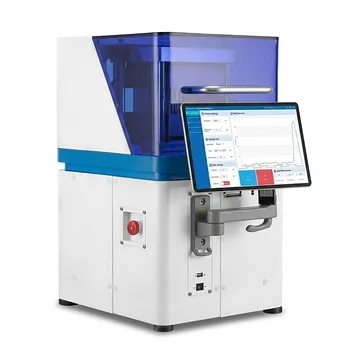
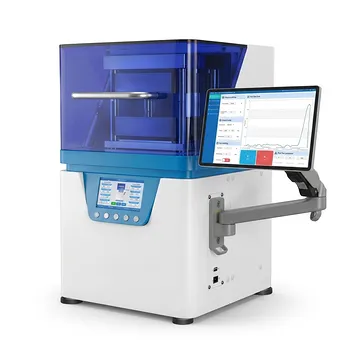
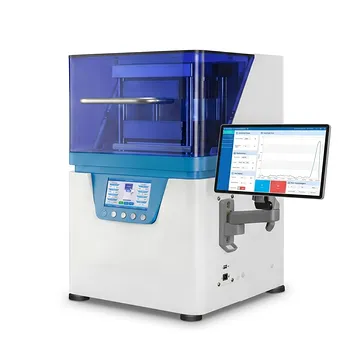
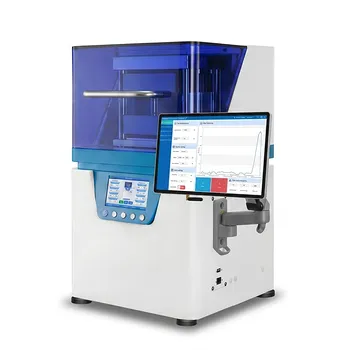
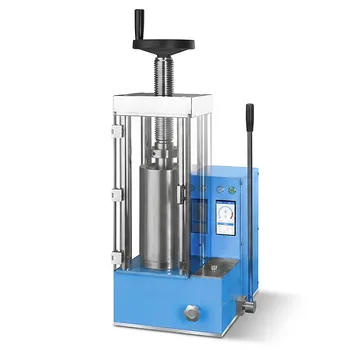
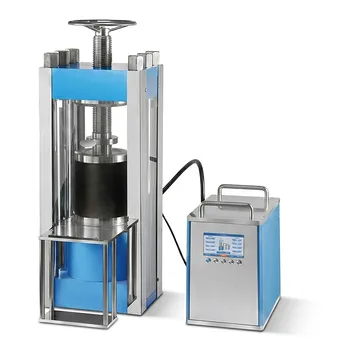
The electric heated laboratory press serves as the critical pre-processing tool that transforms raw rubber compounds into high-precision, standardized sheets. By simultaneously applying controlled thermal energy and high hydraulic pressure, the press ensures the specimens possess the uniform density and exact geometry required for consistent electron or gamma-ray penetration during the radiation process.
Core Takeaway: The laboratory press eliminates physical variables—such as thickness fluctuations and internal air pockets—that would otherwise cause uneven energy absorption during radiation. It establishes a repeatable, high-density baseline that is essential for accurate mechanical testing and predictable cross-linking results.
Achieving Geometric and Structural Precision
Uniformity of Thickness and Flatness
An electric heated press compresses rubber materials into sheets with precise thicknesses and high flatness. This uniformity is vital because radiation penetration depth is highly sensitive to material thickness; even minor variations can lead to "over-cured" or "under-cured" sections within a single specimen.
Elimination of Internal Defects
High-pressure compression (often reaching 4.9 MPa or higher) expels internal gases and air bubbles from the rubber matrix. By removing these voids, the press prevents physical defects that would otherwise act as stress concentrators or cause localized shielding during the radiation cross-linking phase.
Molecular Chain Arrangement
The application of stable heat—typically between 140°C and 160°C—facilitates the mobility of rubber molecular chains. This allows the polymer chains to arrange themselves more effectively within the mold, creating a homogenized material structure before the final three-dimensional network is "locked in" by radiation.
Preparing the Matrix for Radiation Cross-linking
Ensuring Consistent Molecular Density
Radiation cross-linking relies on the consistent interaction between high-energy particles and the polymer matrix. The press ensures internal structural density is uniform across the entire sample, providing a reliable foundation for the radiation to create a predictable cross-link density throughout the specimen.
Standardizing the Testing Baseline
For mechanical evaluations like tensile strength and hardness to be valid, the starting material must be standardized. The press provides the necessary kinetic conditions to ensure that any subsequent changes in physical properties are a direct result of the radiation dosage rather than inconsistencies in the initial sample preparation.
Pre-Radiation Conditioning
While radiation provides the energy for cross-linking, the press can be used to facilitate the initial distribution of vulcanizing agents and accelerators within the matrix. This ensures that the chemical environment is perfectly balanced before the specimen is moved to the irradiation chamber.
Understanding the Trade-offs and Limitations
Thermal vs. Radiation Cross-linking
It is important to distinguish between the heat used in the press and the energy used in radiation. If the press temperature is too high or the duration too long, unintended thermal vulcanization may occur, prematurely cross-linking the rubber and potentially skewing the results of the radiation study.
Pressure Compensation Issues
A common pitfall in laboratory pressing is the loss of pressure as the material softens and flows. Advanced presses utilize pressure compensation systems to maintain a constant load; without this, the center of the rubber sheet may be denser than the edges, leading to "edge effects" during irradiation.
Temperature Gradients
In larger molds, temperature gradients across the heating plates can cause uneven material properties. Reliable specimen preparation requires a press with high-precision temperature control to ensure that the entire surface area of the rubber sheet experiences identical thermal conditions.
How to Apply This to Your Project
Making the Right Choice for Your Goal
- If your primary focus is radiation dose-response accuracy: Prioritize a press with high-precision thickness control (within microns) to ensure uniform energy absorption across all samples.
- If your primary focus is evaluating mechanical strength: Ensure the press provides sufficient pressure (at least 4 MPa) to completely eliminate internal voids and air bubbles.
- If your primary focus is processing heat-sensitive elastomers: Utilize a press with a highly responsive PID temperature controller to avoid premature thermal cross-linking before irradiation.
The precision of the laboratory press ultimately dictates the validity of the entire radiation cross-linking experiment.
Summary Table:
| Feature of Laboratory Press | Benefit for Radiation Cross-linking |
|---|---|
| High-Pressure (4.9 MPa+) | Eliminates air voids to ensure uniform energy absorption. |
| Precise Heat (140°C-160°C) | Arranges molecular chains for a homogenized material structure. |
| Thickness Uniformity | Prevents over-cured or under-cured sections due to penetration depth. |
| Pressure Compensation | Avoids "edge effects" by maintaining consistent density across the sheet. |
| PID Temp Control | Prevents premature thermal cross-linking in heat-sensitive elastomers. |
Elevate Your Specimen Preparation with KINTEK
Precise radiation cross-linking starts with a perfectly prepared specimen. KINTEK specializes in comprehensive laboratory pressing solutions tailored for high-stakes research. Whether you are conducting battery research or elastomer testing, our range of manual, automatic, heated, and multifunctional models—including cold and warm isostatic presses—provides the structural uniformity and geometric precision your project demands.
Don't let sample inconsistencies skew your data. Contact KINTEK today to find the ideal press for your laboratory and ensure repeatable, high-density results for every test.
References
- Dalal Mohamed Alshangiti. Impact of a nanomixture of carbon black and clay on the mechanical properties of a series of irradiated natural rubber/butyl rubber blend. DOI: 10.1515/epoly-2021-0051
This article is also based on technical information from Kintek Solution Knowledge Base .
Related Products
- Cylindrical Lab Electric Heating Press Mold for Laboratory Use
- Automatic Heated Hydraulic Lab Press Machine 200x200 Plate Size for Battery Research and Materials Science
- Automatic Heated Hydraulic Press Machine with Hot Plates for Laboratory
- Automatic Large Format Laboratory Heated Hydraulic Press 400x400mm Plate Capacity
- 24T 30T 60T Heated Hydraulic Lab Press Machine with Hot Plates for Laboratory
People Also Ask
- What role does a laboratory electric heated press play in polymer composite fabrication? Key for Standardized Specimens
- How does a laboratory electric heated press ensure sample quality? Optimize SiR-EPDM vulcanization and molding.
- What role does a laboratory electric heating press play in NBR molding? Master Vulcanization & Material Density
- Why is a laboratory electric heating press required for PP/EPDM molding? Achieve Superior Specimen Integrity
- What is the purpose of incorporating cartridge heaters into a lab press mold for MLCC block compression? Optimize Results