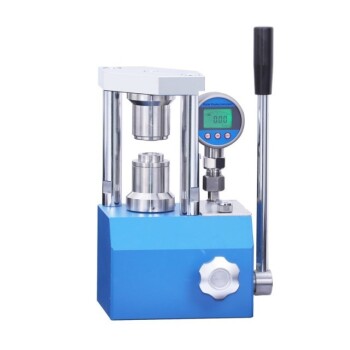
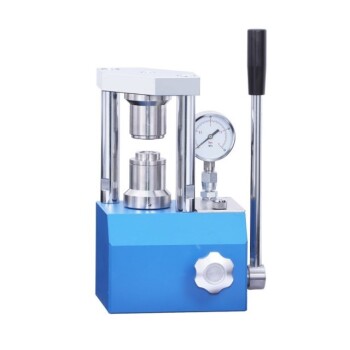
Cold Isostatic Pressing (CIP) serves as the critical densification step in the assembly of pouch-type all-solid-state batteries. It functions by submerging the sealed pouch cell in a liquid medium and applying extreme, uniform pressure (often up to 500 MPa) from every direction simultaneously to eliminate internal voids and bond the material layers.
Core Takeaway: unlike standard mechanical pressing which applies force from only one or two directions, CIP utilizes isotropic (omnidirectional) pressure. This ensures that complex, multi-layer battery stacks achieve perfect interfacial contact and maximum density without the structural damage or density gradients often caused by uniaxial pressing.
The Mechanics of Isotropic Densification
Achieving Uniform Pressure Distribution
Standard uniaxial presses apply force from the top and bottom. This often leads to uneven pressure distribution, where the edges or center may be compressed differently.
CIP uses a high-pressure fluid to apply force equally to every millimeter of the sealed pouch's surface. This ensures that the pressure felt at the center of the stack is identical to the pressure at the edges.
Elimination of Micro-Voids
Solid-state batteries rely on solid-to-solid contact, meaning any air gap or pore is a dead zone for ion transport.
The high pressure of CIP (e.g., 500 MPa) collapses these microscopic voids within the battery cell. This deep compaction is essential for creating a continuous path for lithium ions to travel.
Enhancing Electrochemical Performance
Minimizing Interfacial Resistance
The primary challenge in solid-state batteries is the high resistance at the interfaces between the anode, solid electrolyte, and cathode.
By forcing these components together at the micro-scale, CIP creates tight, homogeneous physical contact. This drastically lowers interfacial resistance, enabling stable lithium-ion transport and improved cycling performance.
Maximizing Volumetric Energy Density
Loose packing of materials results in wasted space and lower energy capacity for the same battery size.
CIP significantly increases the volumetric energy density of the battery by compacting the entire stack into its densest possible form. This results in a smaller, more powerful battery package.
Structural Integrity and Manufacturing Precision
Protecting Ultra-Thin Layers
Advanced solid-state batteries often use ultra-thin electrolyte membranes (e.g., ~55 μm) to reduce resistance.
Uniaxial pressing can shear or crack these fragile layers due to uneven stress. The hydrostatic nature of CIP supports the material from all sides, maintaining the integrity of these thin layers while still applying massive force.
Preventing Density Gradients
When powder or stacked layers are pressed from just one direction, the material closer to the press ram becomes denser than the material further away.
CIP eliminates these internal density gradients. This uniformity prevents localized stress points that could lead to micro-cracks or deformation during subsequent battery operation or cycling.
Understanding the Trade-offs
Batch Processing vs. Continuous Flow
While CIP offers superior quality, it is inherently a batch process. Pouch cells must be individually sealed and loaded into a vessel, which can be slower than the continuous roll-to-roll calendering used in traditional Li-ion manufacturing.
The Necessity of Pre-Sealing
The battery components must be perfectly sealed in a flexible mold or pouch before entering the CIP chamber. If the seal fails, the hydraulic fluid will contaminate the active materials, destroying the battery.
Making the Right Choice for Your Goal
To determine if CIP is the correct tool for your specific assembly protocol, consider your primary performance metrics:
- If your primary focus is Maximum Energy Density: CIP is essential to eliminate all internal porosity and maximize active material utilization per unit of volume.
- If your primary focus is Cycle Life Stability: CIP provides the uniform interfacial bonding required to prevent delamination and reduce resistance growth over time.
- If your primary focus is Layer Integrity: CIP is the safest method to compress stacks containing brittle or ultra-thin solid electrolytes without inducing cracking.
CIP transforms a stack of loose components into a unified, high-performance electrochemical system through the power of uniform pressure.
Summary Table:
| Feature | Cold Isostatic Pressing (CIP) | Standard Uniaxial Pressing |
|---|---|---|
| Pressure Direction | Isotropic (Omnidirectional) | Uniaxial (One/Two directions) |
| Pressure Uniformity | Perfect distribution across entire cell | High risk of density gradients |
| Interfacial Contact | Maximum; minimizes resistance | Variable; potential for micro-voids |
| Structural Safety | Supports ultra-thin/brittle layers | High risk of shearing or cracking |
| Energy Density | Optimized via maximum compaction | Sub-optimal due to internal porosity |
Elevate Your Battery Research with KINTEK Precision
Unlock the full potential of your solid-state battery performance with KINTEK’s specialized laboratory pressing solutions. Whether you are developing ultra-thin electrolyte membranes or high-capacity pouch cells, our comprehensive range of manual, automatic, heated, and glovebox-compatible models—including advanced cold and warm isostatic presses—provides the uniform 500 MPa pressure needed for maximum energy density and minimal interfacial resistance.
Don't let internal voids or density gradients compromise your research. Contact KINTEK today to find the perfect pressing system for your lab and accelerate your breakthrough in battery technology!
References
- Dong Ju Lee, Zheng Chen. Robust interface and reduced operation pressure enabled by co-rolling dry-process for stable all-solid-state batteries. DOI: 10.1038/s41467-025-59363-4
This article is also based on technical information from Kintek Solution Knowledge Base .
Related Products
- Electric Split Lab Cold Isostatic Pressing CIP Machine
- Automatic Lab Cold Isostatic Pressing CIP Machine
- Electric Lab Cold Isostatic Press CIP Machine
- Manual Cold Isostatic Pressing CIP Machine Pellet Press
- Lab Isostatic Pressing Molds for Isostatic Molding
People Also Ask
- What role do electric lab cold isostatic presses play in industrial contexts? Bridge R&D and Manufacturing with Precision
- What are the applications of electric lab cold isostatic presses in research settings? Advance Material R&D with High-Pressure CIPs
- What advantages does electrical Cold Isostatic Pressing (CIP) have over manual CIP? Boost Efficiency and Consistency
- What are the process advantages of using Cold Isostatic Pressing (CIP) for LSMO? Achieve Defect-Free Density
- Why is Cold Isostatic Pressing (CIP) applied after uniaxial pressing? Optimize Superconductor Precursor Density