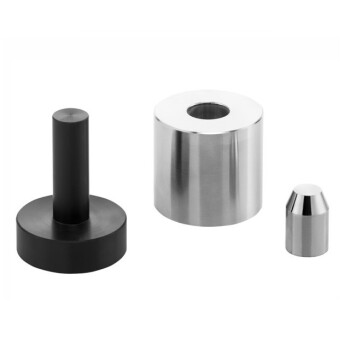
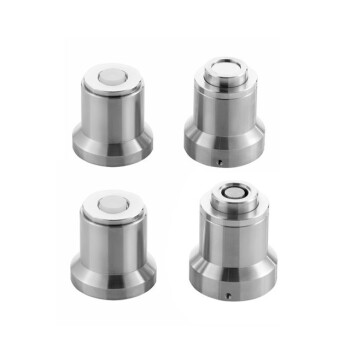
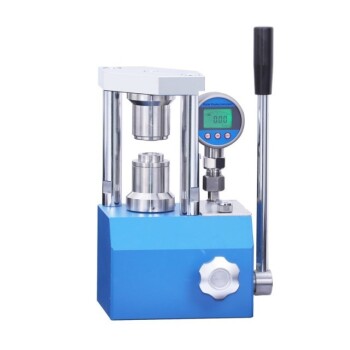
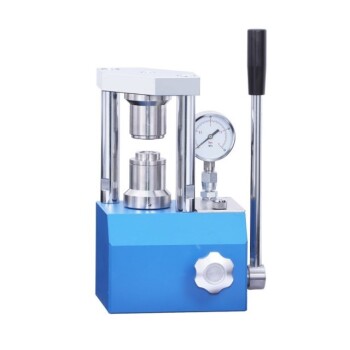
High-precision pressure encapsulation is the primary mechanical catalyst for solid-state battery functionality. During assembly, this equipment applies continuous, uniform pressure—typically in the megapascal (MPa) range—to force solid electrolytes and electrodes into intimate physical contact. This process is essential for reducing interfacial resistance and, when combined with precise sealing, isolating the module from performance-killing moisture and oxygen.
The Core Insight In liquid batteries, the electrolyte naturally flows into gaps; in solid-state batteries, contact must be forced. High-precision pressure is not merely about packaging; it is a functional requirement to bridge atomic-level voids, ensuring ions can migrate efficiently while mechanically blocking the formation of dangerous lithium dendrites.
The Challenge of the Solid-Solid Interface
Overcoming Physical Voids
Unlike liquid electrolytes that wet electrode surfaces, solid electrolytes are rigid. Without external force, microscopic gaps remain between the electrolyte and the electrode.
High-precision equipment eliminates these voids by compressing the materials into a dense composite. This mechanical compression is necessary to achieve the atomic-level contact required for the battery to function.
Reducing Contact Resistance
High interface impedance is a major bottleneck in solid-state battery performance. If the layers are not pressed tightly enough, ions cannot move freely between the cathode and anode.
By applying ultra-high pressure, the equipment lowers this interfacial contact resistance. This ensures the seamless migration of ions throughout the energy storage system, directly impacting the battery's power output.
Critical Functions of Pressure During Assembly
Inhibiting Lithium Dendrites
One of the greatest risks in solid-state batteries is the growth of lithium dendrites—metallic spikes that can penetrate the electrolyte and cause short circuits.
The application of continuous mechanical pressure creates a physical barrier. It inhibits dendrite penetration by maintaining a dense interface that is difficult for the lithium metal to pierce during plating and stripping processes.
Managing Volume Expansion
Electrodes often expand and contract during charge and discharge cycles. Without restraint, this "breathing" can cause the layers to separate (delaminate), leading to contact failure.
The encapsulation equipment provides a stable internal stress baseline. It applies constant stack pressure that inhibits excessive volume expansion, ensuring the structural integrity of the battery remains intact over thousands of cycles.
Facilitating Microscopic Deformation
For certain materials, such as polymer electrolytes, simple contact is not enough. The electrolyte must physically conform to the texture of the electrode.
The hydraulic press forces the polymer to undergo microscopic deformation, allowing it to penetrate the porous structure of the cathode material. This maximizes the active surface area for ion transfer.
Understanding the Trade-offs
The Risk of Over-Pressurization
While pressure is vital, more is not always better. Thermodynamic analysis suggests that excessive pressure can induce unwanted material phase changes.
Operators must maintain stack pressure at appropriate levels (e.g., often below 100 MPa) to ensure effective ion transport without damaging the material structure. Precision control is just as important as the force applied.
Environmental Isolation Constraints
Pressure alone does not guarantee success; the assembly environment matters. The encapsulation process must be integrated with hermetic sealing.
Even with perfect pressure, exposure to moisture or oxygen can degrade materials like sulfide electrolytes. The equipment must simultaneously compress the stack and ensure the seal isolates these external contaminants.
Making the Right Choice for Your Goal
To maximize the effectiveness of your assembly process, align your pressure strategy with your specific objectives:
- If your primary focus is Cycle Life: Prioritize pressure maintenance systems that inhibit volume expansion and prevent interlayer delamination during long-term use.
- If your primary focus is Safety: Ensure the applied pressure is sufficient to densify the interface enough to mechanically block lithium dendrite growth and propagation.
- If your primary focus is Efficiency: Calibrate the equipment to achieve the lowest possible contact resistance by forcing pore penetration without crossing the thermodynamic threshold for phase changes.
Ultimately, high-precision pressure transforms a stack of rigid components into a cohesive, conductive, and safe energy storage unit.
Summary Table:
| Key Role | Impact on Battery Performance | Mechanism |
|---|---|---|
| Interface Bonding | Reduces contact resistance | Eliminates microscopic voids between solid layers |
| Dendrite Inhibition | Enhances safety and prevents shorts | Creates a dense physical barrier against lithium penetration |
| Volume Management | Ensures long cycle life | Provides stable stress to counteract electrode expansion |
| Microscopic Deformation | Increases active surface area | Forces electrolytes to conform to porous electrode textures |
| Hermetic Sealing | Protects chemical stability | Isolates the module from moisture and oxygen during pressing |
Elevate Your Battery Research with KINTEK Precision
High-precision pressure is the mechanical catalyst that transforms a stack of materials into a high-performance energy storage unit. KINTEK specializes in comprehensive laboratory pressing solutions designed specifically for the rigorous demands of solid-state battery development.
Our equipment range includes:
- Manual & Automatic Presses for flexible R&D.
- Heated & Multifunctional Models to facilitate microscopic material deformation.
- Glovebox-Compatible Systems for moisture-sensitive sulfide electrolytes.
- Cold and Warm Isostatic Presses (CIP/WIP) for uniform material densification.
Whether you are focusing on inhibiting lithium dendrites or reducing interfacial impedance, our team is ready to provide the technical expertise and equipment to ensure your research success.
Contact KINTEK today to find your pressing solution
References
- Zhe Guan. Research Progress Review of Domestic and Foreign Enterprises and Postgraduates in the Field of Solid - State Batteries. DOI: 10.47297/taposatwsp2633-456912.20250602
This article is also based on technical information from Kintek Solution Knowledge Base .
Related Products
- Warm Isostatic Press for Solid State Battery Research Warm Isostatic Press
- Lab Button Battery Tablet Press Sealing Mold
- Lab Infrared Press Mold for Laboratory Applications
- Button Battery Sealing Press Machine for Lab
- Lab Polygon Press Mold
People Also Ask
- Why must composite cathodes be sealed in vacuum lamination bags for WIP? Ensure Battery Stability and Density
- How do sacrificial volume materials (SVM) maintain microchannels in isostatic pressing? Ensure Structural Integrity
- What is the function of elastic molds in warm isostatic pressing? Achieve Uniform Density in Composite Particles
- What are the advantages of using a Warm Isostatic Press (WIP) for batteries? Achieve Superior Interface Contact
- What is the significance of temperature control in Warm Isostatic Pressing? Unlock Uniform Densification and Process Stability