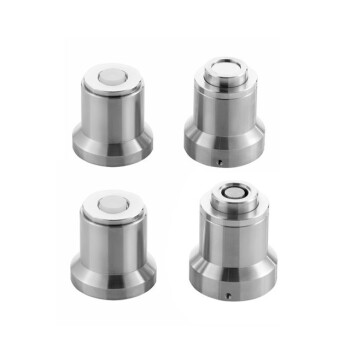
Data integrity begins with physical consistency. High-precision laboratory molds are required to strictly control the geometric dimensions of the specimen, while specific compaction processes are essential to simulate the mechanical forces applied in real-world engineering projects. Together, these methods ensure the density of the internal structure—often referred to as the "green body"—and effectively reduce random voids, creating a standardized foundation for accurate testing.
The reliability of material testing relies on eliminating variables during preparation. By combining high-precision molding with controlled compaction, you ensure that test results reflect the actual properties of the modified soil, rather than inconsistencies in specimen density or shape.
The Role of High-Precision Molds
Ensuring Geometric Consistency
High-precision molds provide a standardized rigid constraint for the cement-soil mixture. This ensures that every specimen produced has highly consistent geometric dimensions, such as diameter and height.
Calculating Mechanical Strength
Consistency in dimension is critical for subsequent testing, particularly for unconfined compressive strength. Mechanical strength calculations rely on precise measurements of the pressure area; any deviation in the mold shape will lead to calculation errors and unreliable data.
Eliminating Geometric Deviations
Using precise cylindrical or rectangular molds prevents geometric irregularities. In testing scenarios, irregular shapes can cause stress concentration effects, where force is distributed unevenly, causing the specimen to fail prematurely or unpredictably.
The Necessity of Controlled Compaction
Simulating Field Conditions
Laboratory compaction is not just about packing dirt; it is a simulation of the rolling and mechanical compaction used at engineering sites. By replicating these forces, you ensure the specimen reflects the performance of the material as it would appear in the field.
Controlling Internal Density
Compaction processes allow researchers to target a specific dry density or relative compaction degree (often around 90%). This establishes a controlled initial physical state, which is vital for studying how modifications to the soil affect its volume change behavior and water flow.
Reducing Porosity and Voids
Layered compaction is used to effectively expel air trapped between powder particles. This increases the contact tightness between soil and cement particles, reducing the material's initial porosity and eliminating random voids that could compromise structural integrity.
Understanding the Trade-offs
The Risk of Uneven Density
Without specific compaction protocols, specimens often suffer from uneven pore distribution. This introduces "noise" into the data, making it difficult to distinguish whether a failure was caused by the material mix or by a flaw in the preparation process.
Manual vs. Automated Limitations
While manual compaction can be used, it introduces human variability. Standardized equipment (like hydraulic presses) is often preferred to ensure the dwell time and pressure values are identical across all samples, minimizing experimental error.
Making the Right Choice for Your Goal
To ensure your data is scientifically valid, align your preparation method with your specific testing objectives:
- If your primary focus is Unconfined Compressive Strength: Prioritize high-precision molds to ensure the pressure area is exact and stress concentrations are eliminated.
- If your primary focus is Water Absorption or Permeability: Prioritize controlled, layered compaction to ensure the internal void structure and porosity are uniform throughout the specimen.
The scientific validity of your research depends entirely on the mechanical fidelity of your specimen preparation.
Summary Table:
| Factor | Role in Specimen Preparation | Impact on Test Accuracy |
|---|---|---|
| High-Precision Molds | Standardizes geometric dimensions and rigid constraints | Eliminates stress concentration and calculation errors in compressive strength |
| Layered Compaction | Expels trapped air and controls internal dry density | Reduces porosity/voids to ensure uniform internal structure and permeability |
| Controlled Pressure | Simulates real-world engineering mechanical forces | Minimizes human variability to ensure repeatable, scientifically valid data |
Elevate Your Geotechnical Research with KINTEK Precision
At KINTEK, we understand that data integrity begins with physical consistency. As specialists in comprehensive laboratory pressing solutions, we provide the high-precision tools necessary to transform modified soil into standardized specimens.
Whether your research involves battery materials or cement-soil stabilization, our diverse range of manual, automatic, heated, and multifunctional presses, along with cold and warm isostatic models, ensures perfect density control every time.
Ready to eliminate preparation variables and achieve superior mechanical fidelity? Contact KINTEK experts today for a custom molding solution.
References
- Wei Lu, Chunsheng Lu. Enhancing Water Resistance and Mechanical Properties of Cemented Soil with Graphene Oxide. DOI: 10.3390/ma17071457
This article is also based on technical information from Kintek Solution Knowledge Base .
Related Products
- Special Shape Lab Press Mold for Laboratory Applications
- Carbide Lab Press Mold for Laboratory Sample Preparation
- Lab Infrared Press Mold for Laboratory Applications
- Square Lab Press Mold for Laboratory Use
- Assemble Square Lab Press Mold for Laboratory Use
People Also Ask
- What is the purpose of incorporating cartridge heaters into a lab press mold for MLCC block compression? Optimize Results
- Why is a high-performance laboratory molding press critical for in-situ electrolyte formation? Unlock Battery Success
- Why are precision laboratory molds essential for forming basalt-reinforced lightweight concrete specimens?
- How does the geometry of laboratory molds influence mycelium-based composites? Optimize Density and Strength
- Why is precise cooling management of the lab press mold necessary? Protect Core Integrity in Thermoforming